Capitol Gorge Hike

Capitol Reef NP

Wednesday October 8, 2014

Our first hike was a “baby” one – only two miles round trip – that followed a dry stream bed past Fremont petroglyphs and so-called Pioneer Registers. At the end of the stream bed we climbed a short distance to what are called The Tanks.

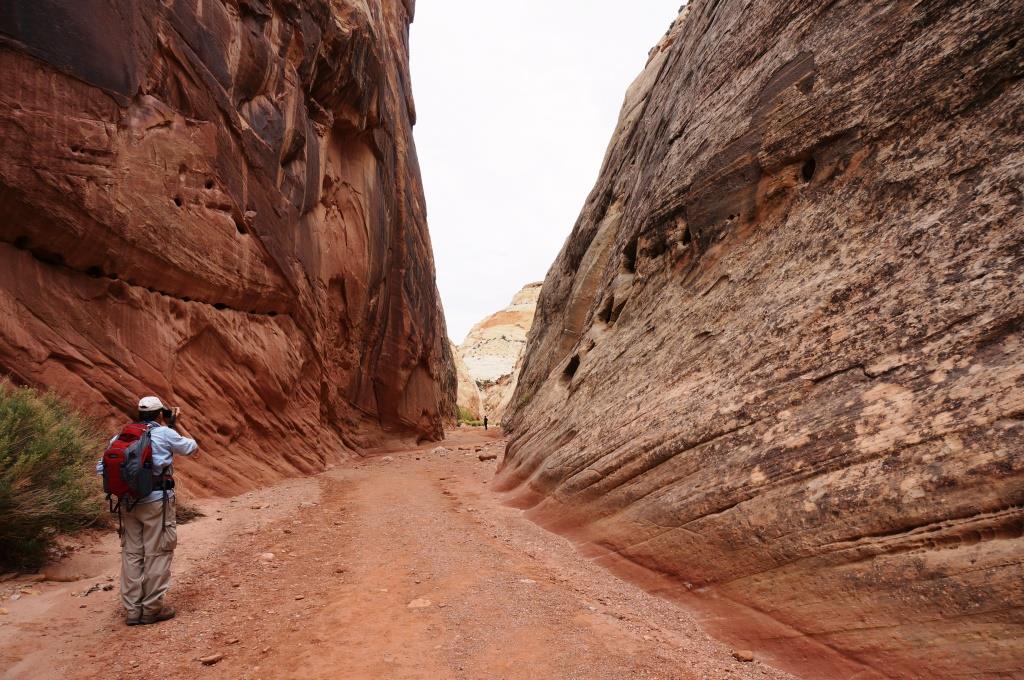
As you can see, the streambed is quite narrow, not someplace you’d want to be after a rainstorm.

Capitol Gorge streambed

Capitol Gorge streambed

For a long time, this streambed was the only “road” through the Waterpocket Fold region. Who knows how many men and women passed along this road?

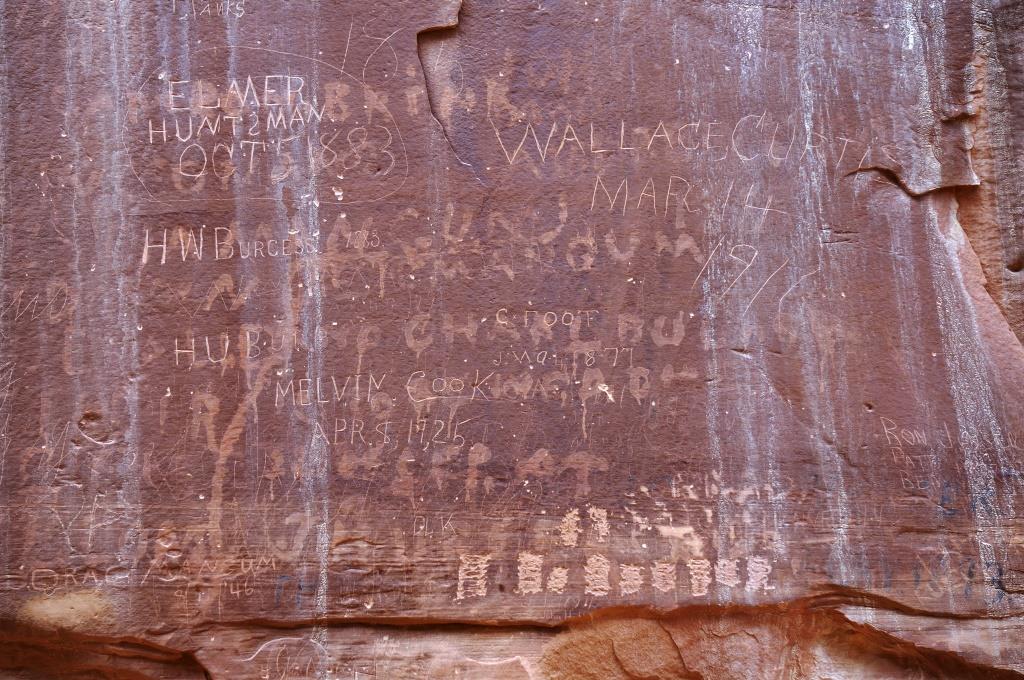
I found the Pioneer Register fascinating. I don’t know how the custom started, but travelers began to carve their names and the date they passed through. It made we wonder where they came from, where they were going, and why.

Pioneer Register

Pioneer Register

I suppose this fascination with the past has to do with my love of history. Walking in the footsteps of these people fills me with wonder about who they were, how they lived, what they did.

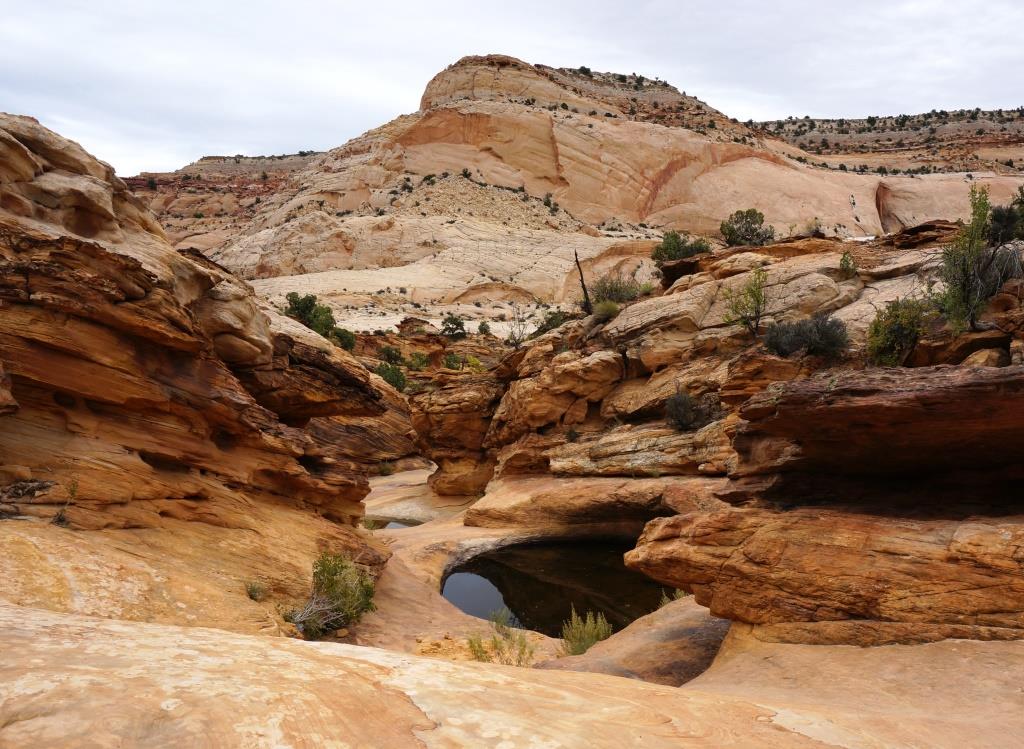
Once we reached the end of the Capitol Gorge Trail, we took a short side trail to an area called The Tanks. These were semi-permanent pools of water scattered among the slickrock.

The Tanks

The Tanks

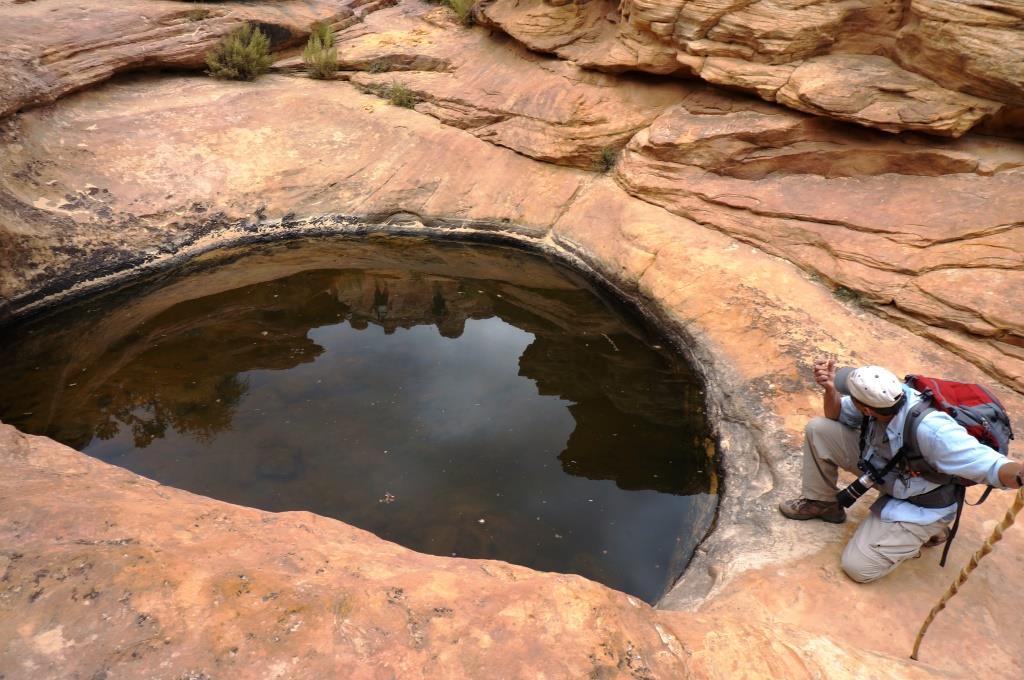
And they aren’t that small either. Not quite swimming pool size, but not too shabby either.

Closeup of water pool

Closeup of pool

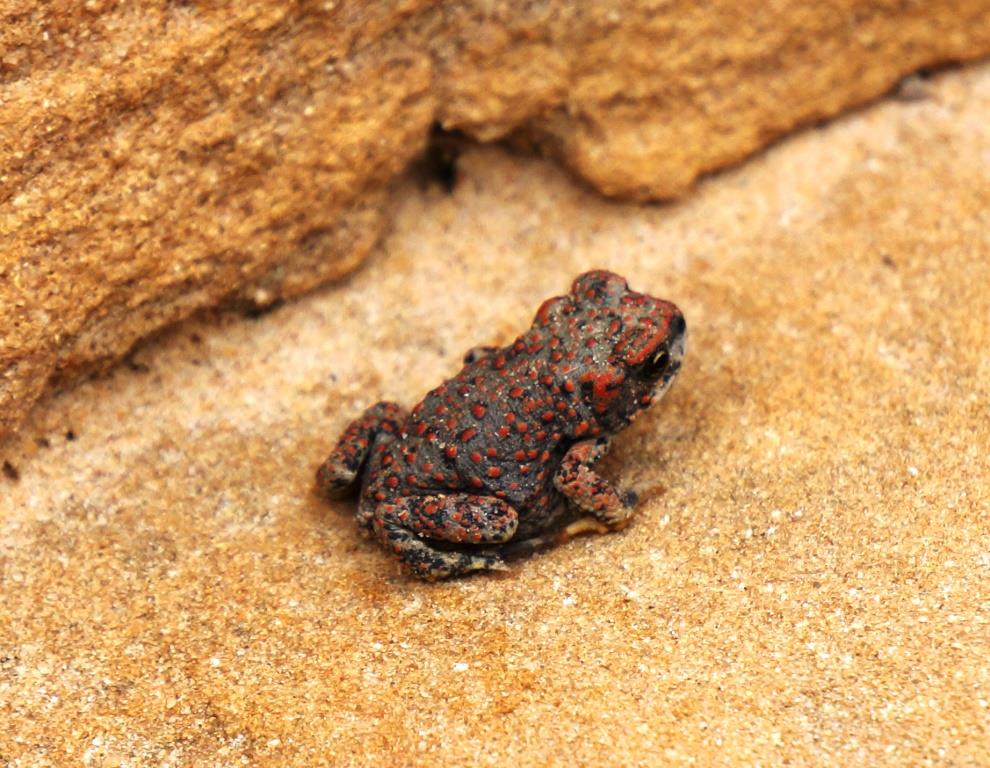
One of the last things I expected to see in such an arid place was a frog. This little guy, a red-spotted frog, was maybe an inch long and lived in and around the pools. We saw quite a few of these critters.

Red-spotted frog

Red-spotted frog

Ain’t nature amazing?

J

Posted in Hiking, National Park | Tagged | Leave a comment

Petroglyphs

Capitol Reef NP

Tuesday October 7, 2014

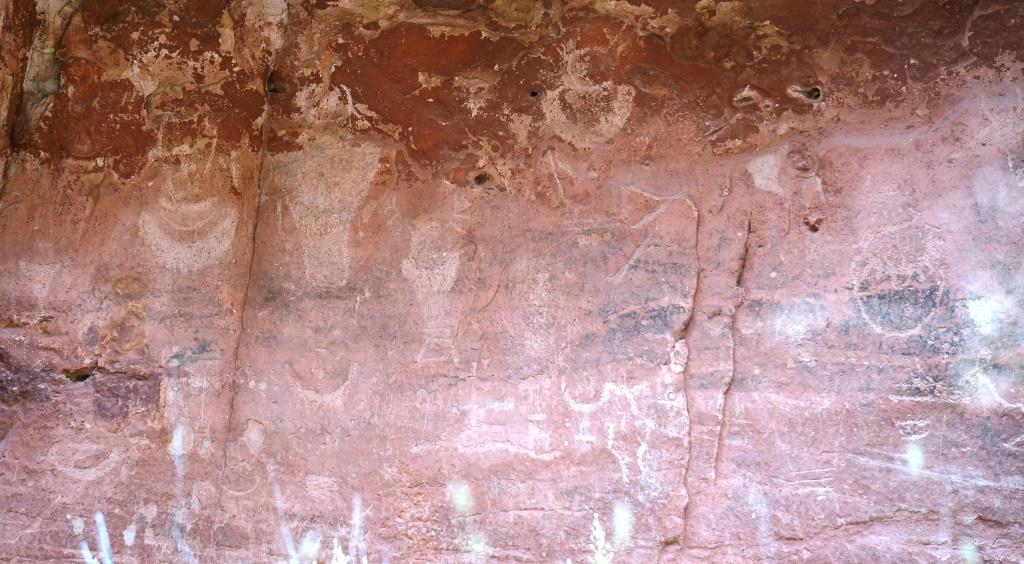
We attended a Ranger talk about petroglyphs and the Fremont Culture. We learned that petroglyphs are etched into stone while pictograms are painted on. Anyway, the petroglyphs in the park were put there by the Fremont people, thought to be an offshoot of the Anasazi or Ancient Puebloans. But nobody really knows for sure.

No one really knows what the petroglyphs mean. The Ranger told us of an experiment where images of several petroglyphs were given to members of three tribes descended from the Ancient Puebloans – Ute, Navajo and Hopi – and asked them to interpret the images. All three came up with different interpretations.

So your guess is as good as any.

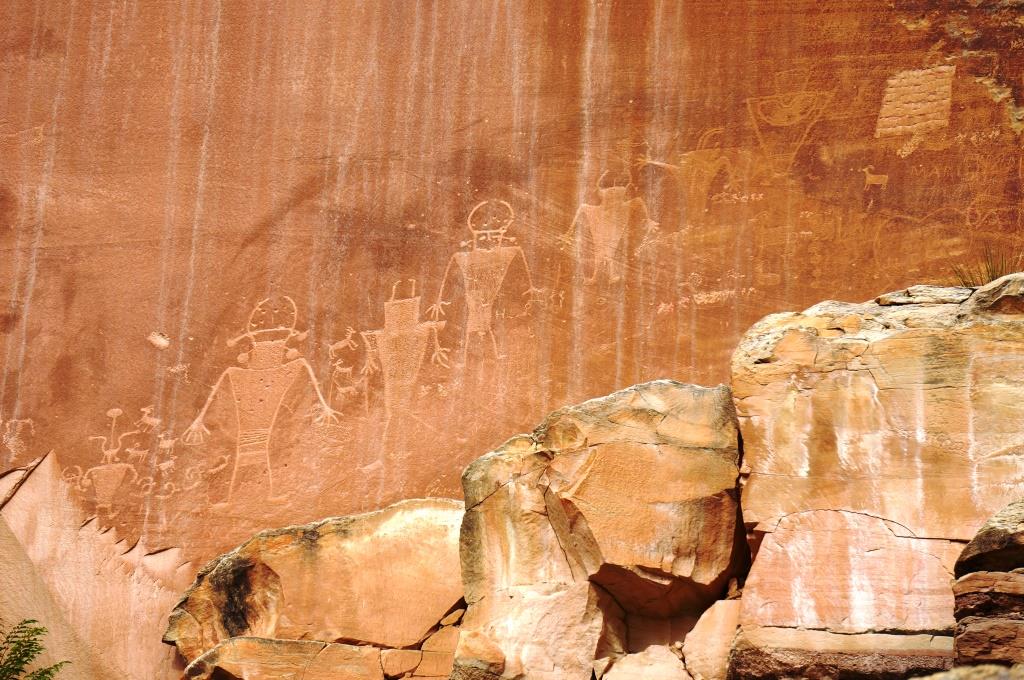
To me these guys look like aliens. And who’s to say they aren’t.

Petroglyphs of aliens?

Petroglyphs of aliens?

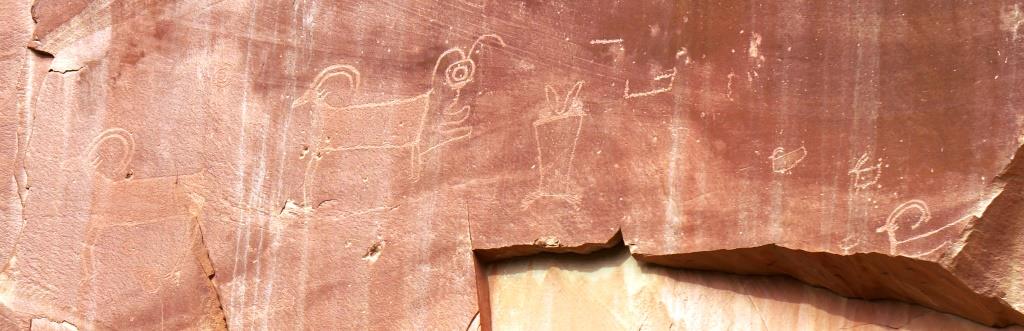
I’m not sure what the pictogram in the left center is, but I think it’s a bighorn sheep giving birth.

Petroglyph of bighorn sheep?

Petroglyph of bighorn sheep?

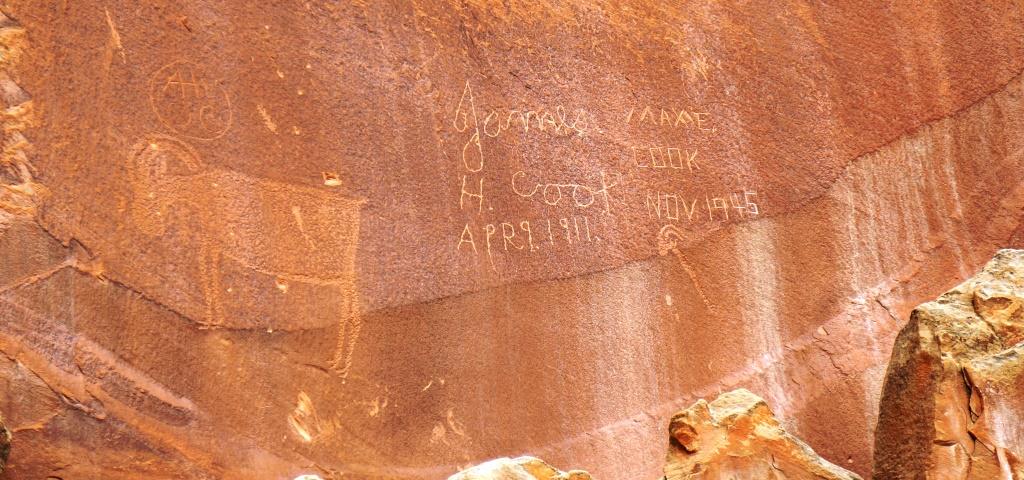
I was pretty sure Holly’s younger than I am, but after seeing this “autograph” dated April 9, 1911, I’m not so sure. H. Cook, Holly Cook? Coincidence? Maybe I should have another peek at her birth certificate.

Is this my Holly's autograph?

Is this my Holly’s autograph?

All kidding aside, while gazing at these petroglyphs I felt a spiritual connection to this long lost civilization. Even though I have no idea why they carved them or what they mean, does it really matter? It meant something to them to leave these images. And it meant something to me to be able to marvel at them.

We also found petroglyphs on our hike through the Capitol Gorge.

Capitol Gorge petroglyphs

Capitol Gorge petroglyphs

The Fremont people must have been prolific carvers of petroglyphs. And the ones we saw may have only been a fraction of the ones that may be out there.

Some day we may be able to translate these images the way we’ve been able to translate Egyptian hieroglyphics. Wouldn’t that be something?

J

Posted in History, National Park | Tagged | Leave a comment

Capitol Reef NP Campground

October 7-14, 2014

Love at first sight!

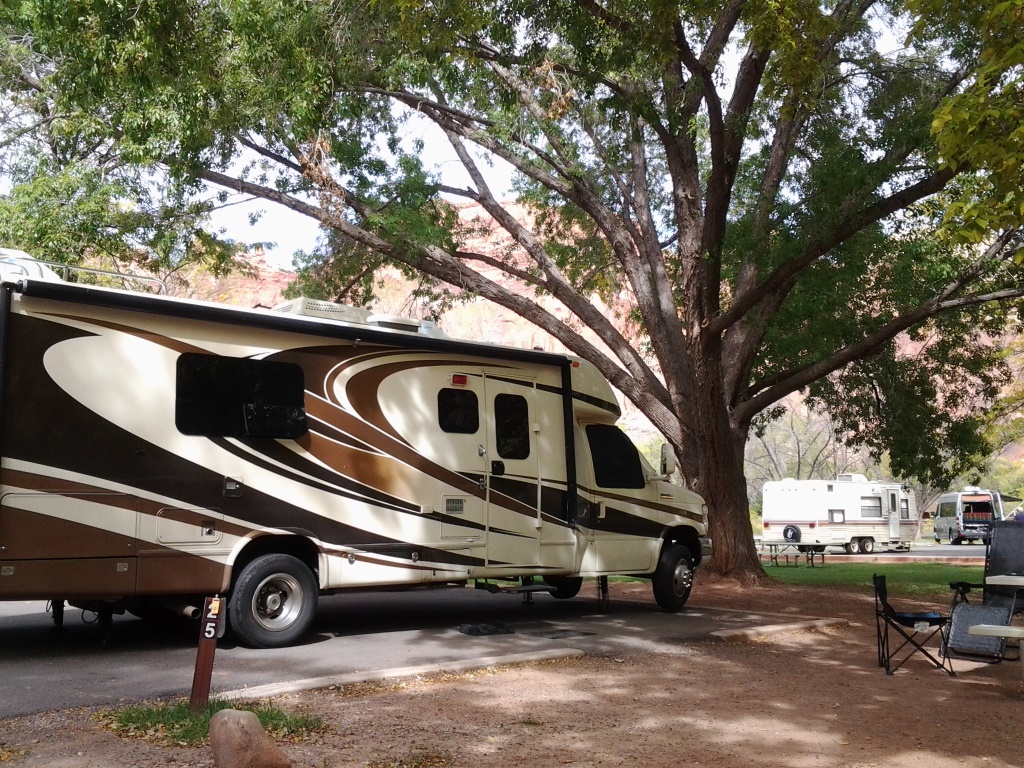
We arrived at the Capitol Reef campground before 10:00 a.m. and snagged one of the last available campsites. We settled into our site and took a quick look around… and immediately agreed to extend at least four more days. I was definitely suffering from tree deprivation and this campground was just the place I needed to settle in and recharge. It is a little oasis in the dessert and we didn’t want to leave. Our intended quick visit with a two night stay turned into a full week with a promise to ourselves to return.

Home Sweet Oasis Home

Home Sweet Oasis Home

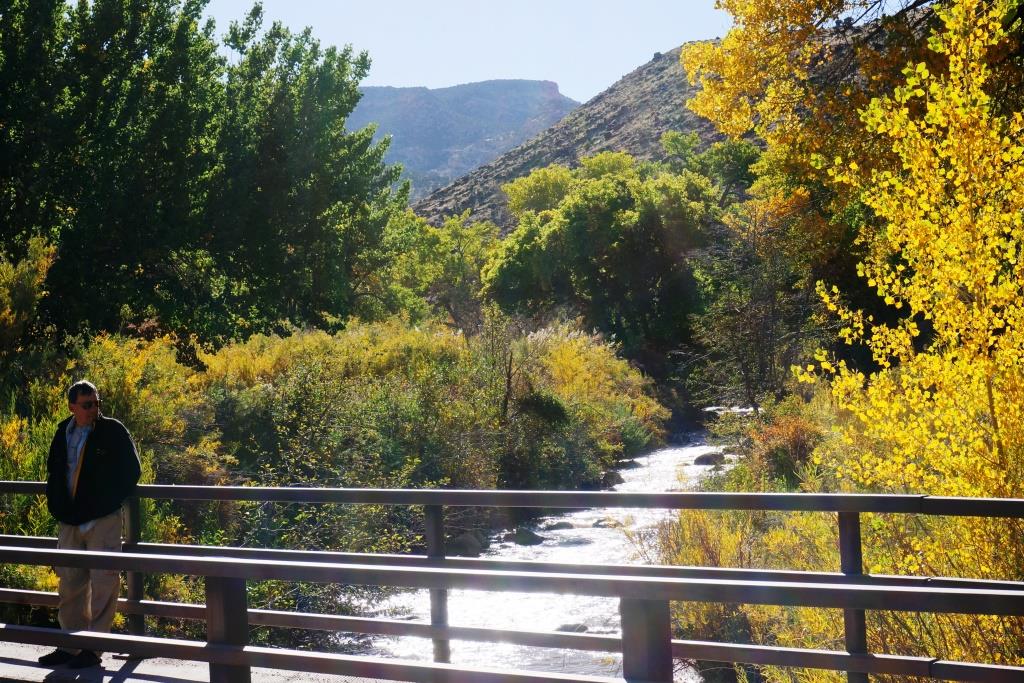
The beauty of the area is breathtaking. The Fremont River rushes between the campground and the towering red rock walls that surround it. Birds flit from tree to tree singing and calling to companions while little furry critters frolic on the lawn and dart in out of the grass and bushes growing along the river. The red apples hang in wild profusion in the orchard and the large trees sway in the cooling breeze.

Fremont River

While the land around you is hot and dry, the campground area is shady, cool and comfortable. I would lay in my bed and watch the red cliffs fade away into darkness as the stars lit up in the sky and the crickets and river joined together to sing me to sleep. In the morning I would watch the sky start to lighten and silhouette the trees just before the sun would rise over the mountains and set the red cliffs on fire.

Campground Info:

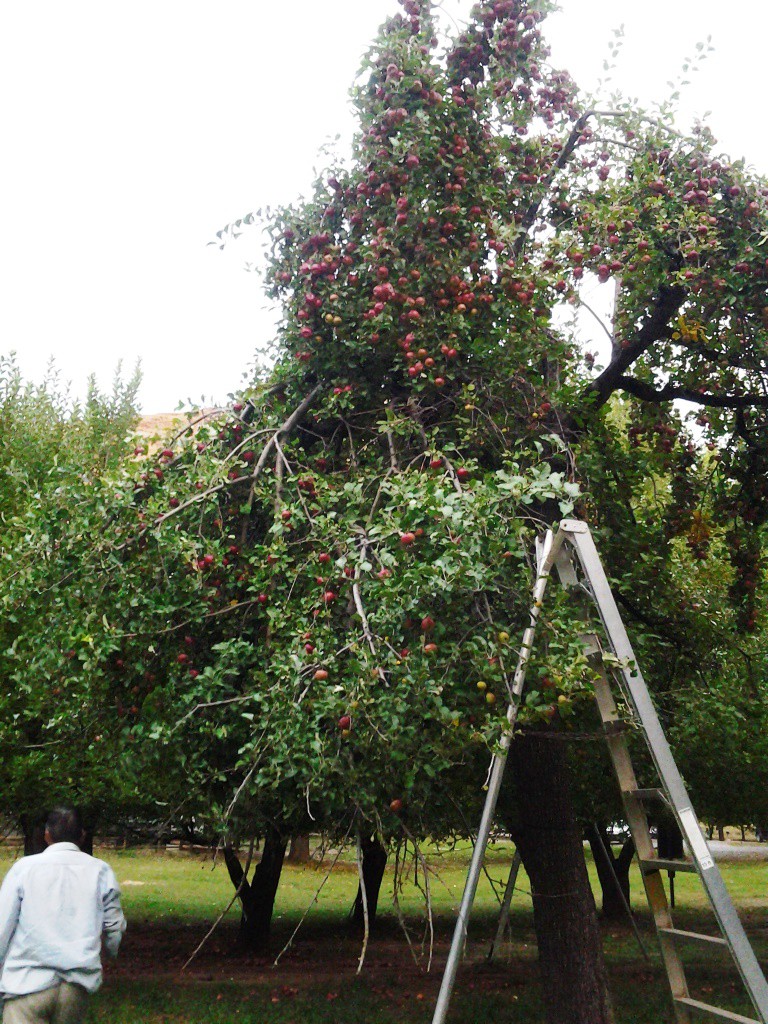
The campground is located in Fruita which was a Mormon community long ago. There are a few historic buildings to check out as well as active orchards where you are allowed to go in and pick your own fruit. It was so late in the season that the selection was down to: apples… but very good apples. You can eat all you want for free while in the orchard and it costs $1.25/lb for any you take out with you. They supply ladders, pole/basket pickers, bags and a scale at the self service pay station at each orchard. They don’t spray the plants so you have to watch to pick the non-buggy ones. The park service tries to maintain the orchards as they were in historic times. Depending on the time of year, you can pick: apples, pears, cherries, apricots, almonds, plums, walnuts, mulberries, grapes, nectarines, pecans, and quince.

Apples

Apples

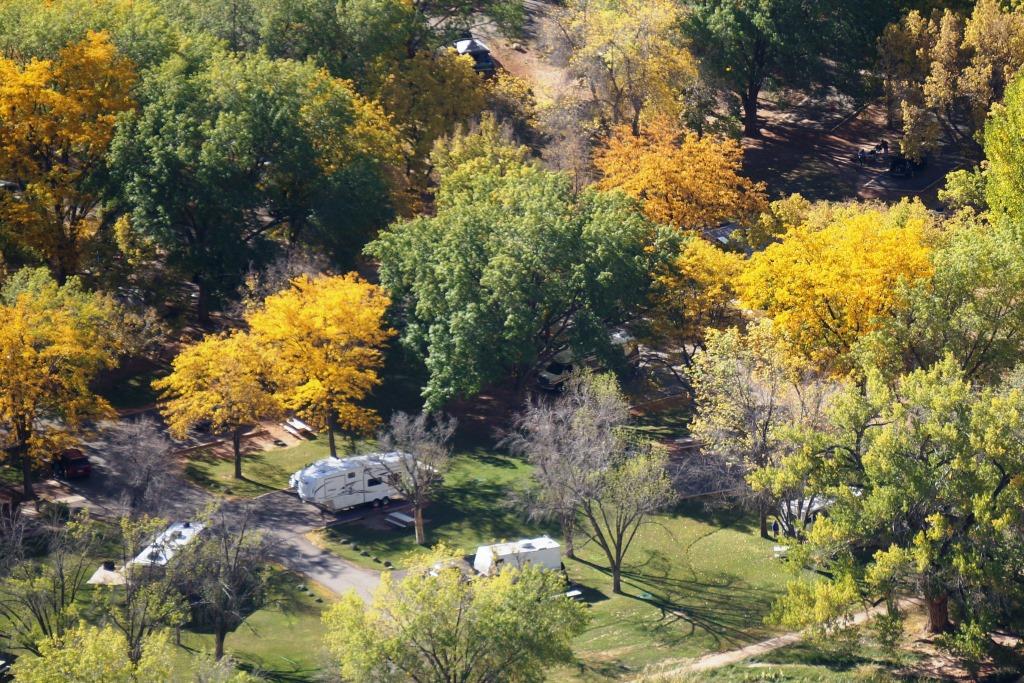
Camp Sites – The campsites are large with paved parking pads, either a pedestal grill or fire ring, and lots of beautiful shade trees and grass. Many of the parking pads, including ours, was wide enough to fit at least two vehicles, maybe three. The rule was you could have as many vehicles on the site that fit on the pad. We saw several sites with two motor homes sharing the site. If you have a tent, you can pitch that as well. Even when the campground was full, it was not crowded.

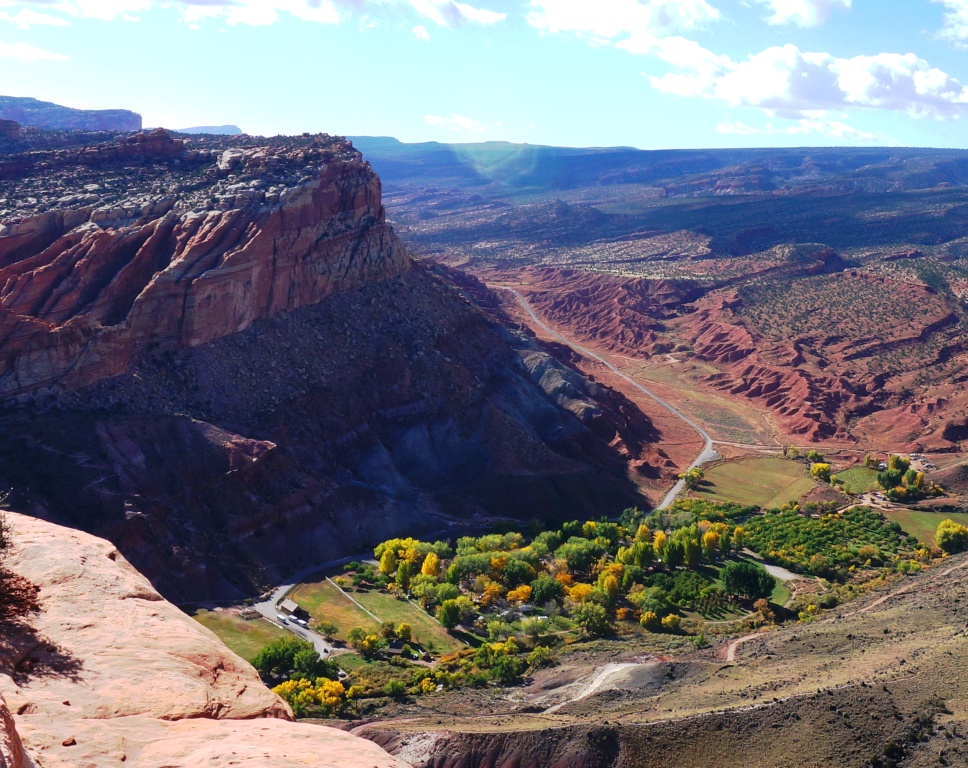
Campground from high atop red cliffs

Campground from high atop red cliffs

Cost – Camping fee is $10.00/night or $5.00 with the senior pass.

Get there early. We didn’t think it would be as popular as other parks since the park is so far out of the way but they have one gorgeous campground and a beautiful park. The entire campground filled every day by 10:00 a.m. and frequently there were campers lined up at 8:00 waiting for people to leave. The camp hosts said they have an average of 30 sites turn over each day but they are claimed very quickly. There are BLM areas just outside the park borders on the east and west where overflow campers wait so they can get to the campground early enough to claim a site and the hosts hang a bag on the gate when the campground is full that lists possible camping areas. So if you can’t get there early enough, get the campsite list, check out the campground AND visit the Gifford house for a snack (more on that below). There is a large parking lot at the picnic area that RVs can sit in when they are visiting and we saw quite a few along the road next to some of the orchards.

Our site from above - under the big tree in the center

Our site from above – under the big tree in the center

Hookups – none. While there are no hookups at each site, they make dry camping easy. The restrooms are very clean and no site is very far from one. They have potable water spigots at each restroom as well as a grey water dump sink. There is a dump station at the campground entrance as well as another potable water spigot. Dumpsters are located there for trash and recycling. Generators are allowed from 8-10 am and from 6-8 pm. The weather was moderate the week we were there so we only needed to run the generator once or twice to recharge our house batteries, which in turn were recharging our computers, phones and Kindles.

Cell phone signal – none. We drove the nine miles into Torrey and were able to get signal and free wifi at the Wayne County Visitor Center at the intersection of Hwy 24 and Hwy 12. They have tables along a wall with electrical outlets. We were also told that the book/coffee shop further up Hwy 24 had free wifi and hosts community events such as a farmer’s market and music night and is a great place to hang out.

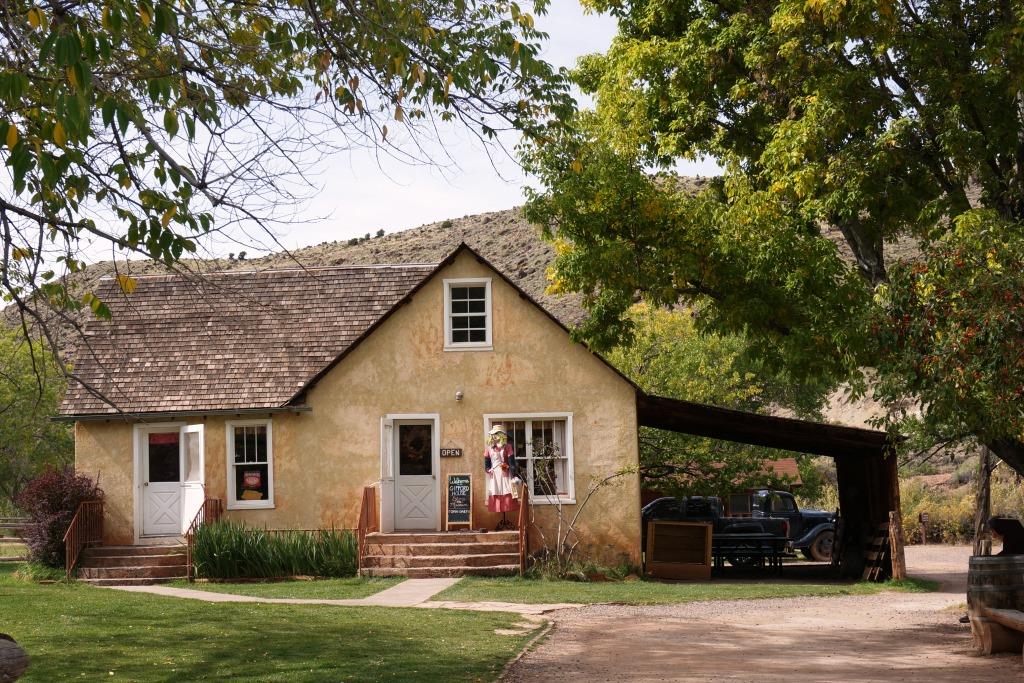
The Gifford House - MUST stop for awesome pie and cinnamon rolls

The Gifford House – MUST stop for awesome pie and cinnamon rolls

History – There are a few buildings left from when Fruita housed a community of up to ten families (only one of the Mormon families living there were polygamists with two wives instead of one). The Gifford House still stands and serves as a mini-museum run by a non-profit that raises funds for the park. They sell coffee, tea, old-fashioned sodas and really, really good pies and cinnamon rolls. Since they open at 8 am, many campers slide over there to have their morning coffee and sugar hit. You can tell yourself that you are only eating there as a benefit to the park. That reasoning worked for us… several times, in fact. There is also a historic barn, blacksmith shop and a one room schoolhouse to check out.

Synchronized eating

Synchronized eating

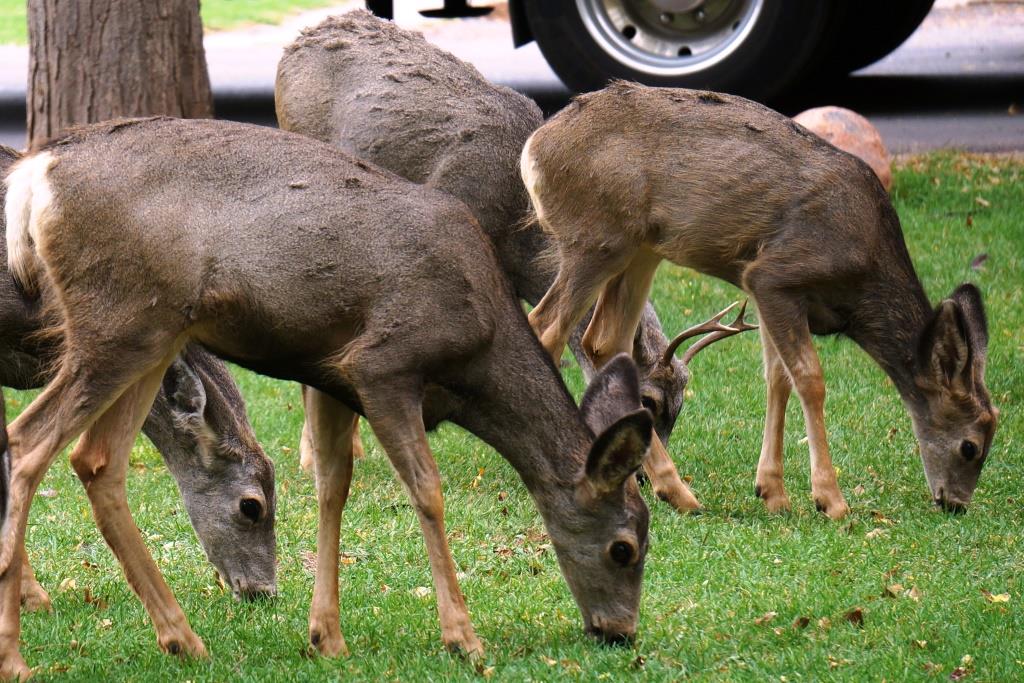
Critters – A wild turkey trotted through our site as we were setting up camp and a decent size herd of mule deer laze around in the orchards and the campground every day. They don’t object to photos at all and it is fun to watch people trying to get the perfect shot (us included). The deer are fat and happy from munching all the apples and other goodies that grow in Fruita. In fact they have it so good there, they have stopped migrating as is the norm for mule deer in that area (hence their inbreeding problem leading to scruffiness). During the summer you should also be able to see yellow-bellied marmots. They were hibernating when we were there but we attended an excellent ranger program on them at the amphitheater (right along the river amidst the orchards and the campground loops – how beautiful and convenient is that?). Up until that night I would have sworn that I had never seen a marmot. I would have been wrong. We learned that Marmots are groundhogs (or groundhogs are marmots, whichever). I’ve certainly seen groundhogs before but I would still like to see the ones that reside at Capitol Reef. They have beautiful golden tummies and scruff around their necks and a little white mark on their muzzles. Like the mule deer, they have it so good here and get so much food that they hibernate more than 8 months of the year. By the end of August they are so fat that their little internal hibernation switch turns on and away they go to blockade themselves into their burrows until spring… or in this case, early summer.

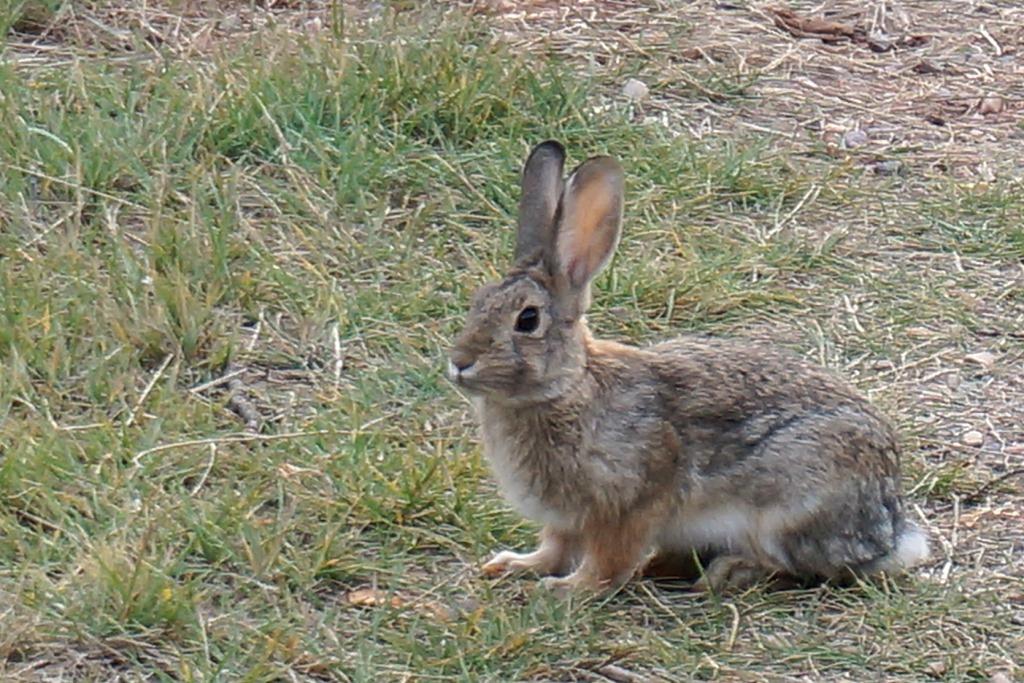
Our Bunny Buddy

Our Bunny Buddy

The campground critter show also includes bunnies, chipmunks and numerous birds wandering though to entertain you while you lounge in your camp chair contemplating the wonders of nature that surround you.

Hiking and Biking – there are several hiking trails that start right at the campground or within a mile. There is a dirt trail along the river that bikes are allowed on to get to the visitor center 1 mile away and a lot of people were riding around the camp loops. The campground is on Scenic Road which has about ten miles of paved surface that bikes are allowed on. Bikes are not allowed on any of the hiking trails in the National Park (but there are BLM bike trails nearby). There are many hiking trails with different difficulty levels plus several excellent, easy to get to, overlook areas for those that don’t hike. We will have separate blog postings for the hikes and drives that we took while we were there.

Food – Bring your groceries with you. You can buy snacks, cups of coffee and pieces of pie in the park but the nearest stores are toward or in Torrey, nine miles away. We ate breakfast at the general store in Torrey (good food and bakery) but their grocery selection was minimal. The entire store was probably 400 square feet and it included hunting and fishing gear, drug store items, clothing, souvenirs, and pretty bare grocery shelves. We WERE at the end of the season but even fully stocked, the selection would have been quite small. We were told another 20 miles to the west on Hwy 24 would get us to Loa where we would find a larger grocery store but that the locals stocked up in St. George which is almost 250 miles away. There are at least 5 or 6 restaurants in Torrey so you won’t starve if you are willing to drive out of the park in search of food. We preferred to eat in our little campground paradise but we did venture out twice and made a point of eating in town on our way through. The Wayne County visitor information center at the intersection of Hwy 24 and Hwy 12 has very helpful people with info on all things regional as well as menus from the local restaurants. Some of the places are not easy to find or the sign saying they serve breakfast is easily overlooked so if you like eating out, hit the visitor center in Torrey for assistance. We had an excellent Mexican meal at La Cueva and decent pizza at the Rim Rock Patio. Both are within 5 miles of the park. On our last morning we left extra early, around 5:30, to try for a campsite at Bryce and there wasn’t a cup of coffee (or open gas station) to be found for the next 100 miles or so. Next time we will get up even earlier and make our own coffee before rolling out.

H


Posted in Campgrounds, National Park | Tagged | Leave a comment

Capitol Reef National Park

October 7-14, 2014

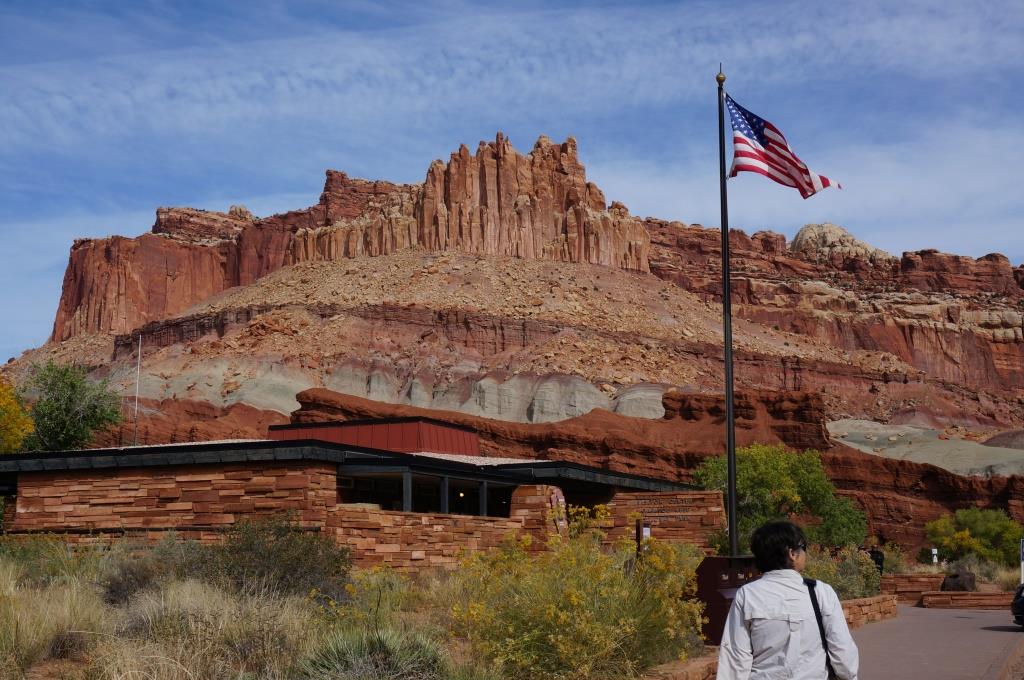
We hit the visitor center as soon as we were set up in the campground and then went back to read a little deeper a few days later. It is a very nice visitor center sitting in the lush, green valley of Fruita with high multi-layered rock walls behind it. The sandstone exterior made it look like it was part of the surrounding land – very nicely done.

VIsitor Center

Visitor Center

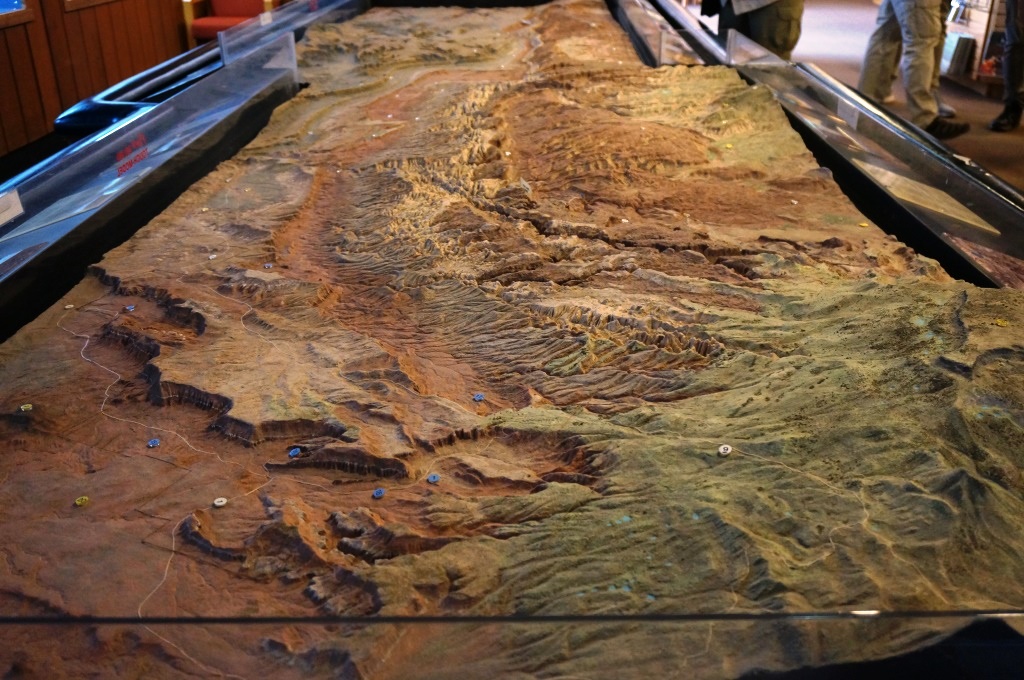
Inside the visitor center is a movie theater, a well stocked gift shop, and interpretive displays. There is a large three dimensional map (my favorite for visualizing an area) and many alcoves explaining the different geology, history and natural wonders inside the park. AND it explains the waterpocket fold that earned the park its name and its park protection. The giant buckling of the land that occurred 65 million years ago created ridges over 100 miles long with few passages through to the other side. The subsequent erosion that has been ongoing since that time caused beautiful contrasting layers of stone to be exposed.

Rock Layers Revealed

Rock Layers Revealed

The three dimensional map is marked with the different areas of the park, trails, passages, wilderness area, four wheel drive roads, rock formations, etc. with photos and explanations of many of them along the side. It is very well done and gives you a good idea of the elevation changes and the different ecosystems within the park.

Waterpocket Fold Country

Waterpocket Fold Country

The rangers are extremely helpful and the park puts on numerous ranger programs and walks to help people explore the many aspects of the park. I’m sure I’ll miss some things but Capitol Reef has something for just about everyone: Geology, Astronomy (dark skies), Archeology, Human History (Ancient Fremont Culture, Mormon Community, Pioneer Register), camping, hiking, back country exploration, plant and animal studies, etc. If nothing else interests you, there are some incredible views.

We will post separate blog entries for the campground and hikes we took.

H


Posted in National Park, Parks | Tagged | Leave a comment

Canyonlands National Park

October 6, 2014

We enjoyed our stop at Canyonlands but it hit us as being more of a draw for Off Highway Vehicles (OHV) and mountain bikers that want to cruise around on the primitive dirt roads.

4WD roads crisscrossing canyon

4WD roads crisscrossing canyon

It’s also possible we were just rocked out and would have viewed it differently if it was the only canyon we’d hit but we’d already hiked and driven through many, many canyons.

That said, the views were still eye popping.

Canyonlands panorama

Canyonlands panorama

We went into the Island in the Sky area which is the most visited section of the park as it is the easiest to get to. (The other areas are The Needles and The Maze.)

We checked out the visitor center, drove all the paved roads in the park, took in the gorgeous canyon views and hiked to the first two overlooks on the Upheaval Dome. There are two theories about how the dome formed: either a meteorite struck the earth or a salt dome heaved up and then collapsed.

Upheaval Dome

Upheaval Dome

A good bit of this trail was across slickrock boulders. Sometimes there were footholds chipped into the rock, sometimes not. There were rock cairns to help guide you but the helpful people (John calls them Humorons) put up cairns for alternate routes… some that went right over the edge of the cliff. So nice of them. At one point there was a whole line of rocks to guide you along the safe portion of the boulder, except for that little space where even those rocks couldn’t hold on. It never bodes well when the rocks marking the trail slide off the side. Careful placement of the feet was definitely in order.

No matter where we hiked, shade was as rare as, well, water in a desert.

Holly resting in the shade

Holly resting in the shade

Some of the views made John’s imagination take flight. In this image the earth looks like it had been gripped by massive hands and torn as easily as we would tear a piece a paper.

Earth ripped open

Earth ripped open

We attended a very good Ranger talk about the geology of the area and the teeny tiny portion of the geologic timeline that includes humans. He used a long rope with different colors to show the time frames and the itty bitty piece of tape on the end of the rope was for humans. We’re the thin layer of tattered, ratty looking piece of sticky tape gooing up the timeline of the planet. That sounds about right.

We did not camp in the park but did drive through their campground. It was small with no services except a pit toilet. I’m pretty sure they didn’t even have water. It WAS very close to the edge of the canyon so I’m sure they got awesome sunrise and sunset views.

The drive into the park is a long way from the highway through BLM land and there are campgrounds out there along the access road but we did not check them out. Dead Horse Point State Park is on a little finger of land that sticks right out into the canyon. It is probably the same distance to the state park as it is to the national park.

J & H

Posted in Hiking, National Park, Parks | Tagged | Leave a comment

Delicate Arch and Windows Arches

Arches National Park

Saturday, October 4, 2014

We did two hikes today, the Delicate Arch Trail (3 mile round trip) and the Windows Trail (1 mile round trip).

The temperature was moderate (mid-60s to 70) but the sun was scorching. Trees and large rocks, which provided shade, were welcome but in short supply.

But we walked slow, stopped fairly often, and drank water to stay hydrated. I don’t think I drink enough – water, that is.

Delicate Arch Trail

The road to the trailhead is on the right about 11.7 miles from the visitor center. Trailhead parking is 1.2 miles down that road. As usual, parking was hard to come by.

I thought the trail to Delicate Arch was fun, even with the heat of the sun beating down on us. We climbed inclined slickrock, followed cairns marking the trail, and tiptoed around rock ledges.

Pet Peeve: Some humorons insist on “helping” hikers by building cairns, even though there are plenty of signs asking hikers not to.

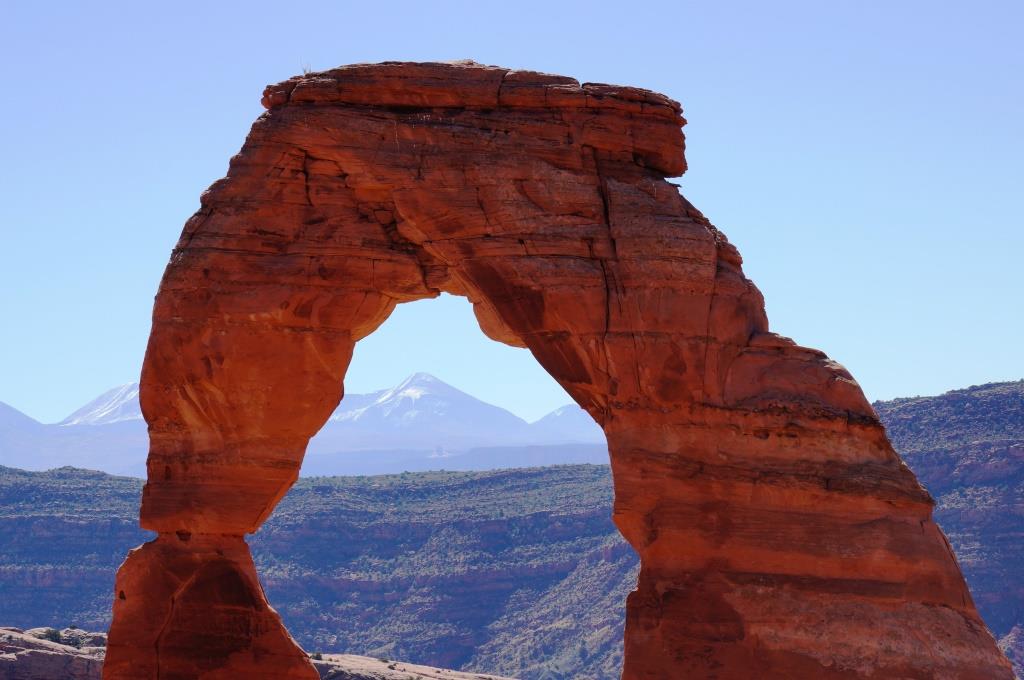
But the view from the Delicate Arch was spectacular. (I say that a lot, don’t I? But it’s true.) The arches, cliffs, valleys, and mountains all molded into one beautiful vista was unforgettable.

Delicate Arch

Delicate Arch

On the way back, we took a short side trail to see some Ute petroglyphs. Modern day Native Americans still visit these, as well as other petroglyphs because it is a connection to their ancestors.

Ute Petroglyphs

Ute Petroglyphs

One of the more unlikely things to see in this parched, arid land, is a ranch. But see one we did. The Wolfe Ranch, consisting of a cabin, corral, and storage building. At one point, this ranch supported four adults and several children.

Wolfe Ranch

Wolfe Ranch

Windows Trail

The road to the trailhead is on the right about 9.2 miles from the visitor center. The trailhead parking area is another 2.5 miles down that road. The parking lot was crowded but we found a spot without too much trouble.

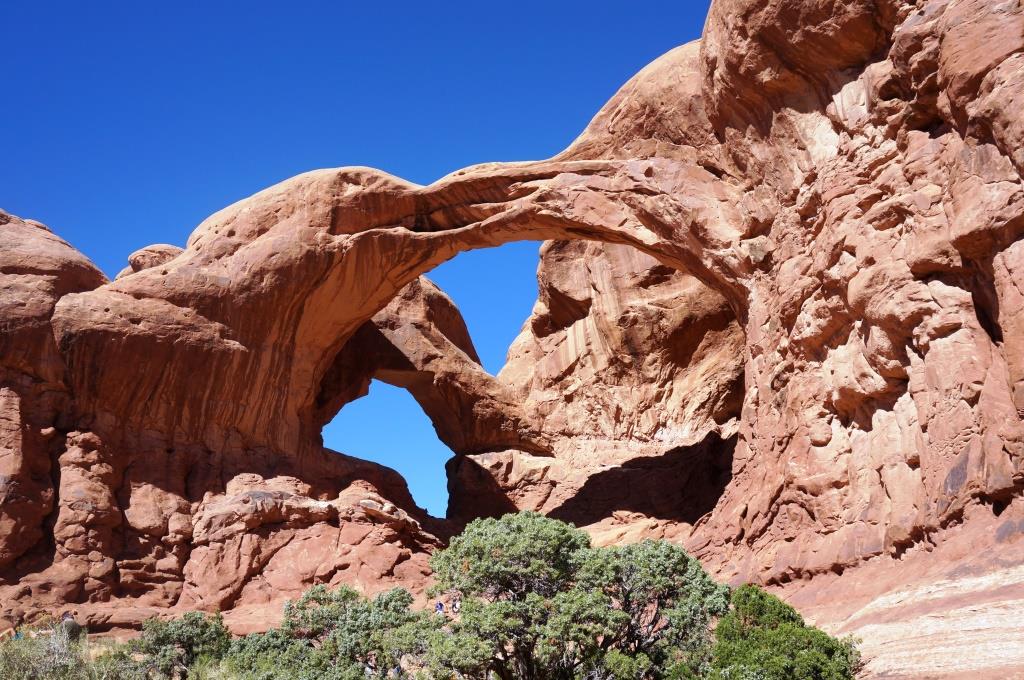
A short (0.5 mile round trip) trail took us to Double Arch. According to the sign, Double Arch is a pothole arch. It starts as a depression near a cliff face. Water collects in and deepens the depression. Water seeps through the cliff face and forms an alcove. Eventually, the hole and the alcove meet forming an arch.

Double Arch

Double Arch

In the image below, South Window is to the left and North Window is to the right. To me the Windows look like a ginormous (granddaughter Chloe’s current favorite word) Lone Ranger or Zorro mask.

North Window and South Window Arches

North Window and South Window Arches

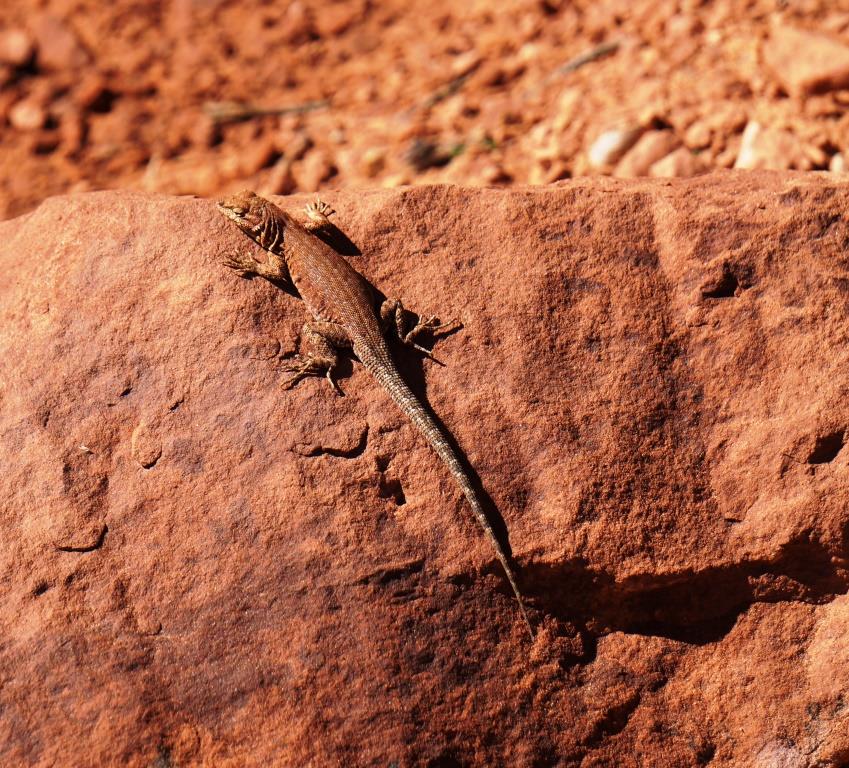
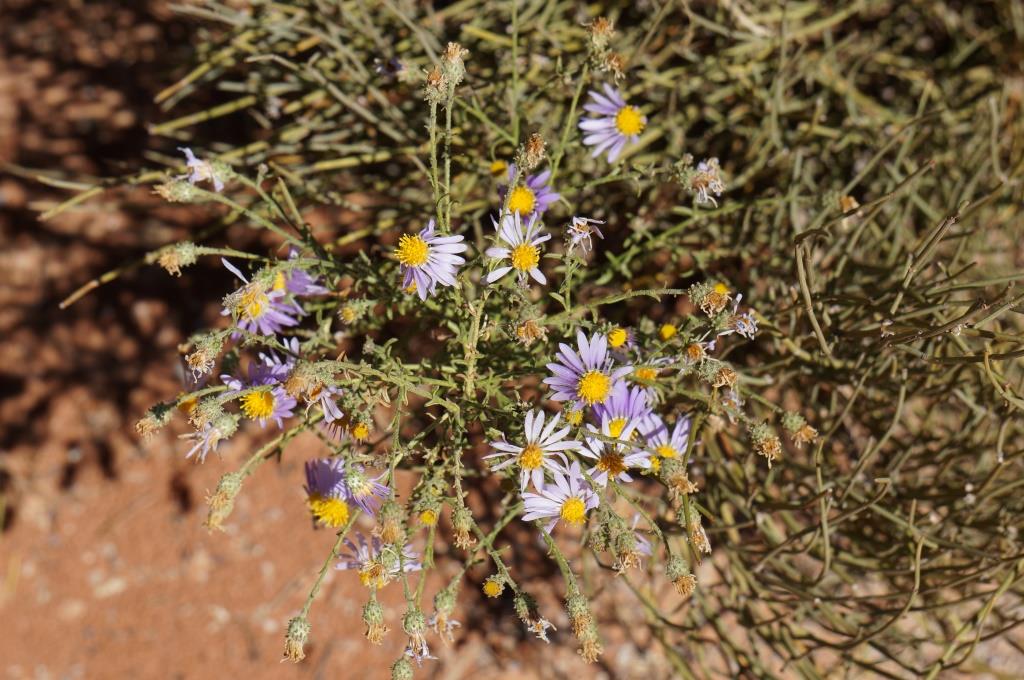
And just to prove that looks can be deceiving, this land is not barren. There is life here, as the lizard and wildflower show.

Lizard

Lizard

Desert Flower

Desert Flower

J

Posted in Hiking, National Park | Tagged | 1 Comment

Devil’s Garden Hike

Arches National Park

Friday, October 3, 2014

We got a later than usual start because we had to go to the Moab Post Office to pick up some packages we had drop shipped there (more on that at the bottom of this post).

The Devil’s Garden Trailhead is at the end of the road, 18 miles from the park entrance. I loved the drive to it, but because I was driving, I could only peek for a second or two. Still, the scenery was spectacular.

The parking lot was packed and I thought we might not find a space. But we did. Fortunately, not too many of the folks up there hiked as far as we did but enough did to  eliminate any chance of solitude.

While we could have hiked the entire 7.2 mile trail, we opted for a “less strenuous” 5-6 miler. If you were hiking in the sun, you roasted even though the air temperature was in the mid- to upper-60s. Shade, when it could be had, was precious. The hike itself wasn’t bad, but we had to stop often to cool off and breathe.

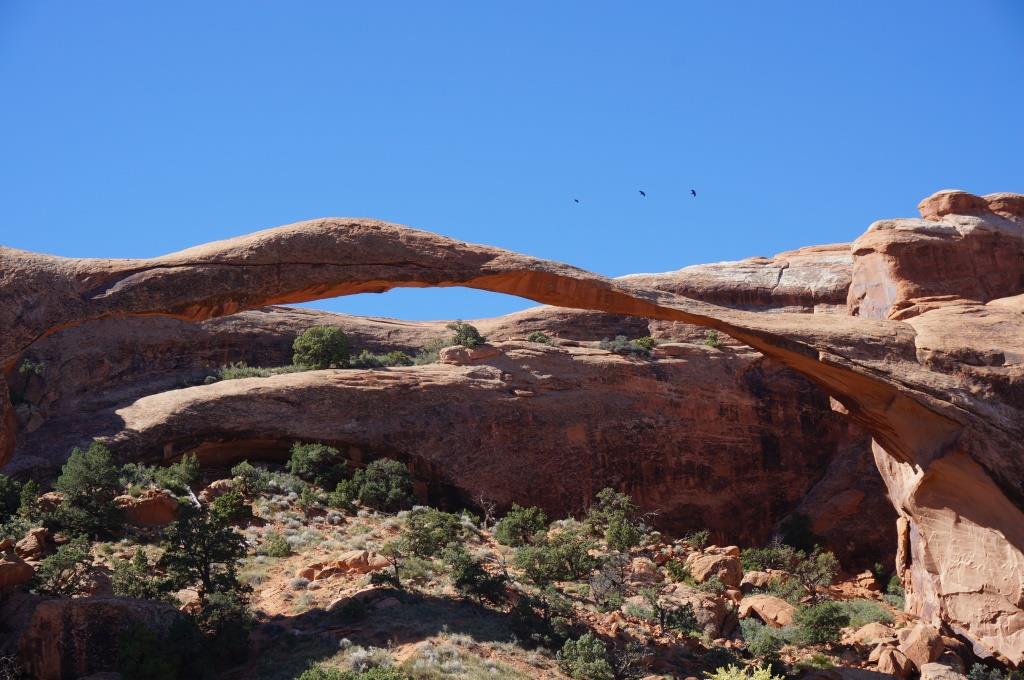
Our hike took us to six arches, the first being Landscape Arch, about a mile up the trail. Less intrepid hikers might stop there, but of course we didn’t. That’s us, the Intrepid Duo.

Landscape Arch

Landscape Arch

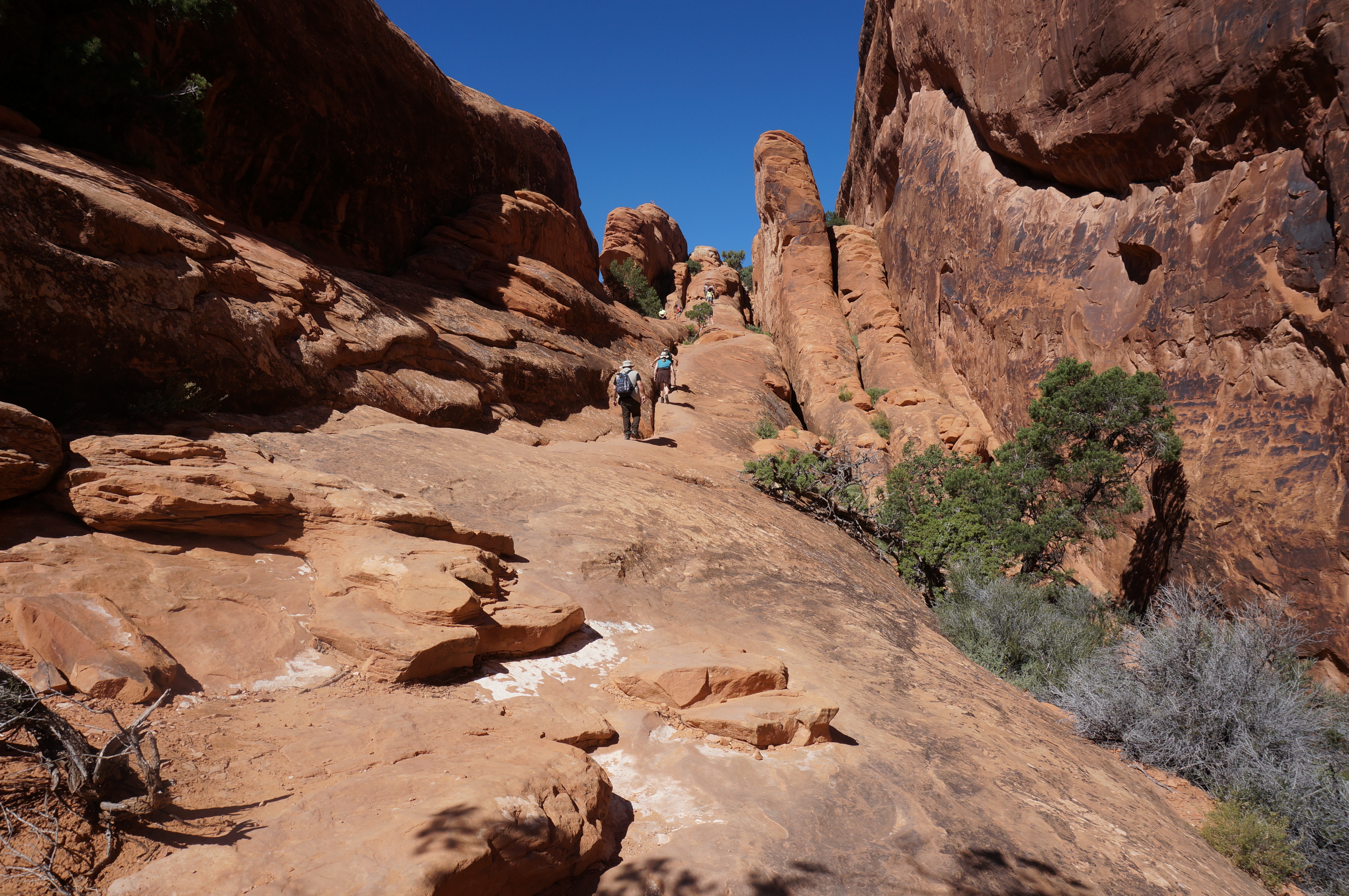
The hike to the next arch, Navajo Arch, was fun but challenging. We had to climb up a solid rock (slickrock I think it’s called) slope for a couple of hundred yards.

Hiking path up rock slope

Hiking path up rock slope

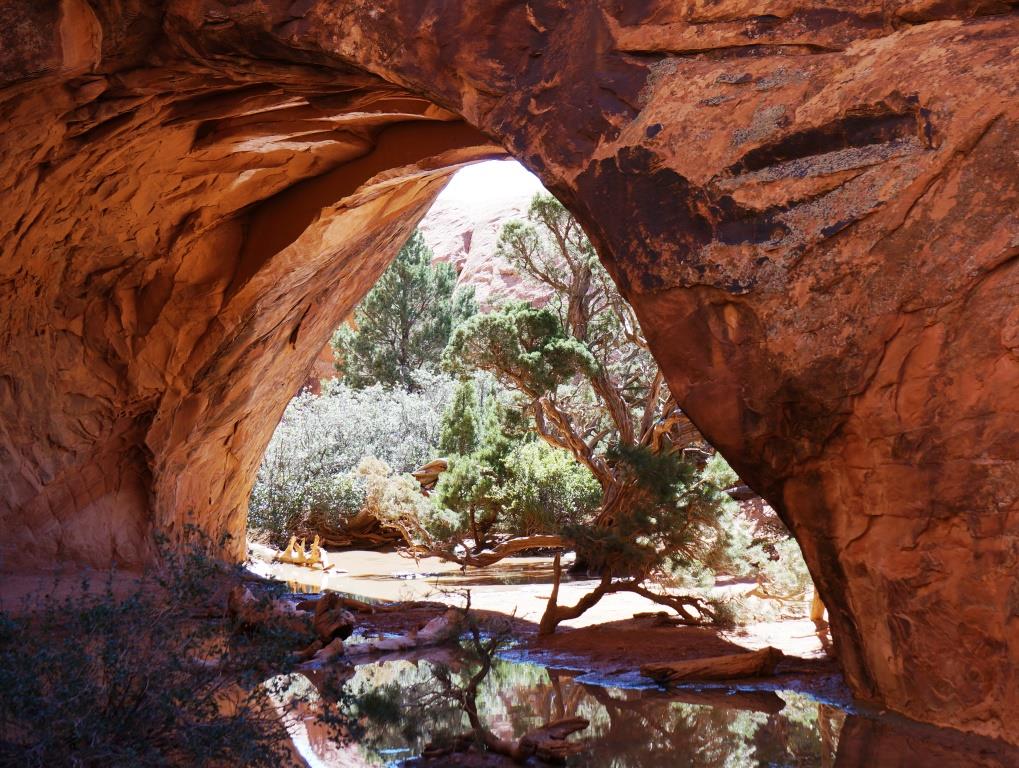
We had to veer off the main trail to get to Navajo Arch. This arch opens into a tiny cave-like canyon. The top is open to the sky but you are walled in. This shot was taken from inside this little canyon.

Navajo Arch

Navajo Arch

We then had to loop around to get to Partition Arch, but the effort was worth it. The view through the arch took our breath away. This was, hands down, our favorite arch.

Partition Arch

Partition Arch

We took the opportunity to sit, rest, and have a snack. What better place than here, where we had a window seat looking out onto the world.

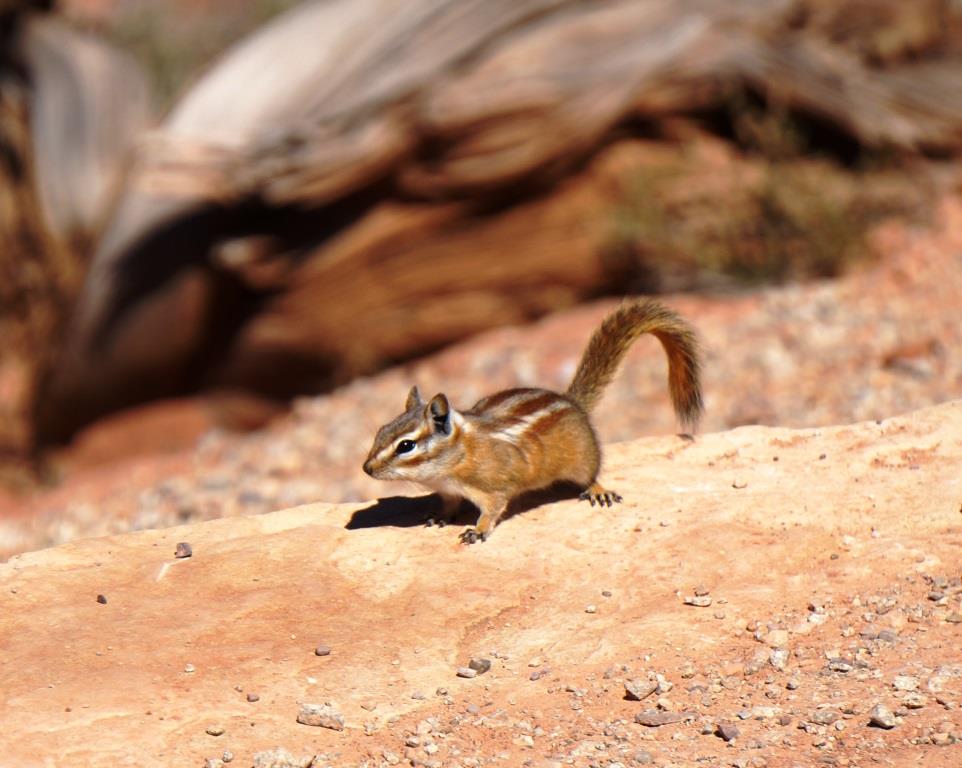
We also had a guest, a chipmunk that dashed around looking for a way to get near us. As cute as it was, we didn’t feed it. That didn’t stop him from trying to help himself. We caught him sneaking around behind us to try to snag food out of our pack but we were quicker than he was. He was moving on to the next hikers as we headed off.

Chipmunk

Chipmunk

We finally got back on our feet and hiked to the end of our trail at Double O Arch.

Double O Arch

Double O Arch

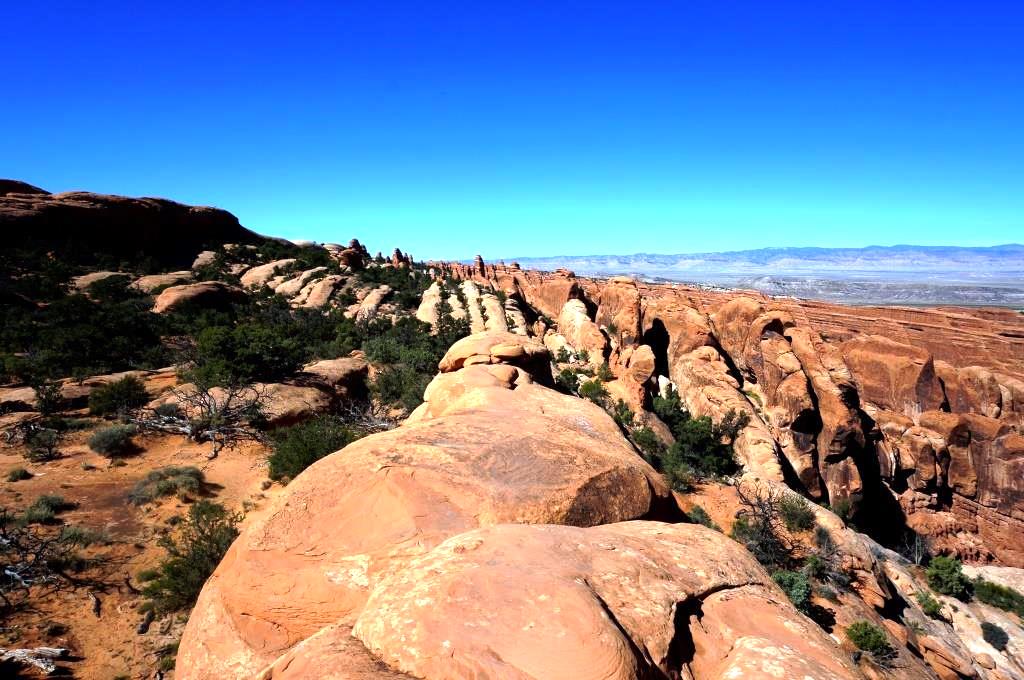
We had the option of hiking a half mile out and back trail to the dark angel but we decided to skip that AND to skip the rest of the primitive trail that looped out around through Fin Canyon. Speaking of Fin Canyon, we had a nice view of it from high up along the trail. In fact, the trail traverses one of the fins… drop off on the left, drop off on the right, and gorgeous views all the way around.

Fin Canyons

Fin Canyon – the fin in the foreground IS the hiking trail

Along most of the way, we could see the La Sal Mountains looming in the distance. Storms that passed through the area several days ago painted the peaks white.

La Sal Mountains

La Sal Mountains

About a quarter mile from the trailhead, we detoured to see two more arches, the aptly named Pine Tree Arch,

Pine Tree Arch

Pine Tree Arch

and Tunnel Arch.

Tunnel Arch

Tunnel Arch

By the time we got back to the car, we were pretty much done in.

But on the way back to the our campground, we stopped so I could peek at Sand Arch. The arch is very popular with families with young kids – it’s shaded, cool, and fun to play in. I scooped up a handful of sand which was red, soft, damp, and cool to the touch. I could picture our granddaughter Chloe and I rolling around in the sand for hours.

Sand Arch

Sand Arch

J & H

Note on the post office stop – The combination of Amazon Prime free two day shipping and general delivery at most post offices worked perfectly for us. We got all the goodies on our shopping wish list and restocked the cat food that they don’t seem to carry around here. We plan to start ordering some of our basic human food supplies this way to avoid the multi-store, multi-town hunt we occasionally do. – H

Posted in Hiking, National Park | Tagged | Leave a comment

Arches National Park

Impressions

A human lifespan is a mere tick on the geological clock.

While watching the movie, A Window in Time, about Arches NP, something it said struck me. It said that, on a geological timescale, the arches are like water. They rise and fall, ebb and flow like swift flowing water in a stream.

Have you ever watched a swift flowing stream where eddies, whitecaps, and waves are constantly moving and shifting? Take a snapshot to capture that motion and you have an idea of what the arches are. Ephemeral.

These insights made me think. It was reinforced when I gazed through Partition Arch. You can sense the enormity of our world and our own insignificance. Then think about the enormity of our galaxy and you get a sense of Earth’s insignificance. Think about the enormity of the universe and you get a sense of our galaxy’s insignificance.

But I don’t find that depressing. In fact, I find that awe inspiring. Nature is amazing and being able to see so much of it, in all its grandeur, is humbling.

Visitor Center

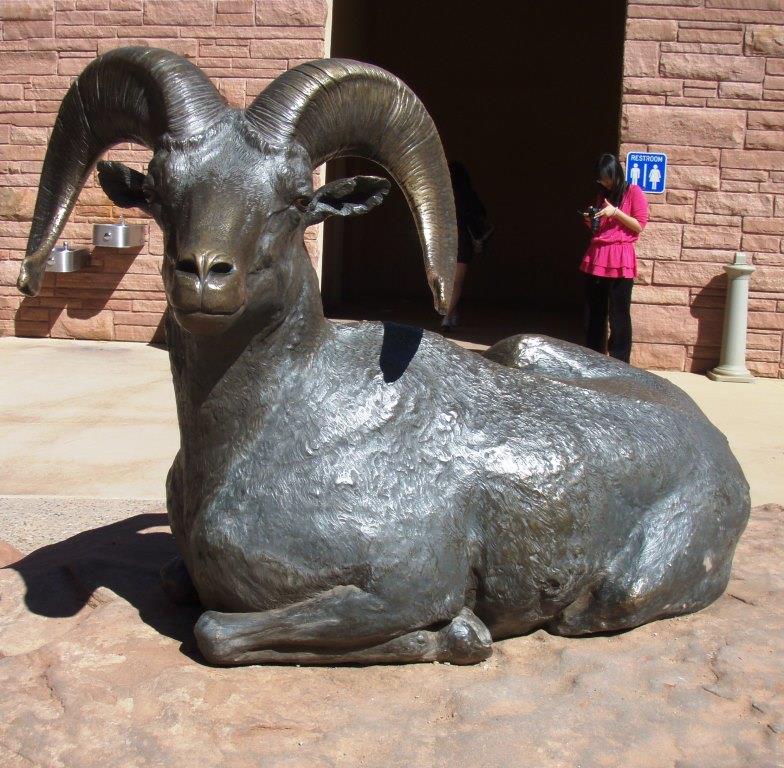
The entrance to the park is about 5 miles north of Moab, UT off Route 191. Just outside the entrance, they have several sculptures of animals native to the area. This is the only bighorn we saw while we were there but we think he is quite handsome.
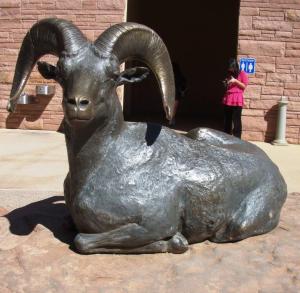
Bighorn sheep sculpture

Sculpture of desert bighorn sheep at visitor center

The Visitor Center is small but its exhibits do a good job of explaining how the arches formed, beginning 310 million years ago. Arches was part of a sea that filled and evaporated 29 times, depositing a massive quantity of salt.  Over time, the salt was pushed into a dome two miles high, 3 miles wide and 70 miles long. Again, time passes and the salt dome is buried by 5000 feet of sediment that eventually turns into rock. Subsequent uplifts caused the rock layer to crack into fin-like structures. Wind, rain, and ice sculpted the fins and created the arches we see today.

The movie, A Window in Time, was excellent. It had a definite impact on me.

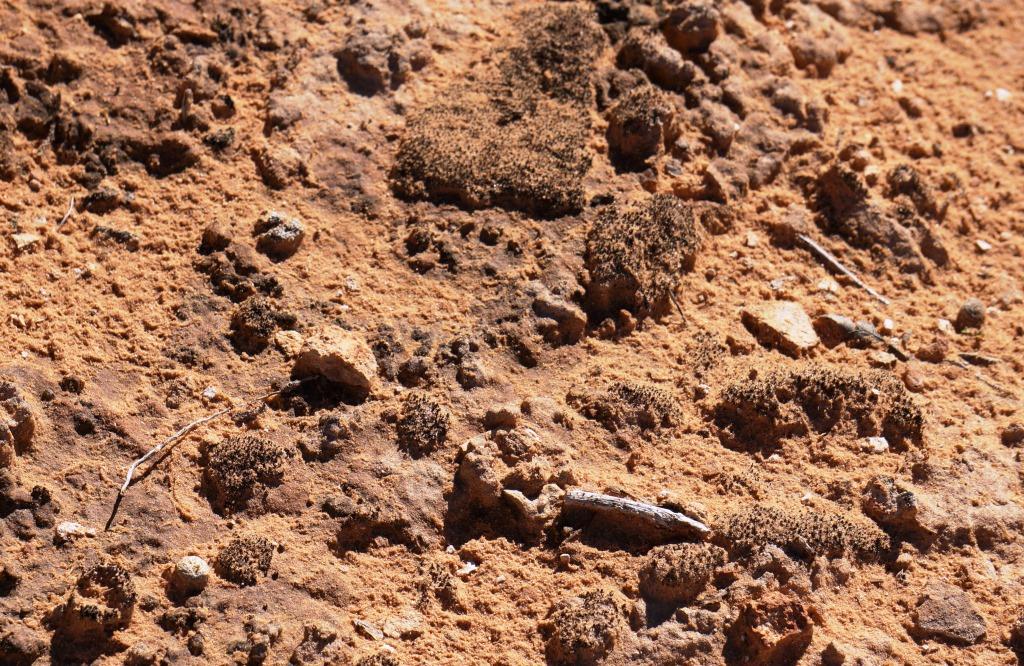
The soil is ALIVE! Many spots along the trail have black crusty patches on the soil. These are cryptobiotic crusts which are combinations of bacteria, algae, fungi, mosses, and lichen. This plant community “glues” the sand together, absorbs moisture, and produces nutrients to support other plant life. Without it, Junipers, Pinon pines, prickly pear, Mormon tea, and other plants cannot grow and multiply. If you step on it, even once, you damage it and it can take years to regrow.

Pet Peeve: There were plenty of signs explaining why you should stay on the trail. Unfortunately, there are plenty of humorons who don’t.We saw thousands of areas that were walked on and crushed.
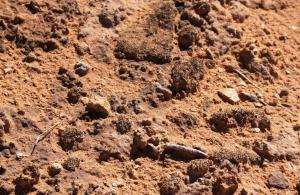
Crust

Crust

Campgrounds

Arches is very popular this time of year – early October.

Devil’s Garden Campground has 50 sites and is 18 miles from the park entrance. The campground has no hookups, fresh water fill-up station, or dump station. The visitor guide said to expect it to be full from March through October.

As expected, it was. So we ended up staying at the Riverside Oasis Campground which was about 2 miles from the entrance to Arches National Park. While the campground was right next to route 191 and the sites were close together, they were mostly shaded. Not what I expected to find in this part of the country. We stayed there Thursday, Friday and Saturday then, figuring we had a good shot at one of the public campgrounds, left Sunday morning.

We checked out the Goose Island Campground, part of a string of BLM campgrounds along route 128 which follows the Colorado River. After waiting for about an hour for someone to leave, everyone who already had a site had extended for at least one day. What we learned is that most people only book one night at a time, hoping someone with a better site will leave the next day and they can take it. Live and learn.

Next, we checked out the Sand Flats Recreation Area campgrounds. The park has 120 campsites but only two loops support RVs (A and E). We found one site that would work, but the entire area was very dusty and virtually treeless. We decided to cross that one off our list.

Sooooo, we returned to the Riverside Oasis Campground for two more nights.

What we found out later is that there was a huge mountain bike rally in Moab the weekend we were there. We didn’t know about it but that explained why the campgrounds were so full.

J

Food

Since we were in the area for so long and SO close to the quaint downtown Moab, we had to check out a few restaurants. Our first was the Moab Brewery. Very good food, good service and lots of neat beer to choose from. The only downside is if you are a sampler. Utah has a law that restricts service to no more than two drinks served at a time so no sample “flights” of beer. You can get two little samples, then order two more, then order two more. It works but the wait staff must hate it. We enjoyed their really good onion rings as an appetizer then moved on to steak for Holly and a sampler for John that had sausage, ribs and brisket. All very good. The onion rings were to help us stall until their seasoned potatoes were available (maybe at 5:00) and they were worth the wait. Our next venture into town took us to the Moab Diner. It is the classic diner style inside with vinyl booths but they have an ice cream counter at the front so you can get awesome milkshakes and desserts after you eat (or just walk in and get the goodies without the healthy meal first). We enjoyed both of our meals and took a ton home to eat another day. Holly had a chicken burrito with green chili sauce (huge and yummy and crammed full of chicken) and John enjoyed their pork chop dinner special. His was good but not great. There was no room for dessert but we weren’t leaving without a thick, rich, chocolate milkshake to go… it didn’t make it back to camp.

H

Posted in Campgrounds, National Park, Parks | Tagged , , | Leave a comment

Anasazi Heritage Center, Dolores, CO

September 29, 2014

The Anasazi Heritage Center is one of those things we never heard of until we drove past a sign for it. We looked it up on the internet and said, “We want to go there!” Since it is less than 20 miles from Mesa Verde, we put it on the list.

It appears that the center came about due to a large public works project, the McPhee Reservoir. Prior to damming the Dolores River and flooding the valley, teams of archeologists were brought in to catalog and save all that they could of the Ansazi ruins and sites in the valley. Much of what they found is in this Heritage Center.

Inside a pit house

Inside a pithouse

They have excellent exhibits inside which include an awesome reproduction of a pit house, trade items and routes, ancient Puebloan culture, hands on weaving and grinding of corn (NOT easy), computer archives of just about everything, and a set of microscopes so you can see different points, blades, seeds, cordage, etc.

Test Trench Explanation

Test Trench Explanation

Test Trench

Test Trench

The  science of archeology and the dating of the artifacts and the sites is also explained very well. We were so busy devouring all the information and examining all the artifacts that we took very few pictures so those shown here are not a good representation of this museum at all. Their website may help round this out and is found at http://www.blm.gov/co/st/en/fo/ahc.html

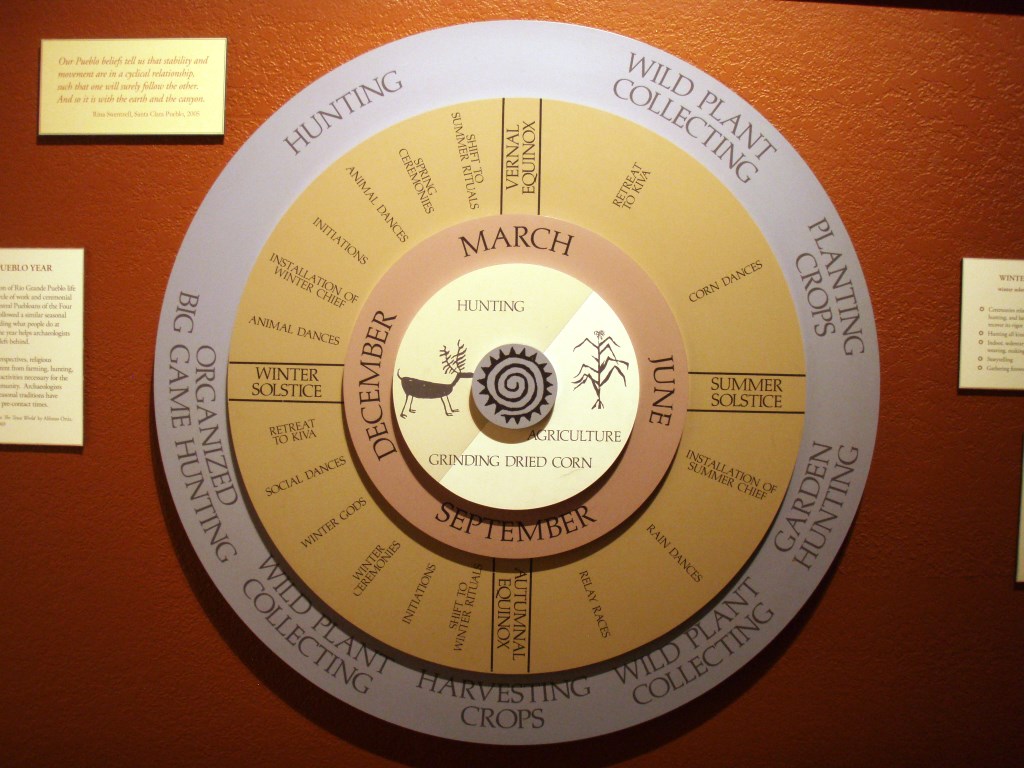
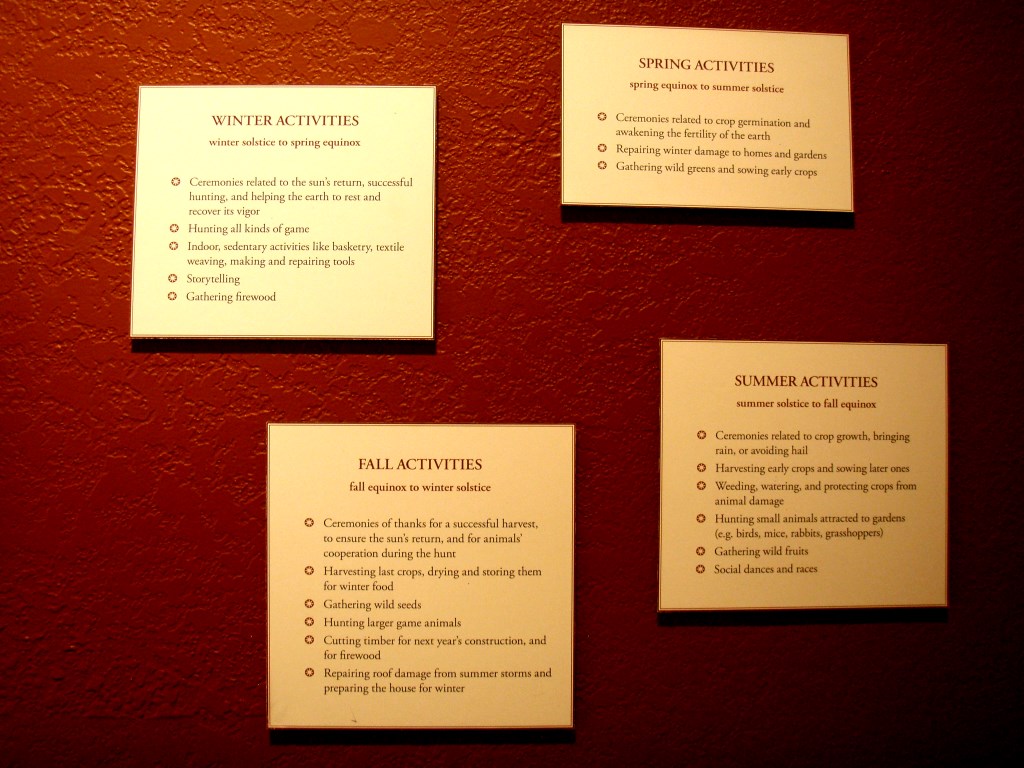
Puebloan Seasons

Puebloan Seasons

Puebloan activities by season

Puebloan activities by season

One corner of the main exhibit hall steps you through the different development phases of the Ancient Puebloans (Anasazi) with graphics depicting their homes and lifestyles, artifacts from that period, and explanations of the differences in the phases. This helps one understand when the archeologists refer to the Basketweaver period, Pueblo I, Pueblo II, etc.

Their special exhibit was on Mountain Lions and we found that fascinating as well. We learned that if you can’t scare them off and they do attack, you should fight back… pretty much the same rules as for a bear. Don’t run, don’t look them in the eye, don’t scream like a girl… the usual. They are gorgeous animals and awesome predators. We’d love to see one in the wild… from a safe distance.

Sand Canyon Pueblo - artist rendering

Sand Canyon Pueblo – artist rendering

By the time we were done inside it was raining again and we decide to go to the car for a snack before heading to the Sand Canyon Pueblo in the Canyons of the Ancients National Monument. On the way to the car it started hailing. The ice balls were small but there were a LOT of them and they hurt the scalp when they hit. We decided with the additional rain (and hail) that we did not want to wander around in gulleys and canyons on dirt roads in the Canyons of the Ancients. A quick change in plans took us into Dolores to sit all nice and warm and dry at the River Front Cafe where we watched the Dolores River roil and rage past the windows while we ate very good calzones and burgers and John sipped some tasty local brew.

For any foodies out there, the Dolores Brewery was highly recommended to us but is closed on Mondays so we went with the River Front Cafe which is the other restaurant recommended to us. We were not disappointed.

H

Posted in Museums | Tagged | Leave a comment

Hovenweep National Monument, UT

Sunday, September 28, 2014

There were heavy thunderstorms last night with rain and fog continuing off and on this morning. The lightning would crack and rock the world as we remembered reading that lightning could strike the mesa top over 100 times a day in the summer… hmmm, that would explain the miles of burnt forest we drove through. Sleep was definitely intermittent.

We broke camp and headed out and as we drove the five miles down the mountain we could see the rocks that had fallen on the road during the night, possibly loosened by the torrential rain. Some were pretty good size and we found ourselves peering up into the fog as though we could see if more rocks were ready to rain down on us… as if we could dodge them if they did.

Our plan was to stay a few nights in Cortez to visit the “four corners” marker as well as spend a full day at the Anasazi Heritage Center up in Dolores. The weather has been beautiful so we were surprised to find that the campgrounds around Dolores closed by this weekend so we had to go a little farther afield. It worked out since there were a few other spots we were interested in that we could hit from Cortez.

We stayed at The Sundance RV Park in Cortez and it is pretty nice. They have some good size trees giving shade to most spots and our site is fairly level gravel and wide enough for the coach and the car to park side by side with space left over. It is a small, clean, quiet campground with stores, restaurants and parks within walking distance.

Once we checked in we chatted with the friendly camp host and found out that the “four corners” marker is part of a Navajo park and it would cost us $5.00 each to get in so we could take our pictures on the marker. If we wanted to hike while we were there, we would have to pay more for a “hiking permit”. We decided to skip that and put our money elsewhere, like food.

We had a nice lunch at Tequilas Restaurant in Cortez with excellent food and service then headed to the Anasazi ruins at Hovenweep. It was about an hour and a half drive through a beautiful canyon that is part of the Canyons of the Ancients National Monument.

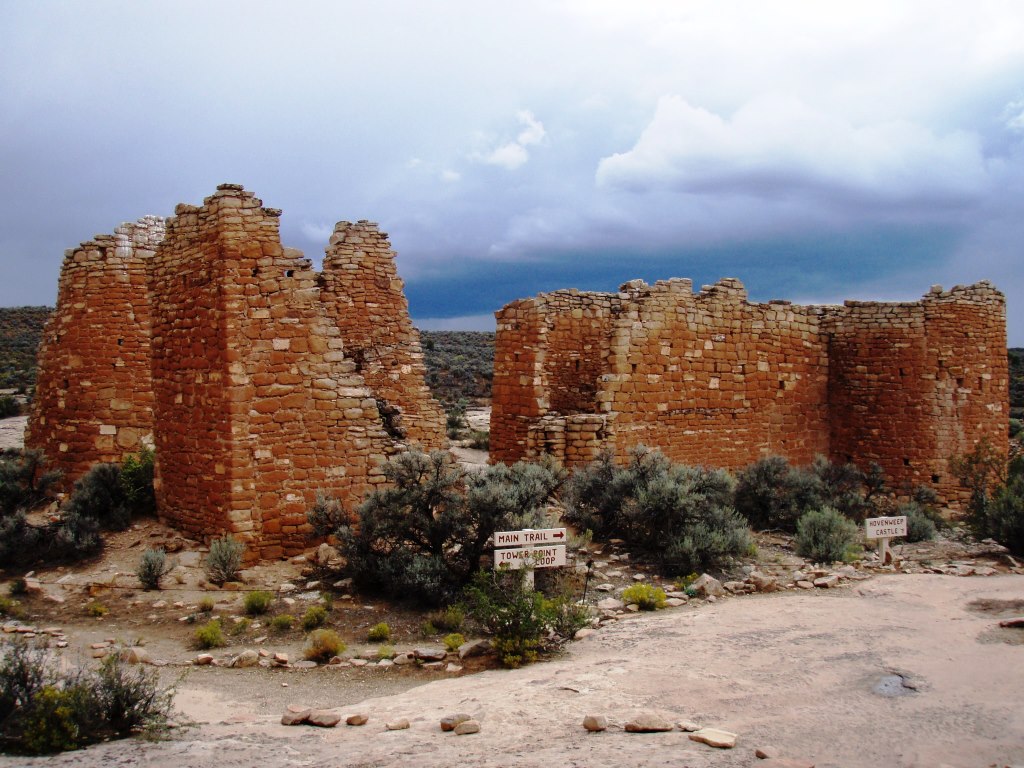
Hovenweep Castle

Hovenweep Castle

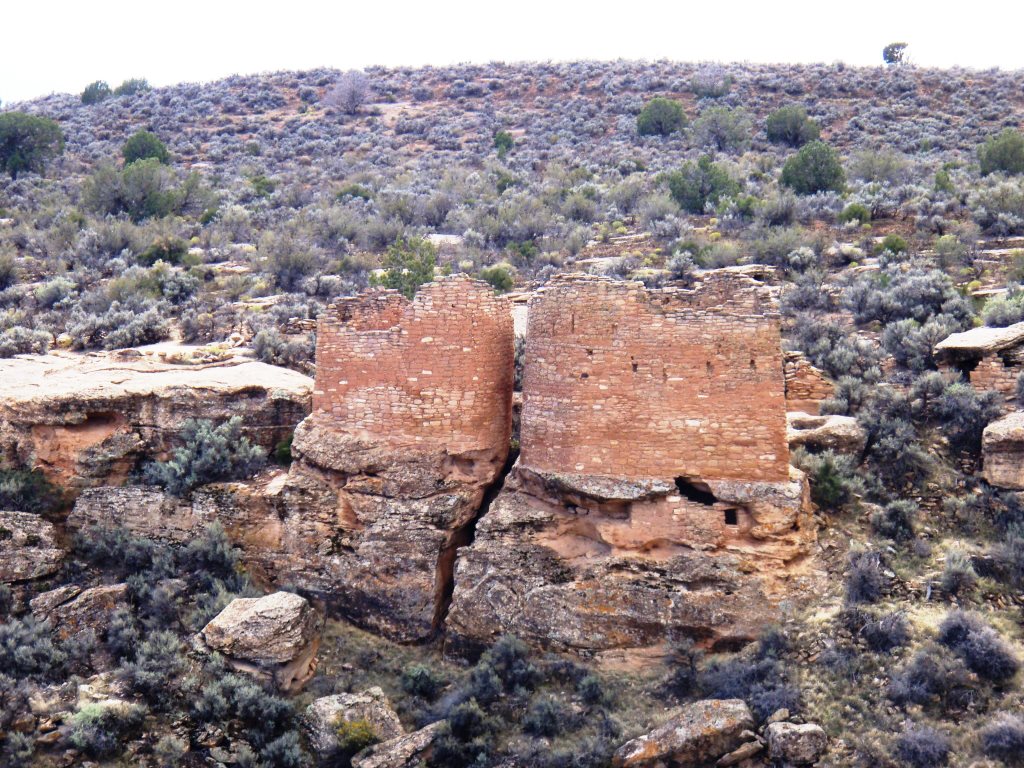
Hovenweep National Monument includes 5 or 6 separate Anasazi dwelling groups around the great sage plain but due to the inclement weather we only went to the visitor center and the Square Tower Group which is on an easy two mile trail right behind the visitor center.

Twin Towers

Twin Towers

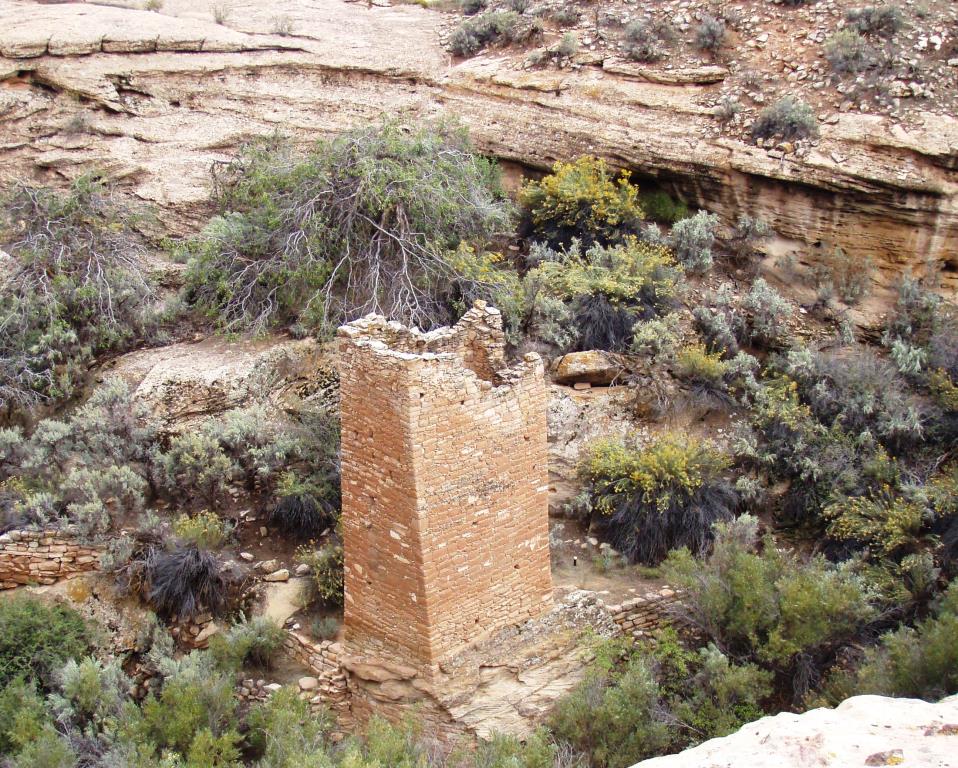
The dwellings are out in the open on the edges and down along the walls of the shallow canyon. These are 800 year old ruins and some still stand two stories tall with most of the original masonry and chinking intact.

Hovenweep Square Tower near the spring in the bottom of the canyon

Hovenweep Square Tower near the spring in the bottom of the canyon

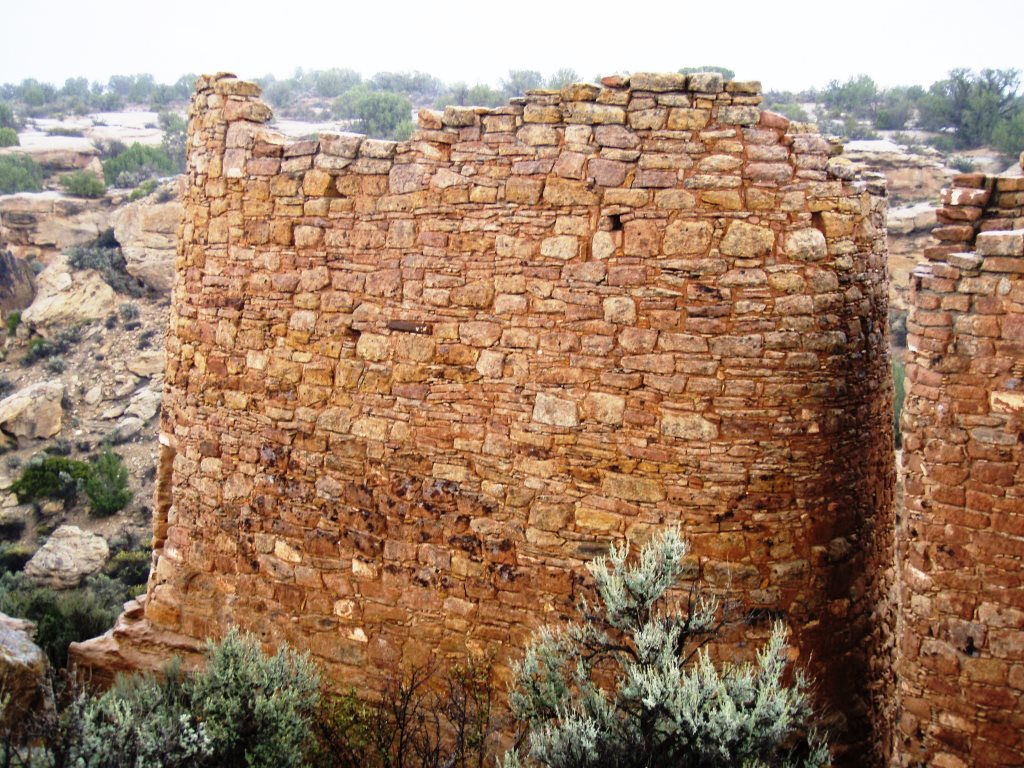
The masonry work is awesome, especially when you consider the blocks were “cut” by dinking away at a chunk of sandstone with a harder rock until the block was shaped… then dinking hundreds more until you had enough to build multi-room, multi-storied buildings.

Twin Tower Stonework

Twin Tower Stonework

One of the buildings was built on, around and under a huge boulder. The remains of a stone tower ring are visible on top and some of the walls under and around the boulder are still standing.

Eroded Boulder House

Eroded Boulder House

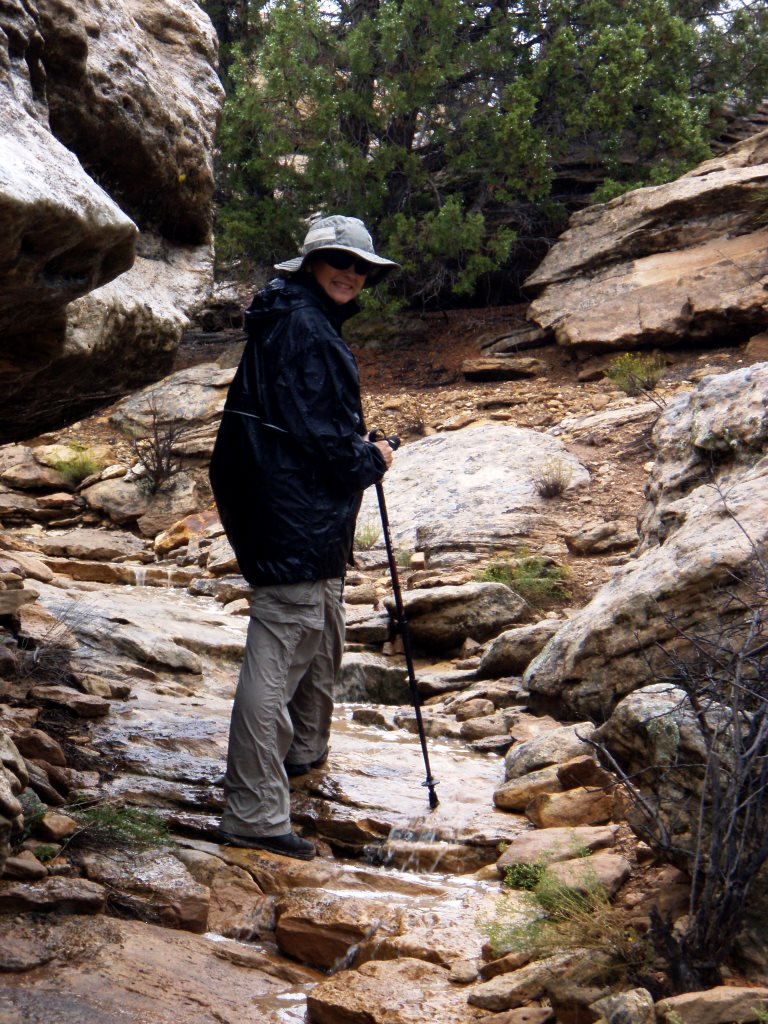
As we hiked the trail we kept a close eye on the black skies to the north. The wind shifted and the rain rolled in and pelted us as we circled the structures along the canyon. We had rain jackets on but our hats and pants quickly soaked through. Even that couldn’t didn’t dampen our enthusiasm for such beautiful handiwork from an ancient people. We just switched to the waterproof camera for the rest of our shots. The trail back to the visitor center led down and back up the narrow canyon and we had to take extreme care with the wet and muddy rocks. We kept stopping for more shots of the ruins in the filtered sunlight. Once we finally started the hike back out of the canyon, we smiled as we saw that the trail had become a pretty little waterfall as the heavy rain quickly drained off the rocks overhead.

Waterfall rolling down the trail

Waterfall rolling down the trail

The sun had come out as we topped the canyon and as we prepared to leave the visitor center we spotted a beautiful rainbow.We debated whether we should run back down the trail to get the ruins with the rainbow overhead but decided rainbows are fickle and it was bound to disappear just as we reached our chosen photo spot so we took the shot from there.

Rainbow

Rainbow at Hovenweep

Being ever curious, we did a little drive about and checked out their campground and it was really nice. It is managed by BLM and they charge $10/night or $5/night with the federal pass. They had water and a restroom available, but no dump stations or hook ups. A number of sites had an “RV Only” sign on them and could handle at least a 30 foot camper. Several sites had excellent views of the mountains and canyons and several hiking trails took you straight from the campground to the ruin sites.

HW campsite

Hovenweep Campground

After a wet but enjoyable day, we finally pointed the car toward home… but that did not go as planned. We planned to make a big loop – out through the canyon then up to Hovenweep, back out onto Rte 10 and up and around to the highway for an easy return to Cortez.

The camp host had drawn the Utah roads onto the Colorado map but missed one turn. The signs for Hovenweep got us there but we did not realize that Hovenweep was on Rte 10. We thought we had turned off of Rte 10 onto an access road (road signs would be nice but we didn’t see any during hours of driving).

We retraced our steps to what we thought was Rte 10 and drove… and drove… and drove. Right when we thought we would be jumping onto the highway, we hit a “T” intersection where one direction was a semi-paved, semi-dirt road and the other was a well worn asphalt road. We knew we were not where we ought to be. We couldn’t get cell signal to check our navigation so we paused a few minutes to consider our options. It was at this point we remembered we had the not so trustworthy GPS with us (duh)… and discovered we were well into Utah and a good two hours from home. OOPS. Ah well, at least we had some adventures.

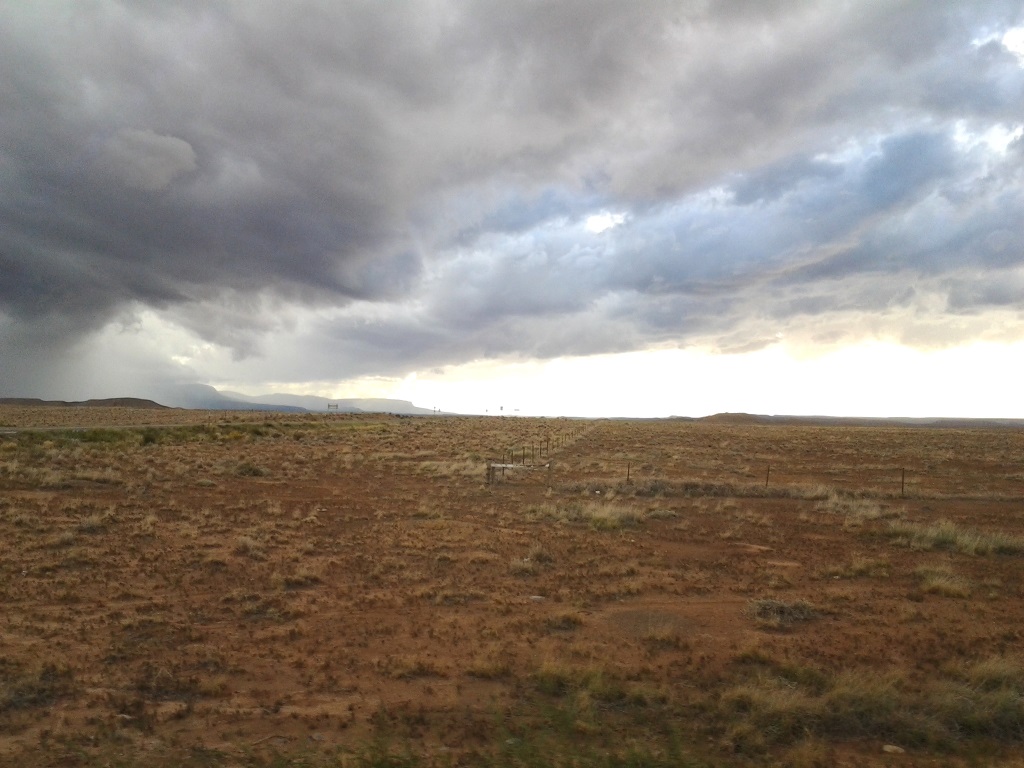
Storm clouds on our way home from Hovenweep

Storm clouds on our way home from Hovenweep

Due to the intense rains, the creeks along the road were raging torrents of muddy water and the run off from the high ground had washed mud and silt across the road in many places. John drove carefully and we only slid once in heavier mud where the road crossed the stream on a shallow bridge. As he slowed down to drive through the mud, I looked to my right and it appeared the muddy, rolling stream was ready to cross the road so we accelerated on out of there. Go Subaru! Much of the land we drove through after that was open range. We had to wait while the cows crossed the road, then farther along, we waited for the horses to do the same. We spotted a herd of sheep that were close to the road and stopped for a picture of them for our granddaughter. We were excited when we realized they were being watched over by a sheep herding dog. He trotted right over to check on his sheep and to check us out.

Sheepherder trying to move us into the flock

Sheepherder trying to move us into the flock

Apparently this particular sheep dog felt that our pausing made us part of his flock and when we started to move, he ran in front of the car and tried to herd us over with his sheep. After he blocked five or six of our attempts to drive forward he finally ran alongside and we could safely drive away with his barking ringing in our ears as he tried to catch up to us and bring us back to the flock.

After that we went back to driving for miles and miles through the great sage plain. It was amazing that you could drive along on what appeared to be flat lands without realizing how high up you were until the land just dropped away and the canyons and streams appeared hundreds of feet below you. One of the ironies of the day was that we wound up within 5 miles of “four corners” after all… and still skipped it.

H
Posted in Hiking, National Park, Parks | Tagged | 2 Comments