Zion National Park

October 23-27, 2014

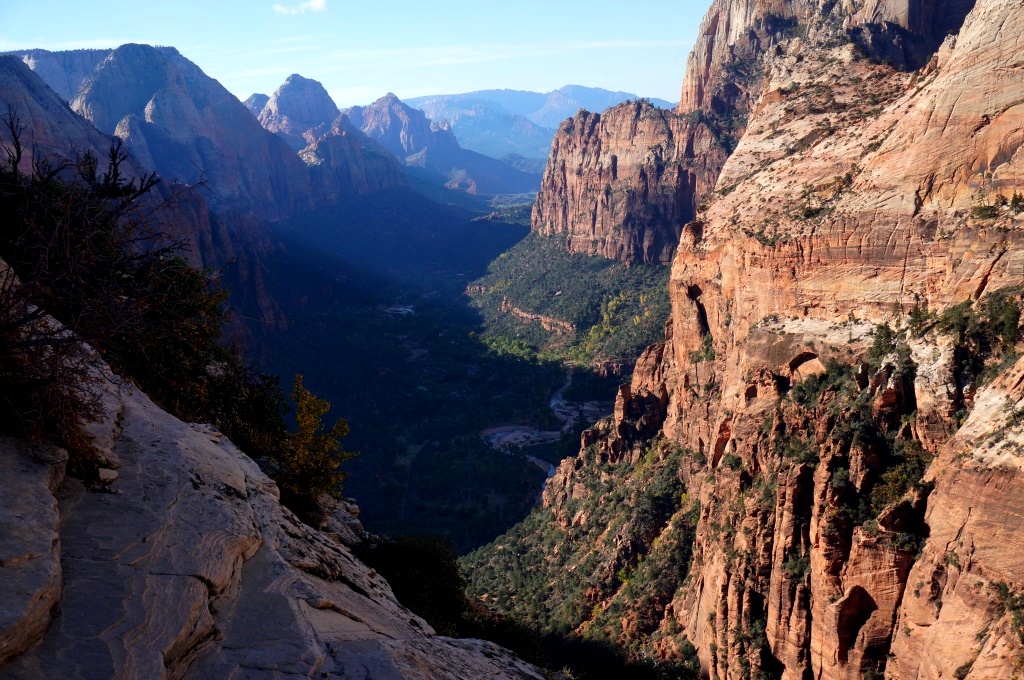
Zion Canyon from Angel's Landing Trail

Zion Canyon from Angel’s Landing Trail

Zion is impressive. The massive cliffs towering overhead are quite a sight to see. While Bryce Canyon was set on the clifftops with trails leading down into the canyon, Zion is on the canyon floor with trails leading up… way up… way, way up. It is a narrow canyon and the space along the bottom is very limited so they restrict the traffic going up the canyon past Hwy 9 during the main visitation season. They have free shuttles instead. This is a good thing. The shuttles are really nice and make it easy to get everywhere you want to go, even into town. They run frequently and stop at all shuttle stops going up and back down the canyon. There is a panel at the visitor center showing massive traffic jams from years back. Prior to the shuttle they had 5,000 buses, RVs and cars coming into the canyon every day where they then had to fight for the 450 available parking spaces. The roar of the engines bouncing back and forth across the canyon and the fumes trapped between the canyon walls must have been evil. We really liked the shuttle.

Zion Canyon View

Zion Canyon View

It is difficult to capture the immensity of Zion. Only so much fits in the camera view and when you do get a nice shot, there is little to show the scale. Since the canyon twists and turns, any photos capture only a small section of the canyon. Some of the cliffs rise almost 3,000 feet above the canyon floor. You can hike up there if you like… we chose not to.
3D Map at Visitor Center

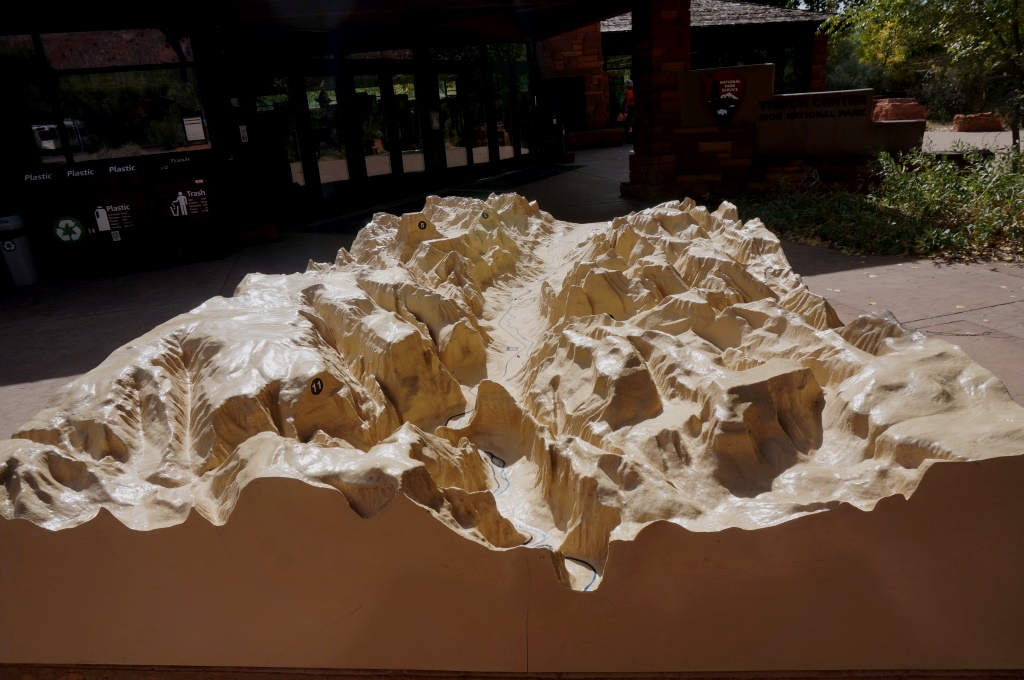
3D Map at Visitor Center

Visitor Center – there are basically three parts to the visitor center: the bookstore, Ranger help desk, and the back country desk. Most people will hit the Ranger help desk first to check on scheduled programs and hike recommendations. Those planning to do extended hikes into the wilderness areas need to hit the back country desk for permits. The visitor center is “green” with a Trombe wall for heating, natural daylighting, and very neat cooling towers where hot air blows across wet sponge type things, cools rapidly, then drops down and flows through the visitor center. Very nice. There are a couple of TV screens mounted on the walls showing short videos. You just push the button of your choice and settle back for the show. A large part of the visitor center is actually outside under sun screens. There are large interpretive panels under each screen so you can wander and learn about those topics that interest you. We, of course, read them all.

The 3D map outside the visitor center shows the contours of the canyon on either side of the Zion Canyon Scenic Drive (visitor center would be at the far end of the map). The park is massive but this small area is the piece that most people visit.  Note that shark fin type promontory sticking out into the canyon. That is Angel’s Landing and there will be a separate blog posting for that world renowned hike.

Human History Museum Display

Human History Museum Display

Human History Museum – this is a separate building that can be reached by car or shuttle. They have very good exhibits about the Native Americans, Mormon Settlers, the Park Service and the CCC and their activities here in the canyon. There is a theater with a movie that you can watch AND an old time projector behind glass and voice recording of J. L. Crawford. He grew up on a farm in the canyon, washed dishes at the lodge when it opened, worked here with the CCC and then became a Ranger at Zion. This gentleman put together the slides for the show and helped set up the museum. It’s always cool to hear the history in the voice of someone who lived it. Most people seem to miss this so look for it – find the antique projector in the glass case – the button to start the slide show will be on the display panel in front of you. There is a small gift shop here and a small art gallery.
Relief Map of the Narrows

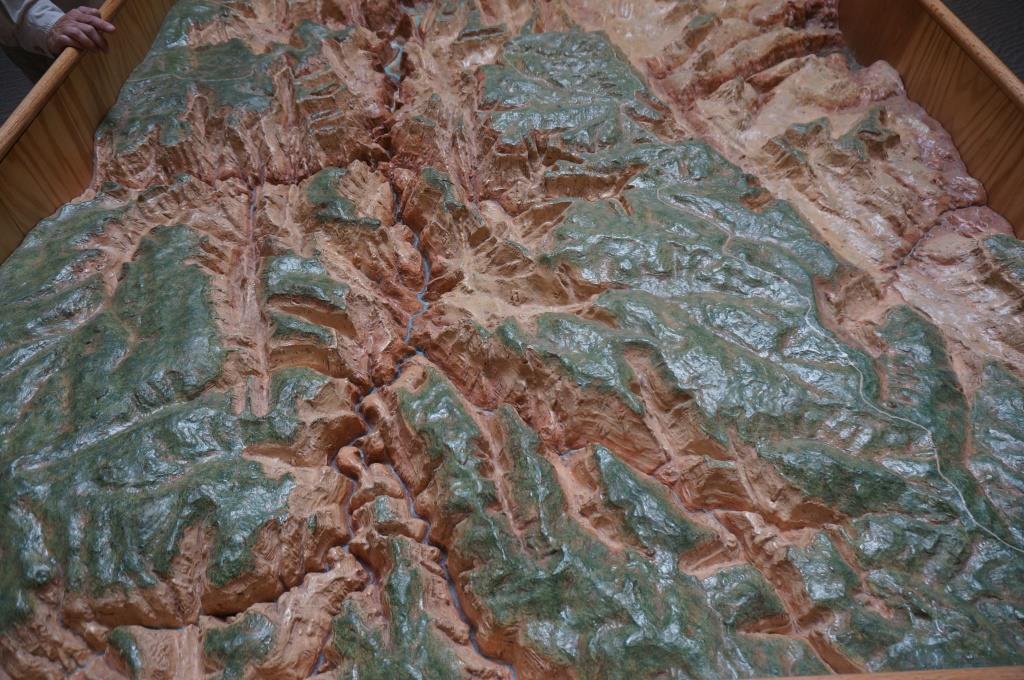
Relief Map of the Narrows

The relief map above is at the Human History Museum and the photo shows the portion called “The Narrows”. This is piece of the canyon at the end of the road. You get off the shuttle then walk a mile on a paved trail along the river until the pavement ends. The canyon is narrow, the cliffs tower high above you, there is room for only the Virgin River to slide by between the rugged cliffs… and here the hike begins. There will be a separate blog post about this world renowned hike.

Campground – we were lucky enough to get a reservation at the Watchman Campground with electric hook ups. It is in the mid- to upper-eighties during the day and we are running the fans to keep the house cool enough that we don’t kill the cat. It is a comfortable mid-40s to mid-50s at night. The campground is very nice with clean restrooms, water spigots, trash dumpsters and recycling bins placed so they are not far from any site. They have a dump station near the exit. The sites are large and somewhat level with enough vegetation to give you some screening between sites. Our site is partly shaded but we did see a few sites in full sun. Our site is along the river so it was an extra $2.00/night (it was the only site available when we reserved) BUT there is a dike type thing between us and the river so you can’t actually sit in your site and watch the water go by. You can hear the water but you have to walk up and over the dike to see the river. Just across the narrow river is a motel which is part of Springdale. Zion’s boundary is actually between us and the river. We had excellent Verizon and AT&T coverage. We checked out the South Campground which is first come/first served. It makes us think it is the old campground and they built the Watchman to accommodate RVs. Most of the sites are not as level and some would fit only a car or very small RV. There are some larger ones and we did see some motorhomes that were at least 35′ long in there. Both campgrounds are conveniently located near the visitor center and shuttle stops so once you’re here, you can leave your car.

Campsite in Watchman Campground

Campsite in Watchman Campground

Other – they have a Nature Center but it is only open mid-May through mid-August so we missed that. There are amphitheaters for evening programs but those were done for the season. The Zion Lodge has a restaurant (somewhat pricey, didn’t eat there so no review on the food) and a snack bar type place that serves fast food, beer, ice cream, etc. There is also a gift shop with some different items than what they sell at the visitor center so it is worth checking out. Bicycling is allowed on park roads and on the Pa’rus trail which runs 1.7 miles between the visitor center and Canyon Junction shuttle stop at Hwy 9 where the Zion Canyon Scenic Drive heads up the canyon with restricted access. Each shuttle is capable of carrying at least 2 bikes. Zion is also very popular for Rock Climbing as seen in the picture below… well, they can be seen if you zoom in enough to spot the two climbers just left and up of center in the photo. They are on the lighter section of cliff face below the jagged edge and shadow. They are UP there… and we only managed to fit half to two-thirds of the height of that cliff in the picture. We can only assume they intend to climb to the top. We saw climbers on the shuttle with massive bags full of ropes, carabiners and other gear. They must have a hundred pounds of stuff hanging on them when they start the climb. The ones we saw heading out had huge smiles and gazed at the cliffs like they’d reached paradise.
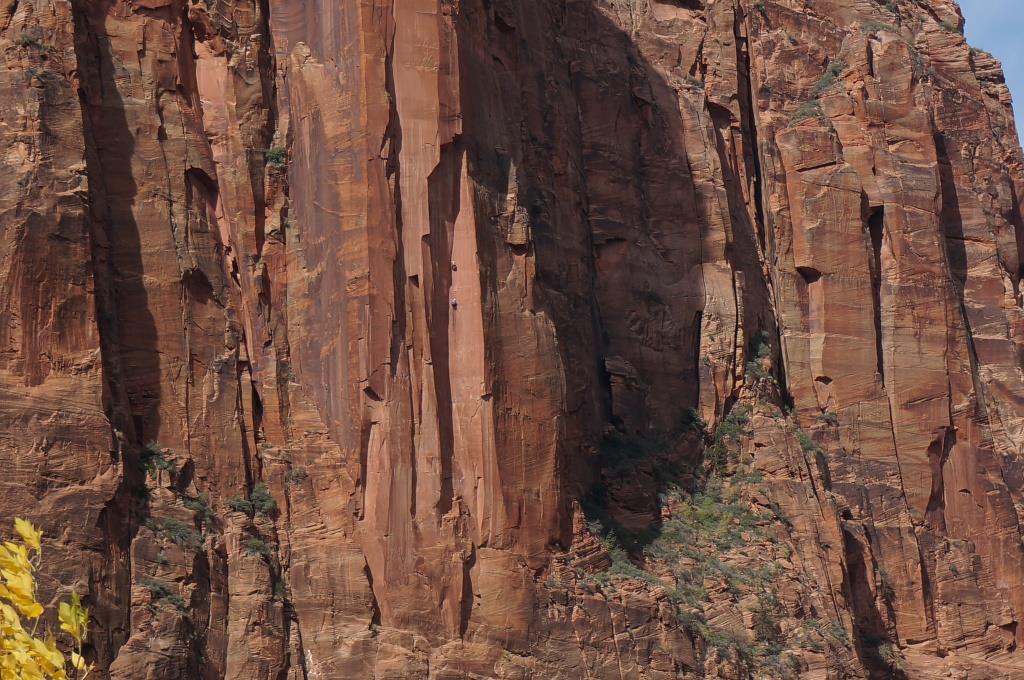
Rock Climbers

Rock Climbers

Restaurants – we skipped the main restaurant at Zion Lodge but we DID eat at Cafe Oscar’s in Springdale.  We had an excellent breakfast at reasonable prices with great service. Flyers in the window showed they sometimes have live music and they have beer and at least margaritas. The Pork Verde Breakfast Burrito was excellent and quite large. It comes with cube style seasoned home fries that are deep fried so they are light and crispy and very, very good. We had considered going back for dinner one night but we wore ourselves out hiking and never made it back to town.

Zion Shuttle/in canyon – The free shuttle acts as a tour bus while running up the canyon. There is a recording with a narrative of the natural and historic aspects of the canyon. If you’re usually the driver, you finally get to enjoy the beautiful views as they go by the large windows. They even have skylights on the roof so you can look up at the sandstone cliffs looming above you, and yes, you can look straight up and still see cliffs. The drivers occasionally stop and point out nearby wildlife or rock climbers.

Zion Shuttle/Springdale – there is very limited parking in the park itself so they have a free shuttle that runs back and forth through the town of Springdale and drops you at a walk-in entrance station to the park. This is right outside the visitor center and the in-canyon Zion Shuttle. You pay your admission fee and head for the visitor center. There are several parking lots in Springdale as well as restaurants, shops, hotels and outfitters.
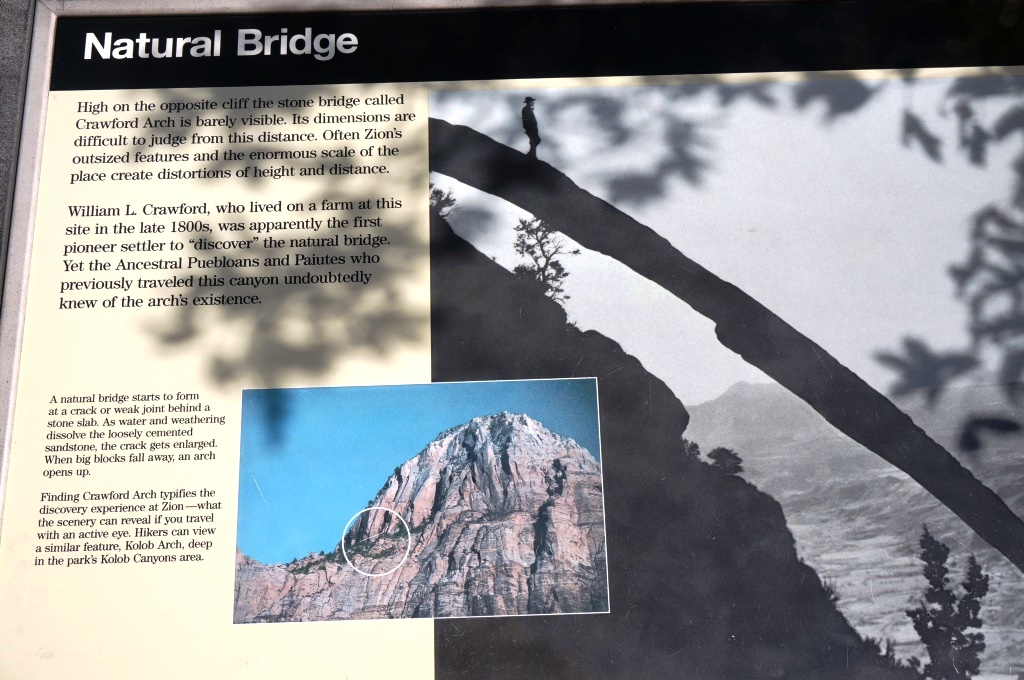
Natural Bridge Sign
Natural Bridge Sign

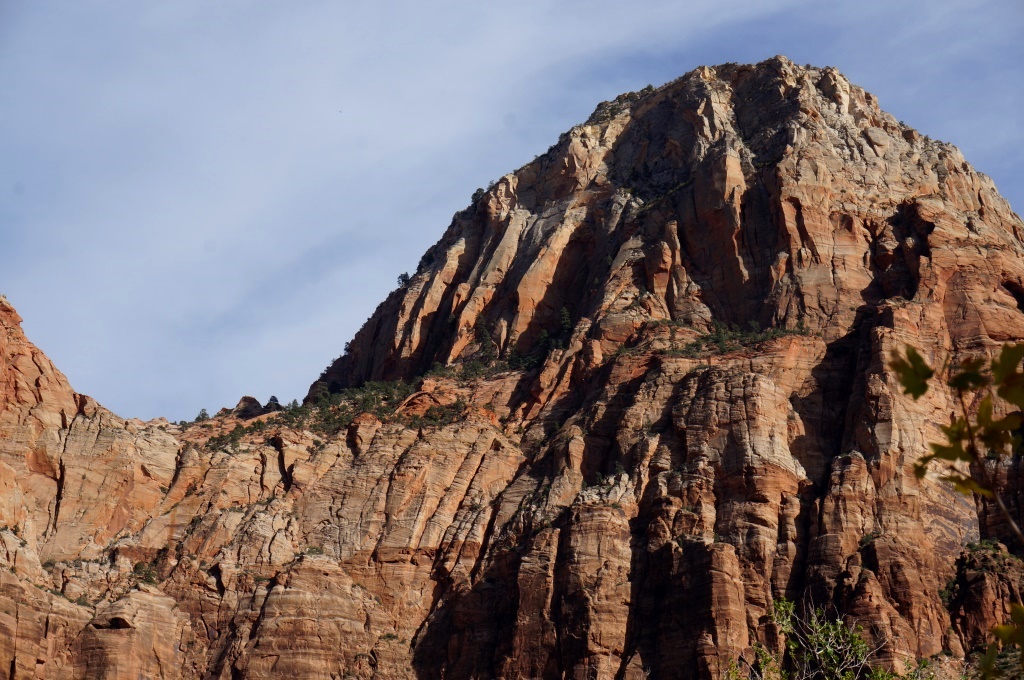
Natural Bridge on Cliff Wall

Natural Bridge on Cliff Wall

Perspective – In an attempt to demonstrate the size of these cliffs we took a shot of a historic photo of the Natural Bridge which can be viewed from the Human History Museum. Then we took a photo of the bridge itself on the canyon wall. Again, we couldn’t fit the entire cliff into the photo or you would never have seen the bridge on there, but by comparing the picture of the man on the bridge in the old photo and the actual bridge on the cliff wall, you can get an idea of just how big those rock walls are. And if you like rocks, Utah has them. We met a nice couple from the Netherlands, both Geologists, that are here to tour, hike, and read the history of the world in those rocks. Very cool.

So if you like rocks, and canyons, and some really different hikes, Zion is the place to be.

H

Posted in Campgrounds, Museums, Parks, Restaurants, Scenic Drives | Tagged , | Leave a comment

Fairyland Loop Trail (Bryce Canyon)

Bryce Canyon NP

Saturday, October 18, 2014

We started this hike early, about 8:00am. Early for me anyway. From the North Campground we caught the Rim Trail past the General Store to the Tower Bridge Trail. We followed that trail, which generally went down, to a short side trail leading to Tower Bridge, then back to the Tower Bridge Trail which turns into Fairlyland Loop Trail. At that point, the Fairyland Loop Trail becomes a 4 mile roller coaster with lots of steep ups and downs. This trail ends at Fairyland Point where it intersects with the Rim Trail. From there it’s a “mere” 2.5 miles back to the campground, with a well earned detour to the General Store for pizza, ice cream, and brownies.

This loop (Tower Bridge Trail, Fairyland Loop, and the Rim Trail) circumnavigated Boat Mesa. It does look sort of like a boat, doesn’t it? But I wouldn’t book passage on it if I were you. For one thing, the captain obviously can’t tell the difference between land and water.

Boat Mesa

Boat Mesa

It was very cool when we started but we were ready. Note that Holly’s wearing a rain jacket (used as an additional layer for warmth and as a wind break), turtle fur (I didn’t know turtles had fur) and gloves.

Here's Holly perky, energetic, and rarin' to go

Here’s Holly perky, energetic, and rarin’ to go

The trip to Tower Bridge was easy – mostly downhill – and we made it in good time.

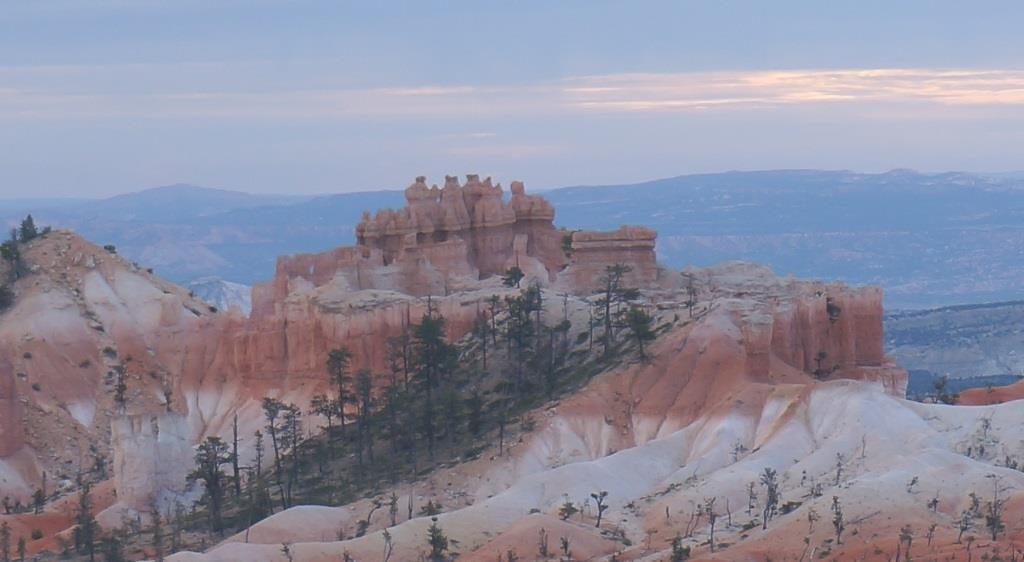
As usual, my head swiveled like a bobble-head doll as I tried to look at everything from every angle. I saw what looked like an abandoned castle, looking forlorn. Maybe it was once inhabited by the Legend People who were turned into Stone People by Coyote.

Castle

Castle

On the way to Tower Bridge we ran into another couple who were only going to be in the park for one day. Holly suggested that after they reached Tower Bridge they should backtrack to Sunrise Point and hike the Queen’s Garden Trail and the Wall Street half of the Navajo Loop. While the scenery along the Tower Bridge Trail and (as we discovered later) the Fairyland Loop Trail was very good, it couldn’t compare with Queen’s Garden, Navajo Loop or Peekaboo Loop Trails.

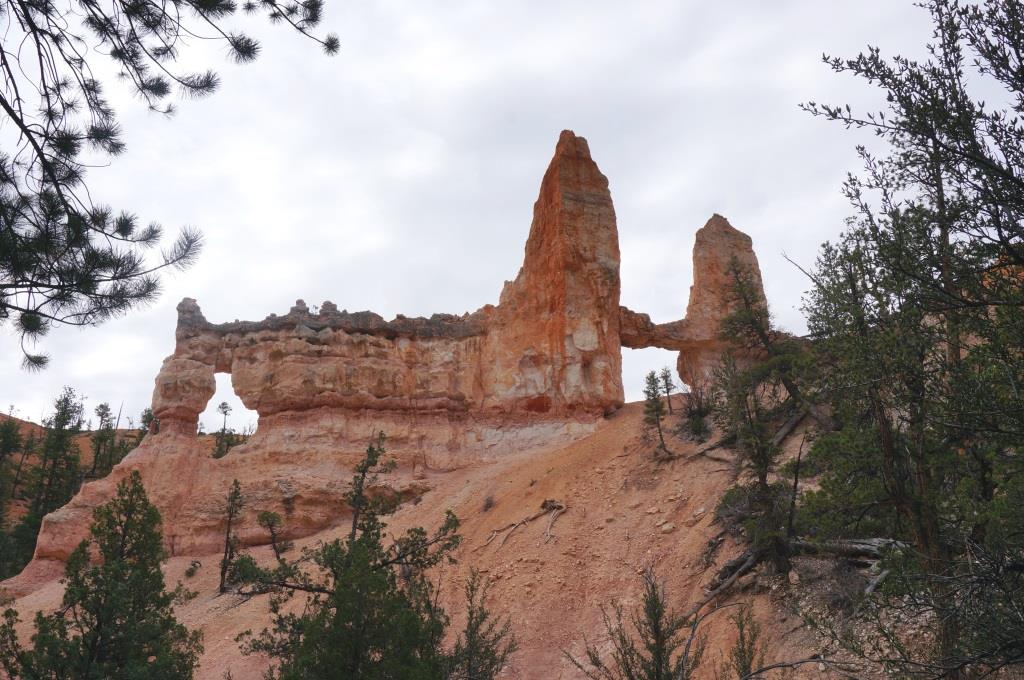
Tower Bridge looks like something you might see in London. Or maybe in Arizona – one of the London Bridges (there’s more than one) was bought by an American and moved to Lake Havasu City, AZ in 1971. I’m not making this up.

Tower Bridge

Tower Bridge

After marveling at the bridge, we backtracked to the main trail and began our roller coaster walk along the Fairyland Loop Trail. The ups and downs were tolerable until the sun started rising over the top of the canyon. Then shade became more scarce, the stops more frequent, and the sweat started pouring out of us.

While hiking in fits and starts, we saw a feature called the Sinking Ship. If you look closely it does look likea  ship lying hull down and sinking by the bow. I wonder if it was captained by the same guy who commanded Boat Mesa? I think he should find another line of work.

Sinking Ship

Sinking Ship

As the sun rose, it got even hotter, shade became even more scarce, and our pace slowed. We stopped in a wash shaded by some trees to rest, drink some water, and eat lunch. It was a well-deserved break.

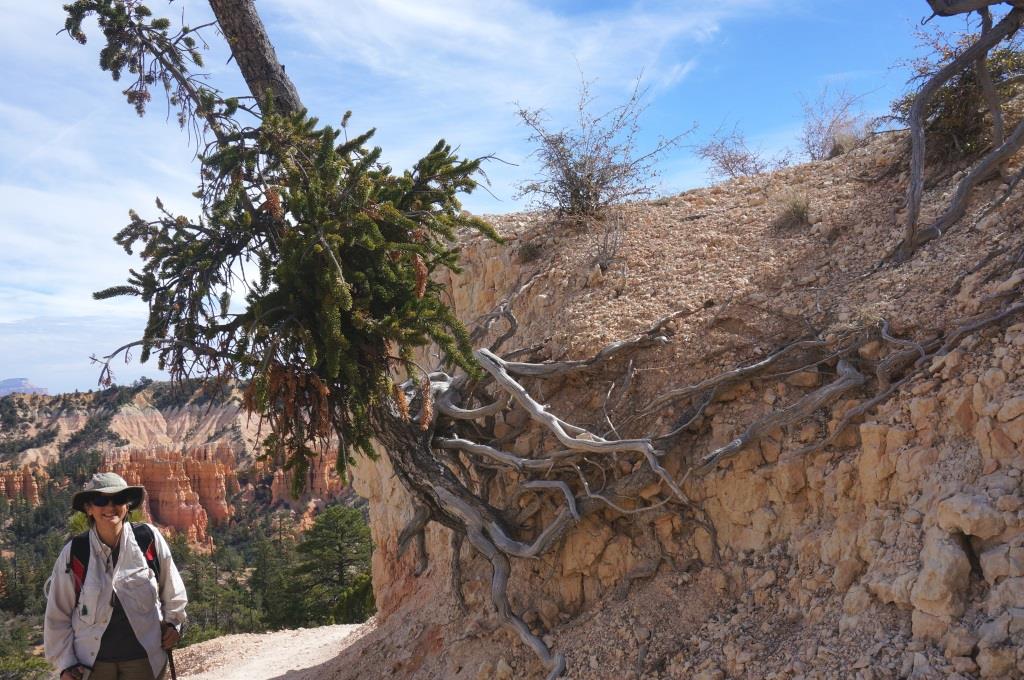
On every hike in the park, I always saw something about nature that amazed me. In this case it was this tree which desperately grips the side of the cliff for dear life. Even without a brain, its will to live is astounding. How can you not “root” for this tree? (Bad puns are free on this site.)

Gnarly tree

Gnarly tree

Once we started hiking again it took a little over an hour to reach the Rim Trail at Fairyland Point. While the view of Fairyland Canyon from the Rim Trail is great, I don’t think it compares with the views from some of the other overlooks.

View of Fairyland Canyon from Rim Trail

View of Fairyland Canyon from Rim Trail

While hiking back to the Trading Post (for our treats), we got a good view of the Fairyland Loop Trail. And this was the easy part of the trail!

Fairyland Loop Trail from Rim Trail

Fairyland Loop Trail from Rim Trail

J

John waxes poetically about the hikes and it was a wonderful hike but it about did me in, for the rest of the day at least. In my defense, we met a much younger couple (younger by 20 years or more) hiking the loop in the opposite direction. When we first met they had just started at Fairyland Point and were all bright eyed and bushy tailed with a few miles under their belts (mostly downhill miles). We crossed their trail again up on the rim when they were about two miles from the finish and they looked beat. They sat on a rock with a glassy eyed look and an air of exhaustion.

So, as for me, I was doing well for most of the hike. We took our usual shade and water breaks and had two snack breaks thrown in. John kept asking “How are you doing?” and I could honestly answer that I was good. It was a nice cloudy morning, cool, and good hiking weather. We hiked down the canyon under cloudy skies, we hiked up the canyon with the sun starting to peek through, we hiked down the canyon in full sun (who designs these trails anyhow?), we hiked back up the canyon in full sun (much more slowly this time), we took one more break at Fairyland Point (food only, for there is no bathroom there). THEN we headed out on the “easy” portion of the hike along the Rim Trail.

I’d like to comment on the trail design. I don’t know about everyone else but I really would be OK if the rim trail went AROUND a few of the higher areas. It doesn’t have to be right on the rim all the time. A nice level trail skirting the backside of a few of the “bumps” would have been just fine with me, but noooo, they have to go up and over every chunk of rock that sticks up in the air.

OK, back to the story. So we had 2.7 miles of Rim Trail to hike and we’ve gone up and down and up and down some little bumps and now we have one last elevation gain of about 200 feet. It is steep, it is gravelly, and my legs have gone on strike. They were fine a mile ago. Now when I put on the push to truck up that incline I get two steps, maybe four. This is not good. I look up the hill, I look down at the ground, and John waits patiently on the trail ahead of me (probably wondering just exactly where he could stash the body if I keel over because he is certainly not carrying me out of there). I finally drag myself up the hill, using my arms and trekking poles as much as my legs with the elegant form of a decrepit mountain goat and we hit the downward home stretch… and hike right past the turn for the campground. Seriously, you think I’m going back to camp when a few hundred feet farther is a General Store with pizza, and lemonade, and ice cream, and brownies? We’re pushing nine miles of trail by now, another quarter mile isn’t going to make a difference… and they have a bathroom there. By the time we are done munching, I am rejuvenated and can hike somewhat normally, albeit slowly, back to camp. The stupendous surprise is the lack of pain or muscle soreness the next day. Woohoo! I figure that by the time we hit Oregon (and sea level air), we will be buff hiking fools! I’m ready.

H

Posted in Hiking, National Park | Tagged | Leave a comment

Peekaboo Loop Trail (Bryce Canyon)

Bryce Canyon National Park

October 16, 2014

On this hike we followed the other half of the Navajo Loop Trail (to Twin Bridges) then took the connector trail to the Peekaboo Trail. When we reached the Peekaboo Trail we went left (or clockwise) and continued on to the Bryce Point Trail and up to the top. From there we took the Rim Trail back to Sunset Point and our car. Total distance was 4.5 to 5 miles. It felt like a lot more. It always does.

While hiking these trails I felt that I was in some sort of shape-shifting landscape. With each step the view changed, sometimes dramatically. I spent so much time looking left, right, up, and down, I thought my neck might unscrew itself and fall on the ground. Even more unsettling than that is the thought that I might not notice. As it was, I had a gigunda kink in it by the time we were done.

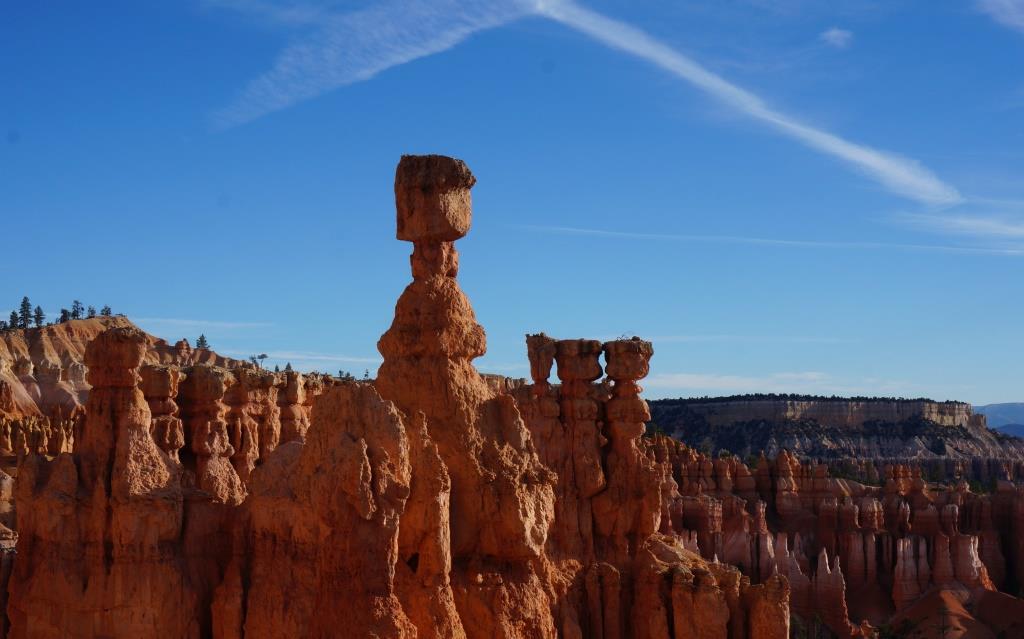
We had barely started when I focused on a hoodoo with a large rock delicately balanced on top.

Hoodoo on Navajo Loop Trail

Hoodoo on Navajo Loop Trail

Don’t ask me what it is about these features, but they are haunting. Maybe it’s the Stone People myth and I’m starting to see these things as formerly living people. Dunno.

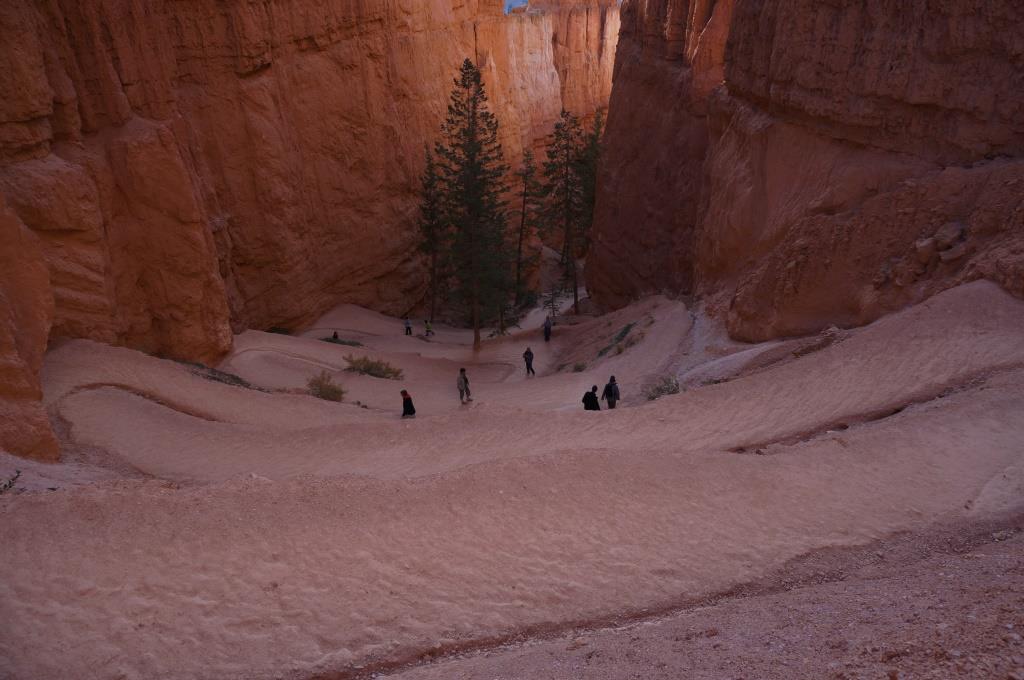
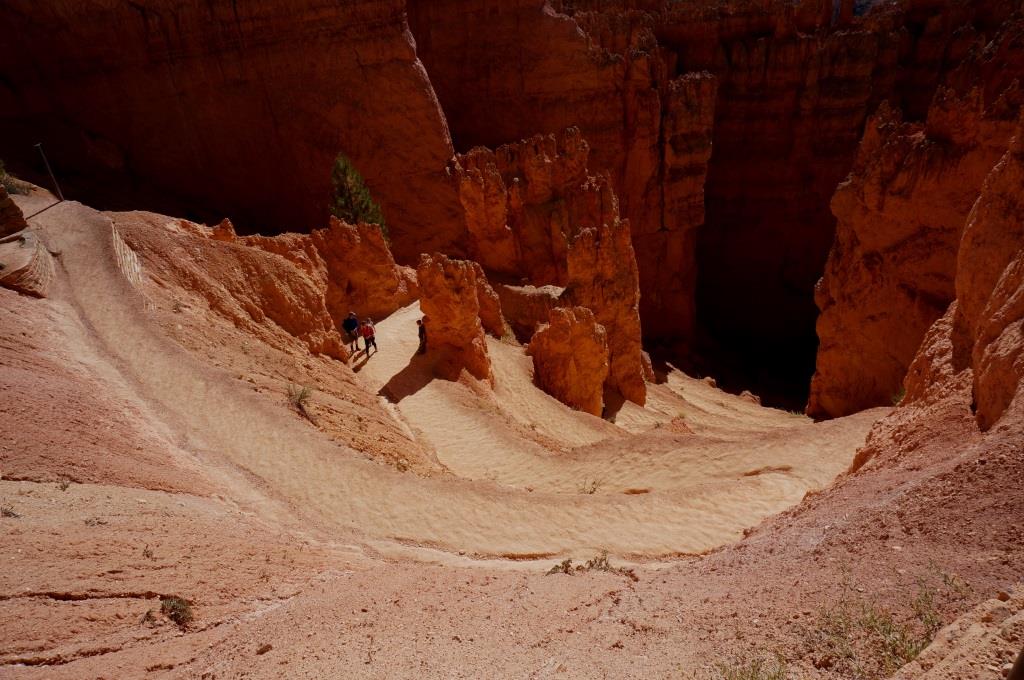
It wasn’t long before we were twisting and turning through switchbacks – again going down, not up. Yeah!

The sandstone dust on the trail is a fine powder that looks as though you could ski on it. Not me though. Me on skis is a 911 call waiting to happen.

Notice how the canyon walls close in as you descend into the canyon. And surprisingly, there are tall Douglas firs growing at the bottom. Somehow, someway they get enough light and water to take root and grow.

Navajo Loop switchbacks

Navajo Loop switchbacks

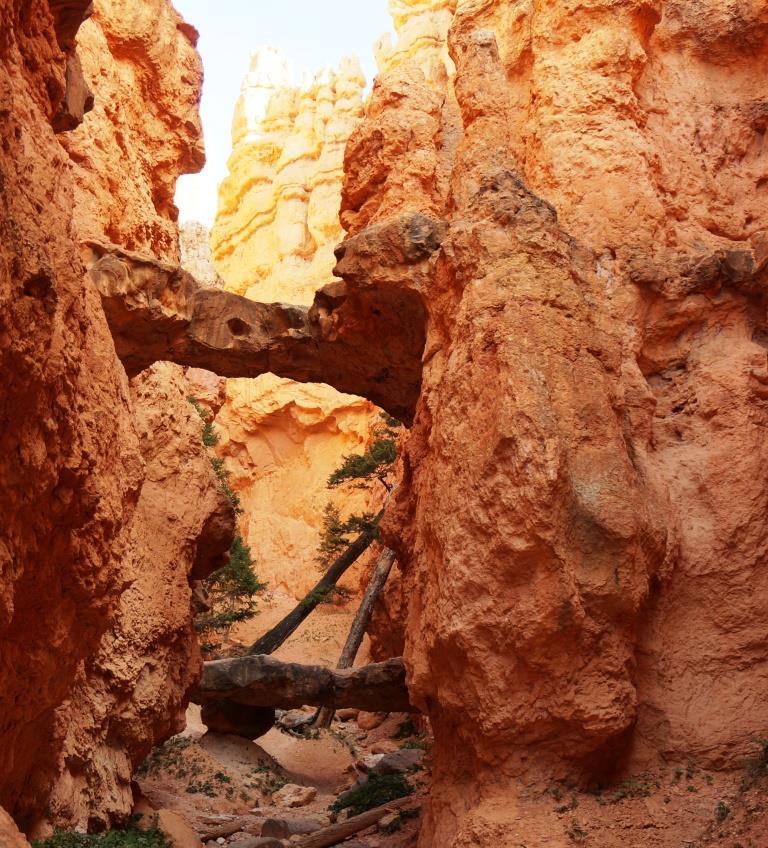
Not far past the end of the switchbacks, we came to Twin Bridges. Notice how the canyon wall beyond the bridges has a golden glow. Just about everything about this hike was awe inspiring.

Twin Bridges

Twin Bridges

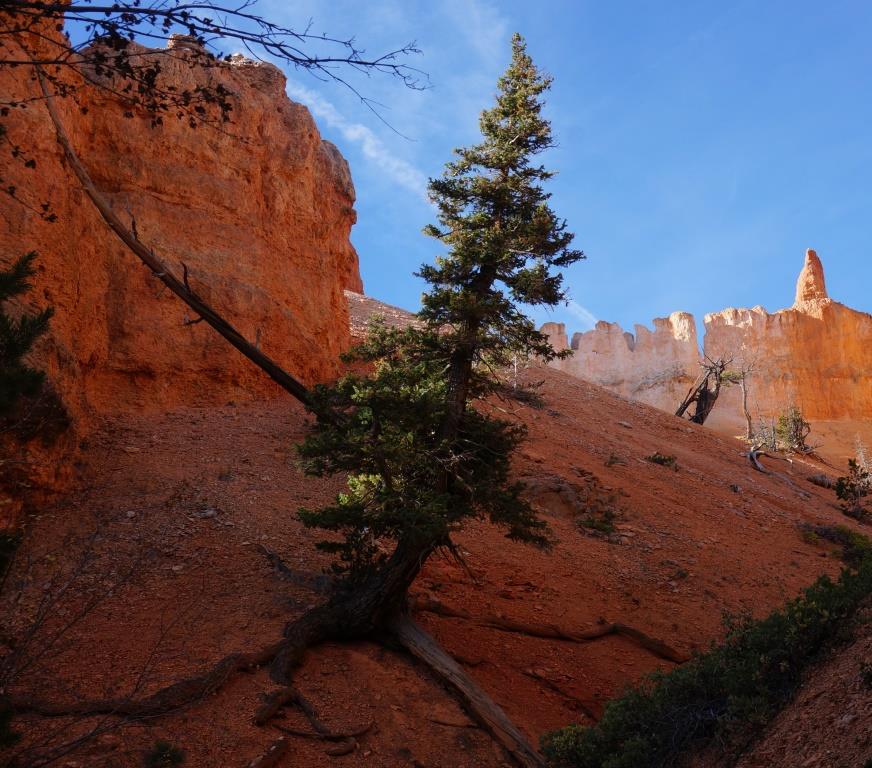
What never ceases to amaze me is how tenacious life can be. Just look at this conifer (I’m think it’s a Douglas fir) clinging to life, it’s roots like bony fingers grasping the ground for support. How can anyone look at this and not feel something for this tree?

Conifer clinging to life

Conifer clinging to life

We got to the junction of the Peekaboo Loop trail and turned left.

The views along this trail were spectacular. Almost pure white canyon walls tower above rows of hoodoos, standing like sentinels. A tower appears to form where the white canyon walls merge at the corner. Room-like alcoves line the cliffs where royal Stone People keep watch over their subjects. The more I look the more I see a fairy tale kingdom.

View from Peekaboo Trail

View from Peekaboo Trail

One thing Peekaboo Trail had plenty of was horse poop. There is a horse corral on the half of the Peekaboo Loop that we did not hike so we never saw the horses, just their “sign”. Apparently horseback riding is a very popular activity on this trail. It brought back memories of my backpacking the Grand Canyon where guided mule trains passed us every so often (too often IMO). At least the droppings on the Peekaboo Trail didn’t stink like those in the Grand Canyon. And horses aren’t nearly as prolific poop producers as mules.

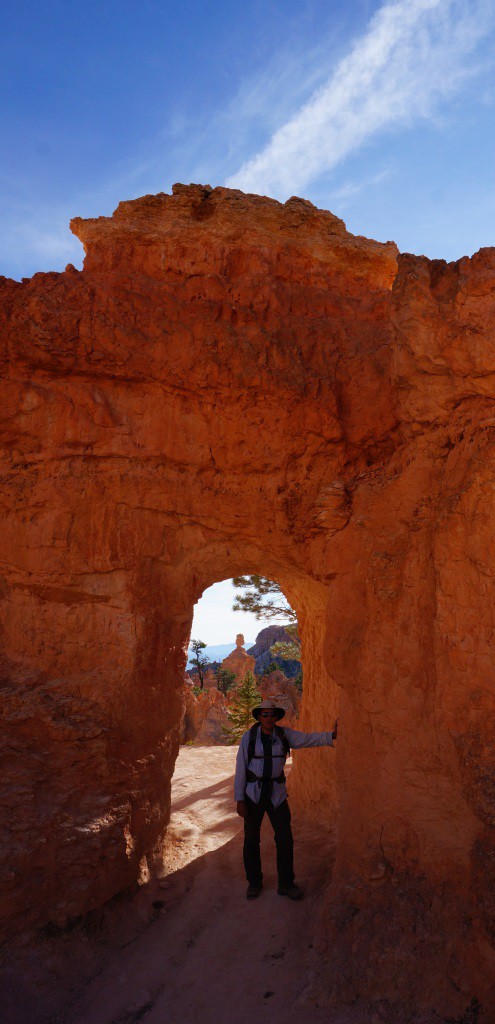
Like most of our hikes, this one had it’s dearth of shade. So when the opportunity arose, I took a break, in this case under an arch cut into the sandstone.

John resting under arch

John resting under arch

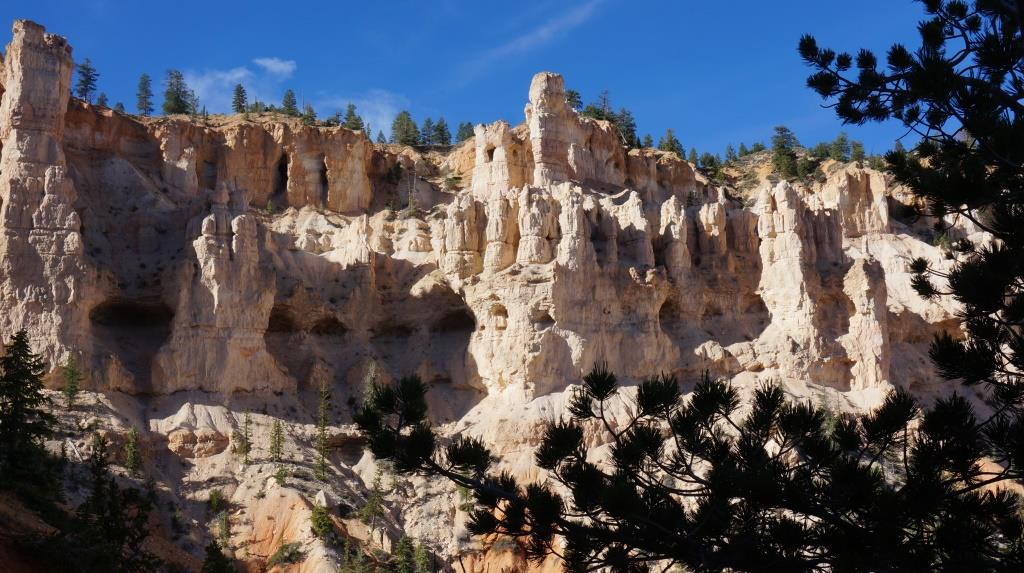
I’m always seeing more evidence of the existence of the Stone People. This cliff face is lined with alcoves and tall narrow arches that look like an ancient condo. I can certainly see why the Paiutes believe this place was once inhabited by flesh and blood humans. It doesn’t take much of an imagination to see that.

Stone People's condo

Stone People’s condo

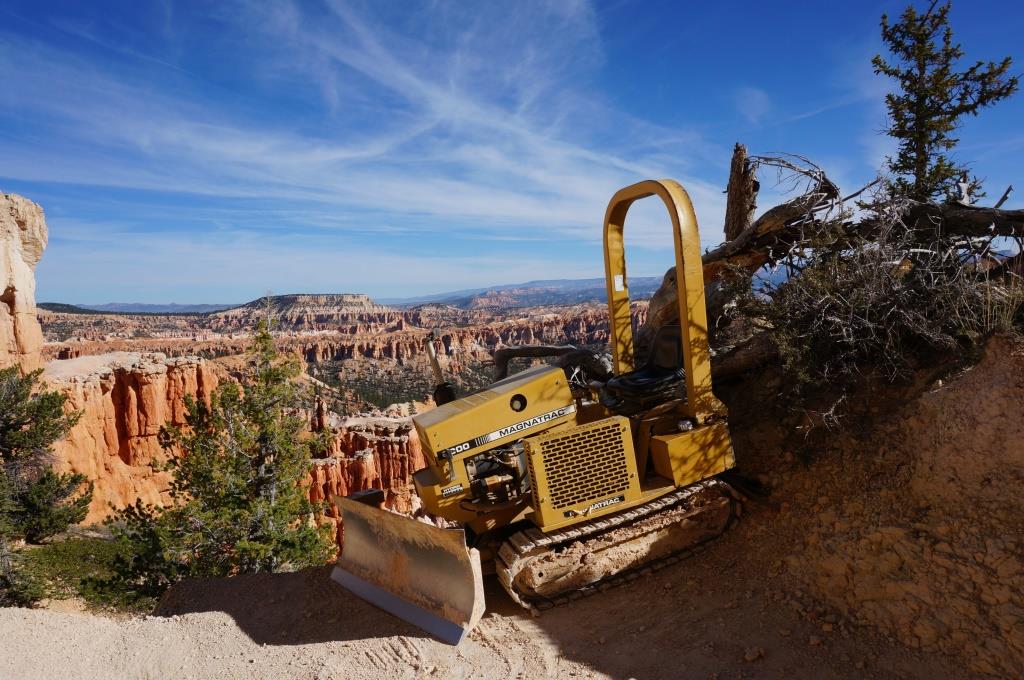
We even saw a bobcat, or something like it, on the Peekaboo Trail. But it didn’t look anything like what I expected. It didn’t have fur or teeth or even legs. It didn’t try to eat us either.

Bobcat???

Bobcat???

Actually, this small dozer along with two small wheelbarrow type tractors are a testament to the park’s dedication to maintaining these steep, narrow and twisty trails. It wouldn’t take much of a mistake to drive one of these things off the cliff. The park’s employees and/or contractors deserve our thanks and gratitude.

As we climbed toward Bryce Point, we got a terrific view of Boat Mesa. We hiked the Fairyland Loop the following day. That 8 mile loop threads its way around the mesa.

Boat Mesa from trail to Bryce Point Trail

Boat Mesa from trail to Bryce Point

Finally, after climbing 800 feet in about a mile, we reached Bryce Point. We were hot, tired, sweaty, but victorious. And our car was still 2+ miles away at Sunset Point.

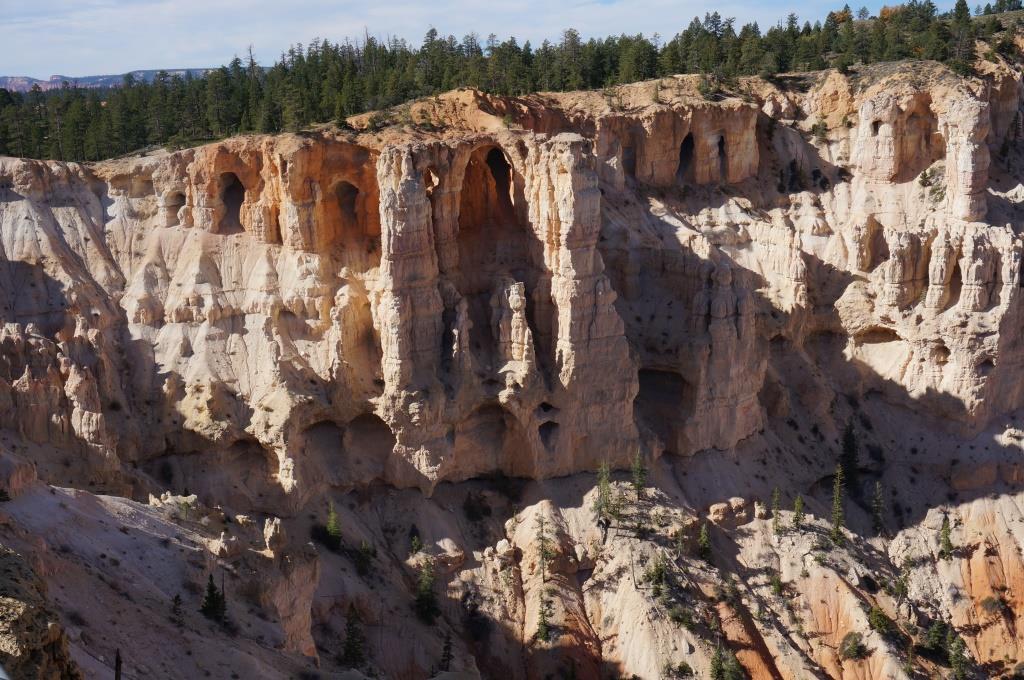
Along the way, we got a good view of the Wall of Windows. Although there’s a logical geological explanation, I rather like the idea that these are Stone People condos.

Wall of Windows

Wall of Windows

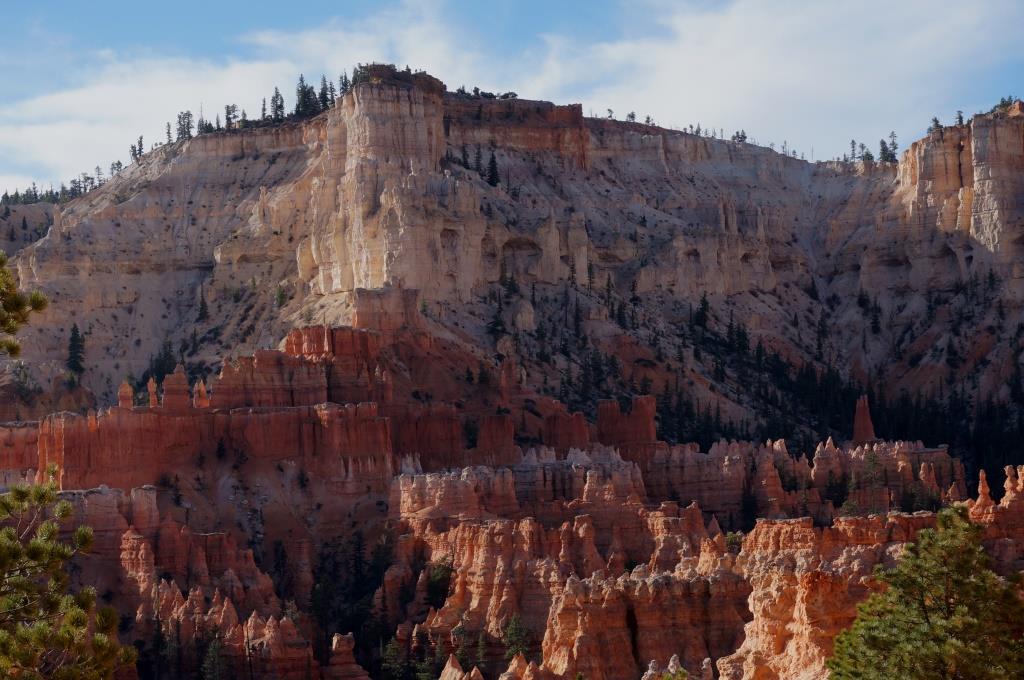
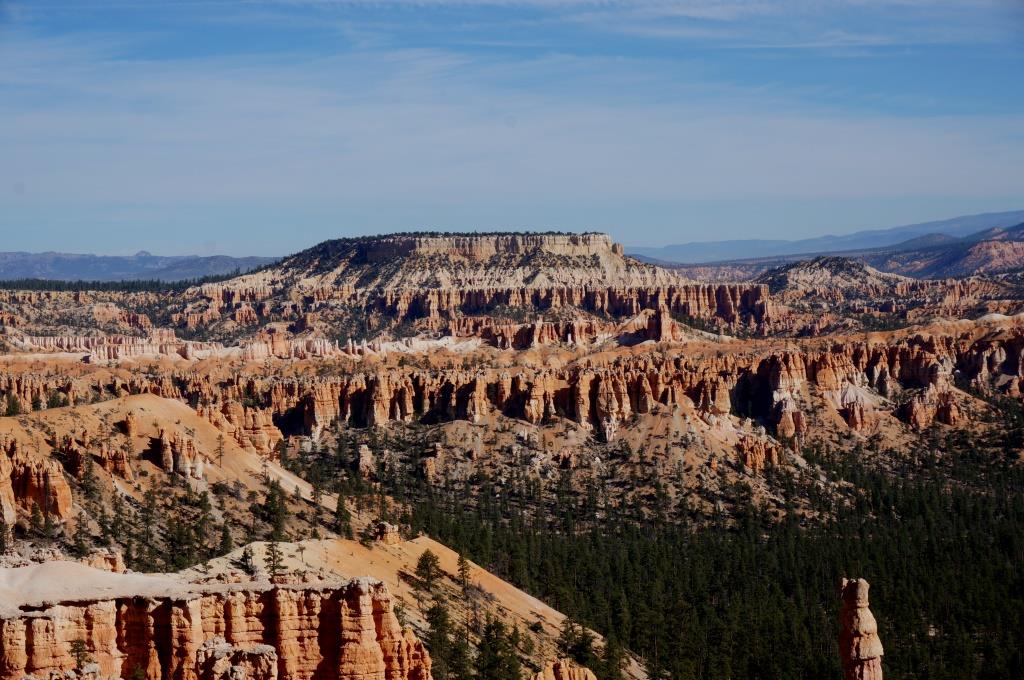
While walking back to Sunset Point, we got a terrific view of thousands upon thousands of hoodoos. Or Legend People frozen in their tracks.

Thousands of hoodoos

Thousands of hoodoos

Every time I look, Bryce Canyon shows me something new and spectacular.

J

Posted in Hiking, National Park | Tagged , , , , , | 1 Comment

Navajo and Queen’s Garden Loop Combo Hike (Bryce Canyon)

October 16, 2014

If God had been a child, Bryce Canyon would have been His playground. The hoodoos look as though they were sculpted out of mud by a child’s tentative hand. This hand practiced building multicolored towers, walls, windows, bridges, arches, and alcoves. Some things, like the statue on the Queen’s Garden Trail, appear to have been sculpted out of papier mache. Regardless of your religious leanings, hiking any of the trails at Bryce Canyon is a spiritual experience. At least it was for me.

We started our hike at Sunset Point, followed the Wall Street portion of the Navajo Loop, switched to the Queen’s Garden Connector Trail to Queen Victoria’s statue, wound up the Queen’s Garden Trail to Sunrise Point, and followed the Rim Trail back to Sunset Point. Total distance was a little over 3 miles, but with the heat of the sun felt like 300.

The trails were very well maintained and when the trail split, signs got you going in the right direction. If I can follow the trail signs and not get lost, then they have to be good trail signs. And this is from a person who got “lost” driving out of a church parking lot! Where our Boy Scout Troop had been meeting for years! And with a caravan of Boy Scouts following me! True story – honest.

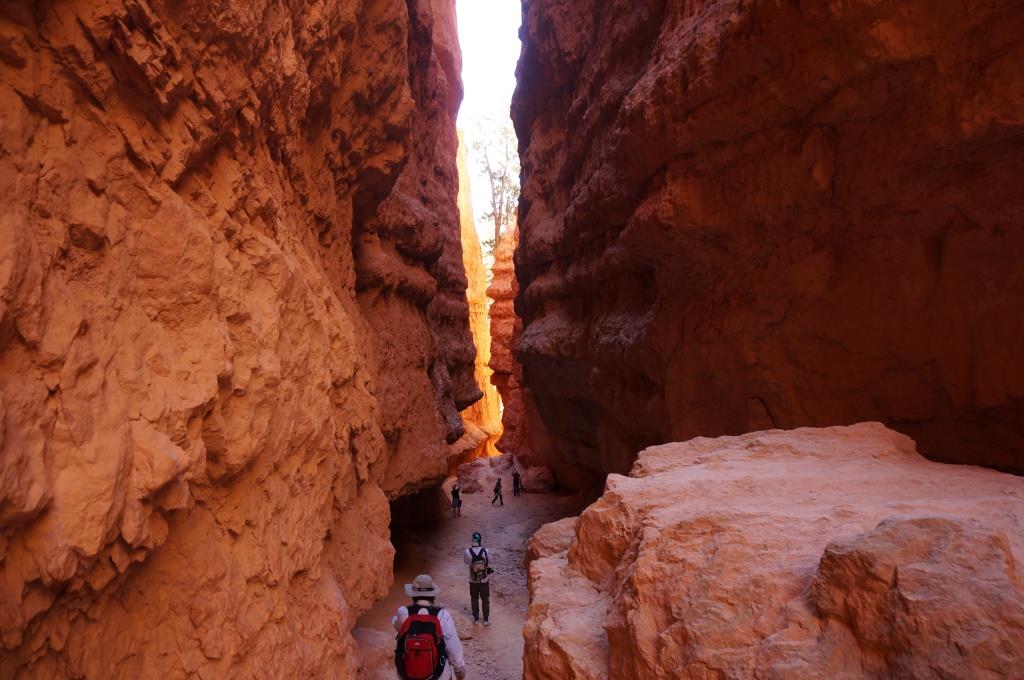
The first few steps of the hike clued us into what was in store for us. At the bottom of the picture, you can see the Navajo Loop Trail winding down the canyon. And beyond that is a spectacular view across the canyon. Visibility is extremely good and you can see features up to 100 miles away.

Navajo Loop Trail and landscape

Navajo Loop Trail and landscape

It didn’t take long before we ran into a very compact set of switchbacks that led to Wall Street. At least we were going down!

Navajo Loop switchbacks leading to Wall Street

Navajo Loop switchbacks leading to Wall Street – there are at least 29 of them

Near the end of the switchbacks, the dimly lit entrance to Wall Street loomed ahead.

Wall Street entrance looms ahead

Wall Street entrance looms ahead

We flipped a coin to see who would enter the jaws of Wall Street first and Holly lost. (I am making this up.) Note the intrepid look on the face of our heroine. I was quaking in my boots.

Holly about to enter Wall Street's maw

Holly about to enter Wall Street’s maw

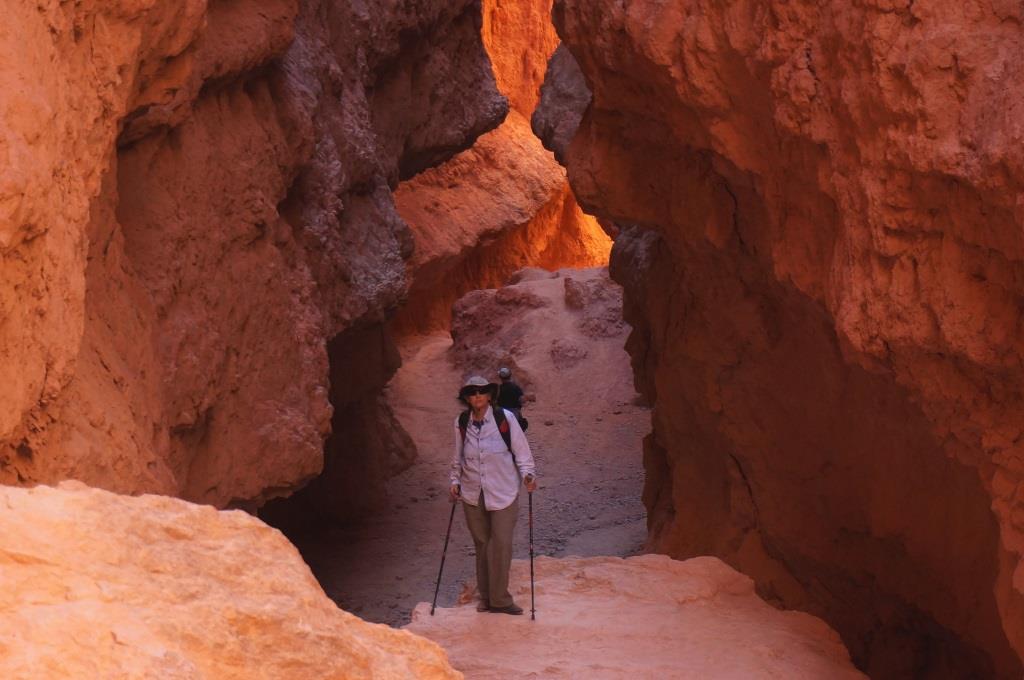
Holly turned and went in. She was neither gored by a Bull or mauled by a Bear. I followed her at a safe distance.

Holly in Wall Street

Holly in Wall Street

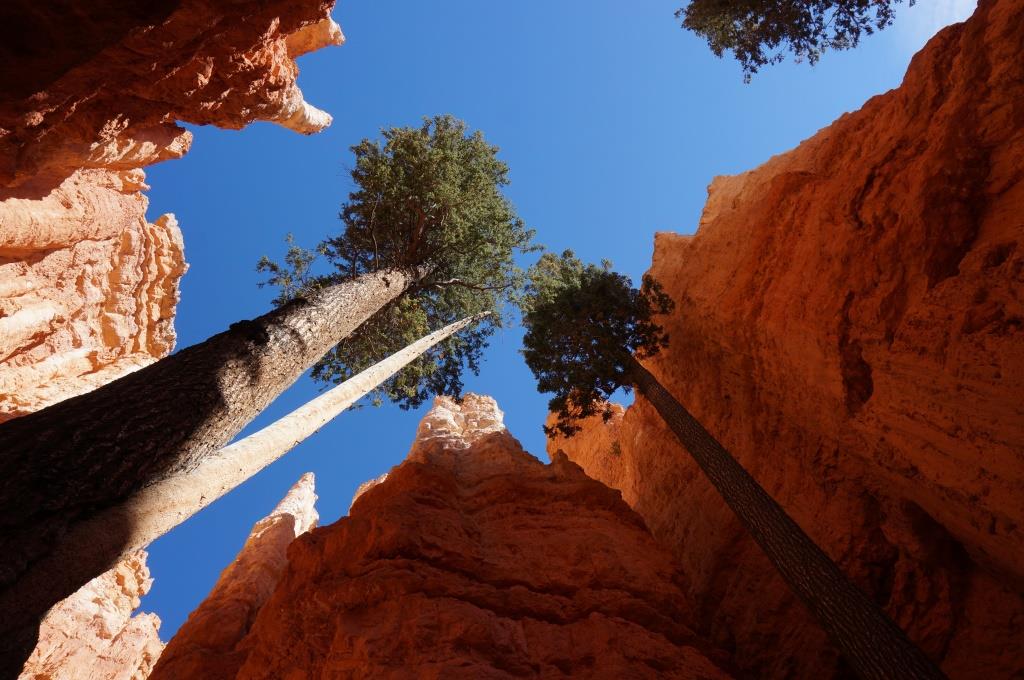
Another one of nature’s many marvels greeted us as we left Wall Street, two gigantic Douglas firs reaching for the sky. As you can see, the canyon walls are narrow and tower above the pines. How they managed to germinate, mush less grow to such heights, amazes me.

Ponderosa Pines at Wall Street exit

Douglas Firs at Wall Street exit

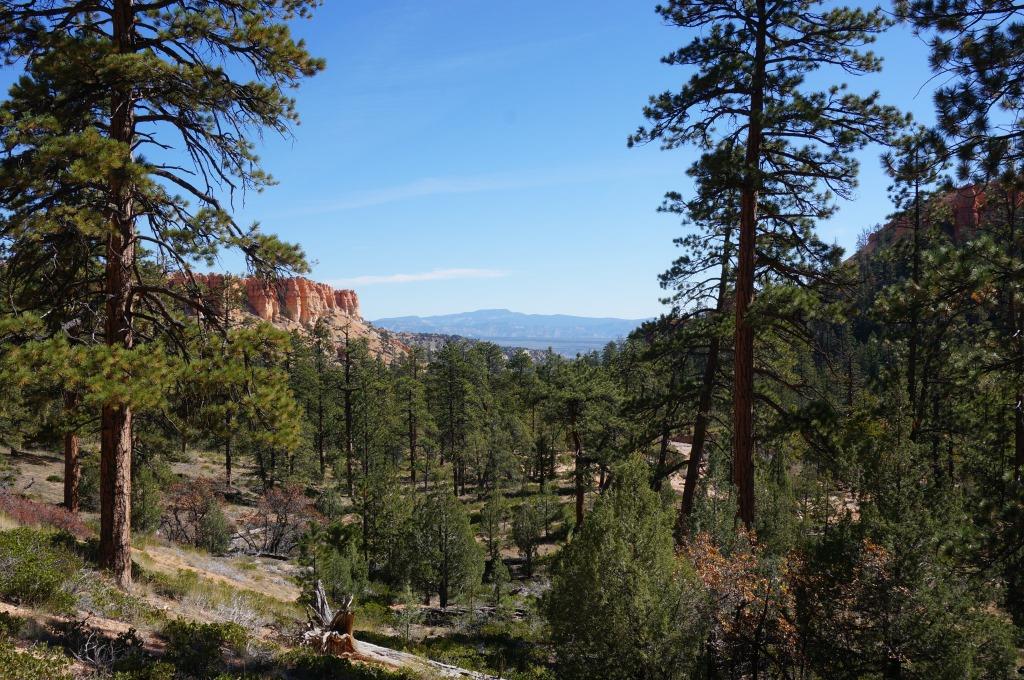
As we left the confines of the canyon, a forest of Douglas firs and other conifers spread out before us. These trees are truly majestic.

Ponderosa pine forest

Douglas Fir forest

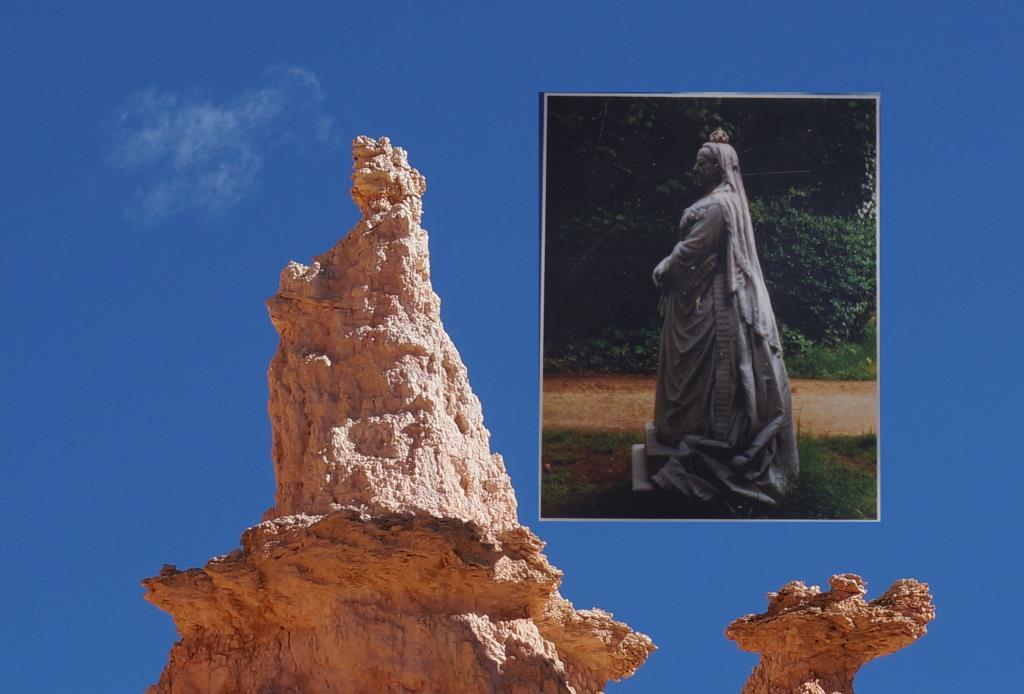
After a pleasant walk of about a 1-1/2 miles, we came to the short side trail to Queen Victoria’s statue. Eerie as it seems, the naturally carved sandstone (hoodoo) statue of Queen Victoria looks quite like the real statue of Queen Victoria. Does anyone hear music from the Twilight Zone series?

Queen Victoria's Statue

Queen Victoria’s Statue

One the trek back to the canyon rim, we passed hundreds, maybe thousands of hoodoos like these.

Hoodoos

Hoodoos

On the one hand, as I said at the beginning, these features look as though they could have been crafted by a giant God-child’s hand. Large blobs of mud were molded layer by layer into something almost human like.

In fact, there’s a Paiute legend that Legend People once inhabited this land. They abused the land, drank all the water and ate all the food, leaving nothing for any other living creatures. The animals complained about the Legend People’s selfishness, finally getting the attention of Coyote, a powerful god. Coyote invited the Legend People to a banquet where he promised them all the food they could possibly eat. They came dressed in their finest clothes and war paint. They sat down at Coyote’s elaborate banquet table but before they could take a bite, he turned them to stone.

If Lot’s wife could be turned into a pillar of salt, who’s to say that the Legend People couldn’t be turned into stone?

The Stone People

They call them the Stone People now. It is said that you can see the Stone People at Bryce Canyon. Some are standing up, some are sitting down, some are holding onto each other. You can see their faces and the paint they wore on them to this day. Can you see the face of the Stone People?

Walls of hoodoos

Walls of hoodoos

Whatever you may think about the legend, it should give us all food for thought. Are we the new Legend People? Are we taking care of our planet, its resources and treasures? Are we doing enough to protect our flora and fauna, even those we haven’t discovered yet? Or will we continue to ravage our planet and in the process destroy ourselves?

J

Posted in Hiking, National Park | Tagged , , , , , , | Leave a comment

Bryce Canyon Overlooks (little to no hiking involved)

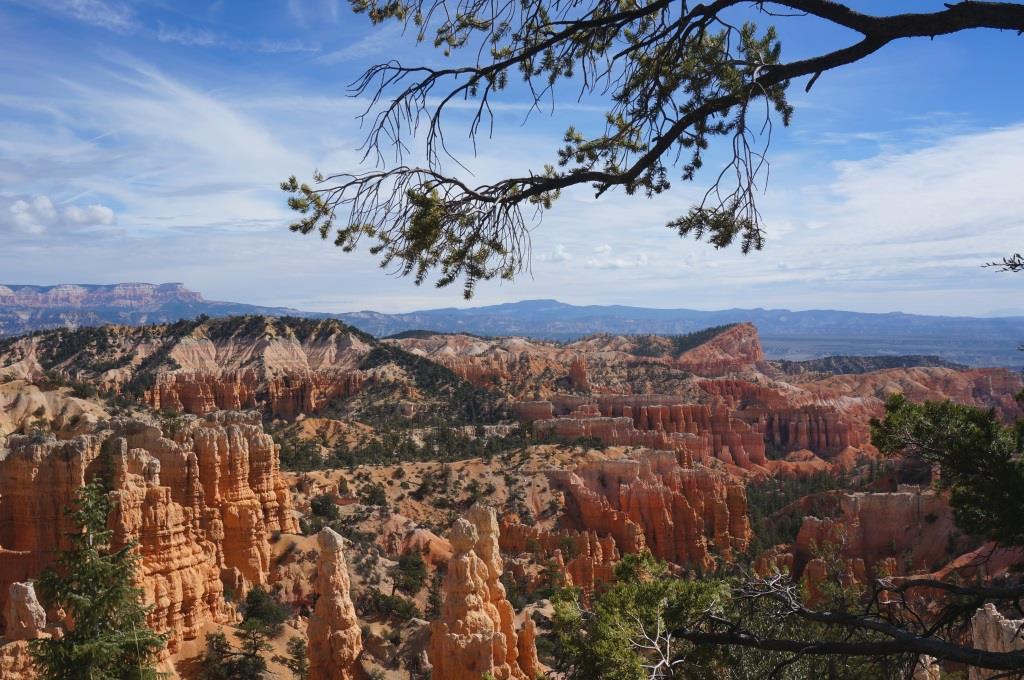
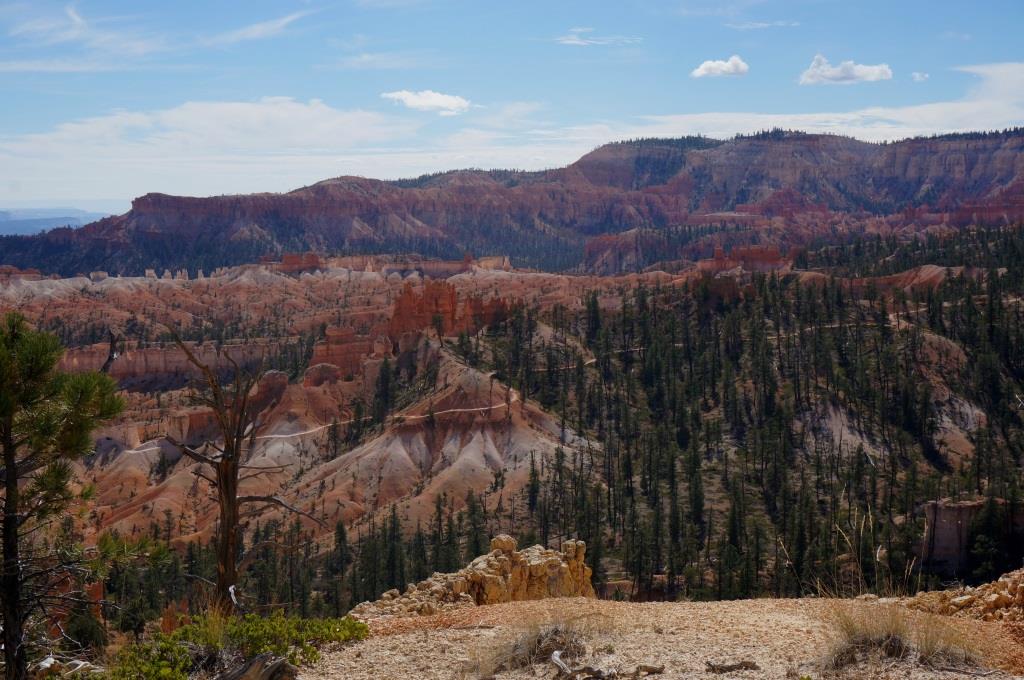
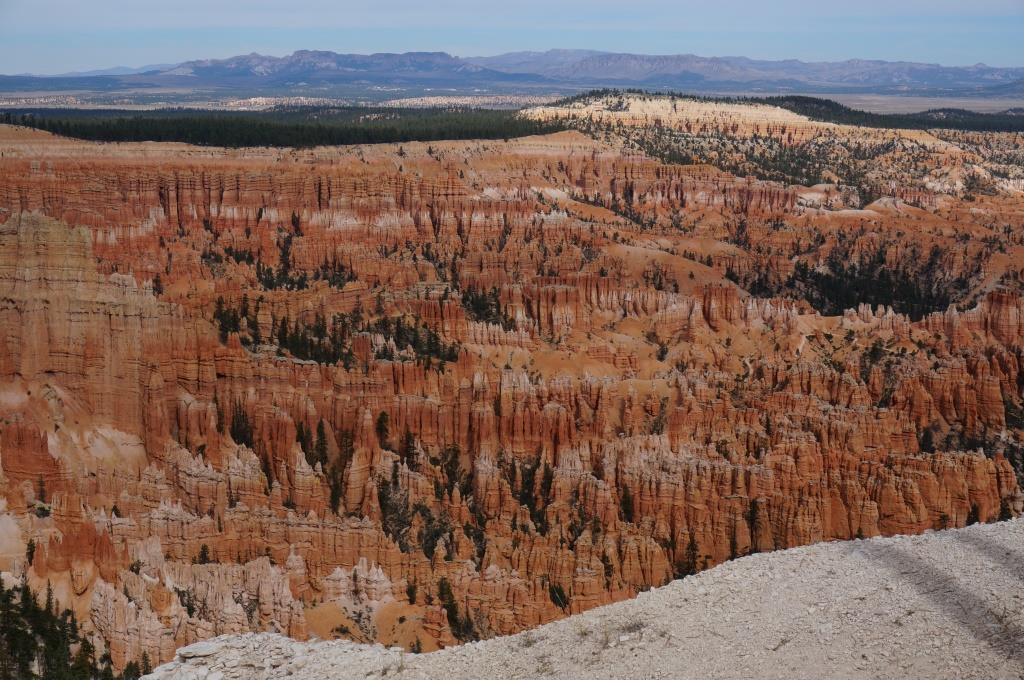
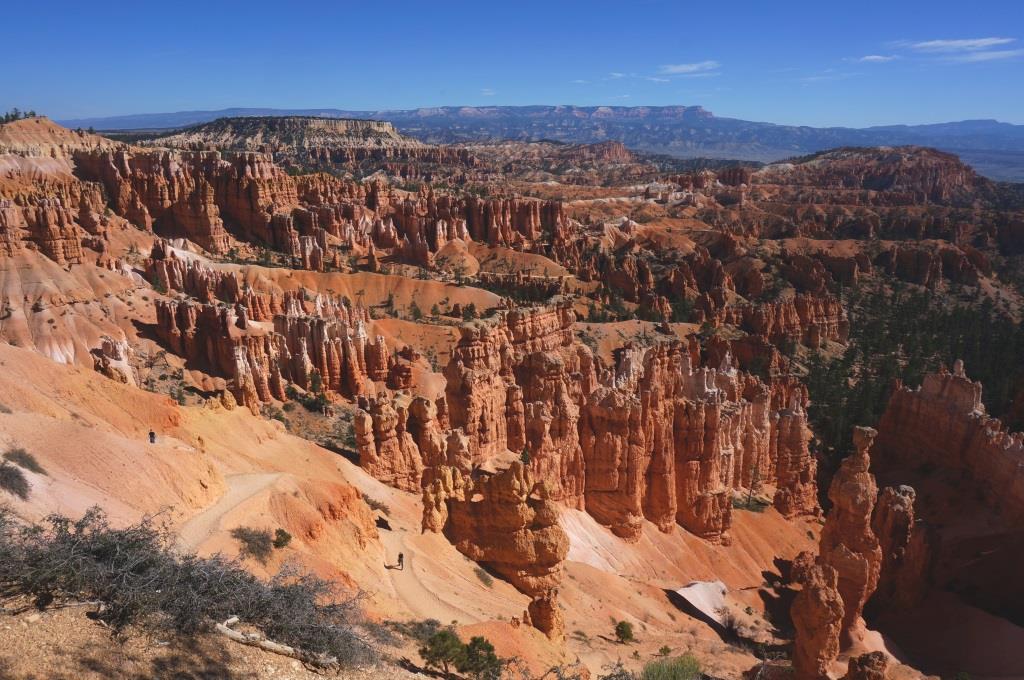
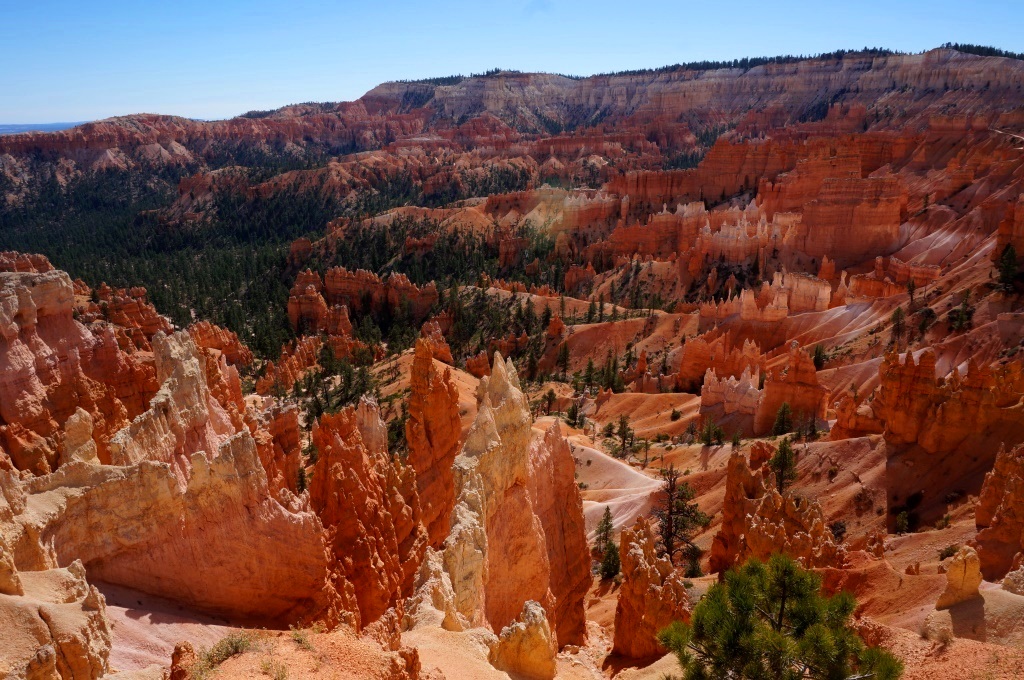
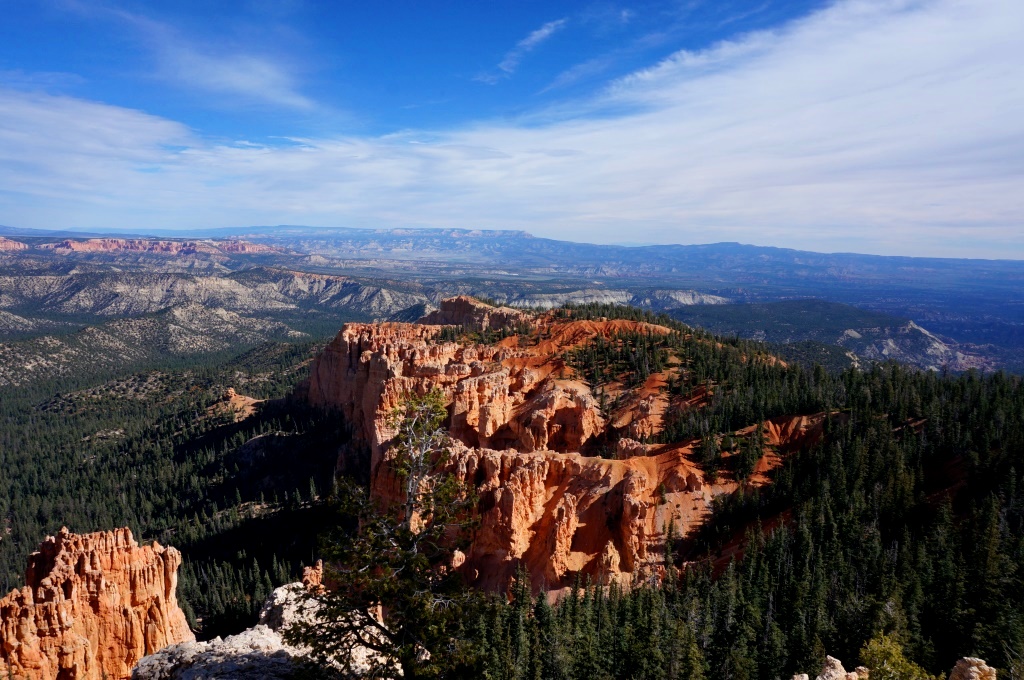
We do a lot of hiking so many of our posts are for fairly strenuous hikes but you do not have to hike to see some awesome views of Bryce Canyon. The main park drive is eighteen miles long (one way with a 30 mph limit) and has 14 viewpoints along it. The entire road is at the top of the canyon so all of the viewpoints are looking down and out onto beautiful vistas. Those at the northern end of the park, near the entrance, look down into the Bryce Amphitheater and Fairyland Canyon with thousands upon thousands of multi-colored hoodoos. These are also the most popular and most crowded.

Sunset Point

Sunset Point

Almost all of the overlooks have a short, paved path from the parking area to the overlook where you will find interpretive signs either explaining the view or giving the history of the park and the humans that came before us.

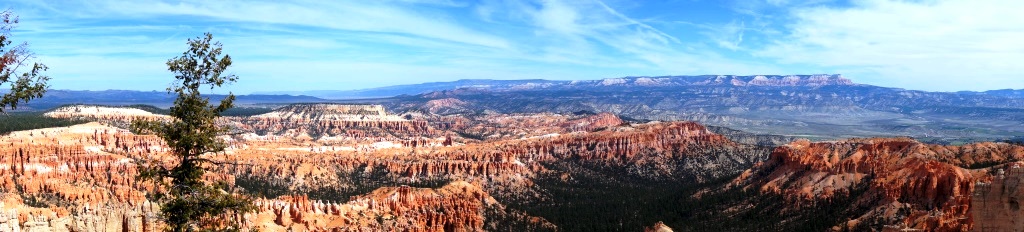
Bryce Point Panorama

Bryce Point overview is absolutely incredible. There is a nice, easy to access, platform with railings and great views. The more adventurous can walk a short trail out on a fin of rock (some areas with no rails so hold onto those children) to a fenced and railed area where you feel as though you are hovering over the canyon itself. It is a dizzying look down for sure but a definite must-see view.

Sunrise Point

Sunrise Point

When you stop at an overlook, look at the map they have posted there and look around for other trails. Several have that second viewpoint and even though it may only be another hundred feet, the view can be completely different.

Fairyland Point

Fairyland Point

Fairyland Point – shown above – is actually the first overlook you come to after you enter the park but it is off down its own road and comes before the fee station so most people drive right on by. The view down Fairyland Canyon is beautiful with hoodoos, rolling sandstone hills and far away vistas. There is a hiking trail here that goes down into the canyon. Many people hike down then back up the same way just to get a view from down in the hoodoos. The entire loop hike is covered under another post. Note that there is no restroom here. This was a great disappointment to us after we climbed up out of the canyon after chugging about a half gallon of water on our first 6 miles of the loop hike. It was another 2.5 miles to the restroom at the General Store but we made it.

If you have the time, venture all the way to the end of the road for some more awesome views.

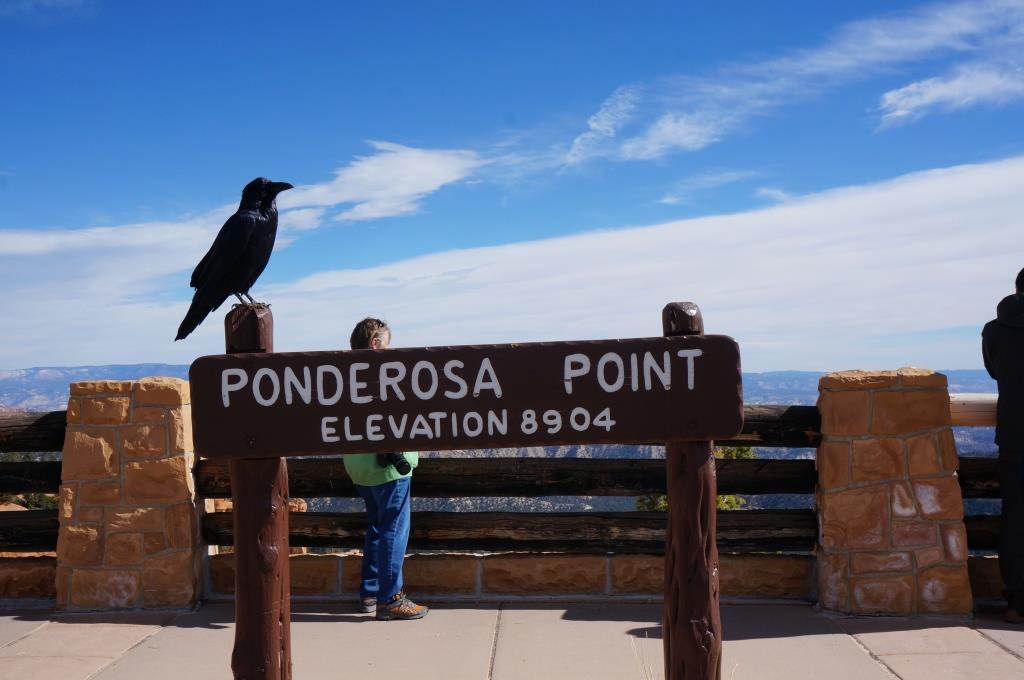
Raven posing for pictures at Ponderosa Point

Raven posing for pictures at Ponderosa Point

Ponderosa Point

Ponderosa Point

Just a little wildlife shot thrown in there. The raven stayed like that for quite some time as people took his photo. But someone got too close and he flew away so we went back to taking pictures of beautiful rocks.

Natural Bridge Overlook

Natural Bridge Overlook

All the photos in this post were taken from less than fifty feet from the road along paved paths. So even if you don’t hike, you can still marvel at the wonders of nature at Bryce Canyon.

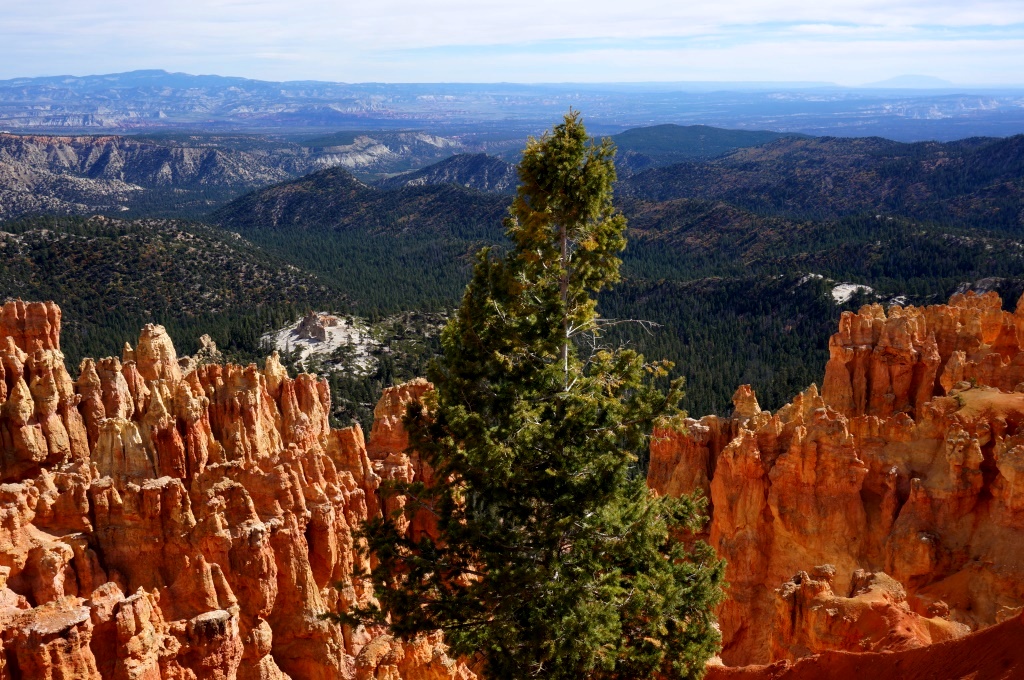
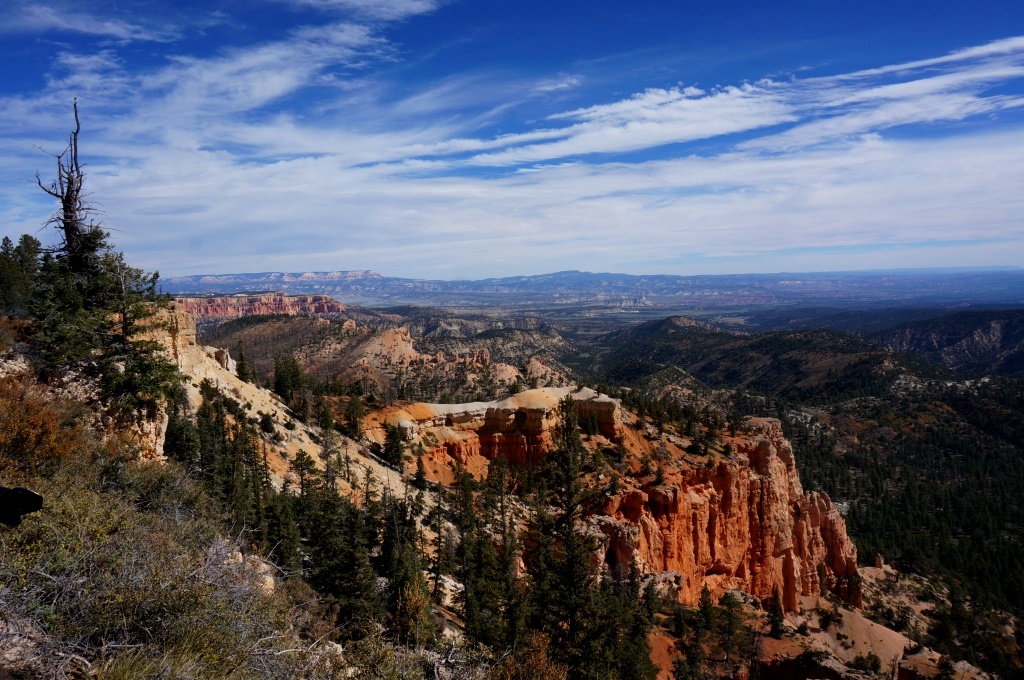
Farview Point

Farview Point

And to show that the drive is worth it, here is the end of the road at Rainbow Point.

Rainbow Point – the end of the park road

H
Posted in Parks, Scenic Drives | Tagged , , , | Leave a comment

Bryce Canyon National Park

October 14-19, 2014

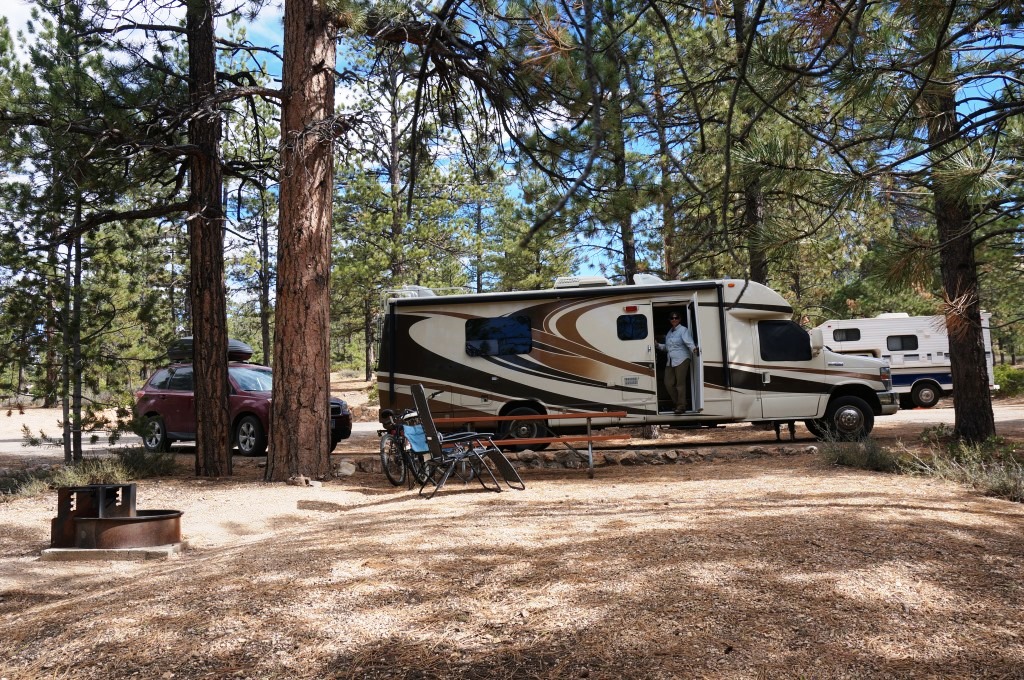
We thoroughly enjoyed our stay at Bryce Canyon. There was no problem getting a campsite though we first went to Sunset Campground and were not impressed with the lumpy, uneven, short sites in the RV loop. We skedaddled back to North Campground and found a beautiful, reasonably level site and snagged it quickly (the camera is tilted left, not the campsite – the rig is level).

Campsite in North Campground

Campsite in North Campground

What you can’t see in the picture is a very nice bathhouse up the hill behind us with flush toilets, HOT water and a separate dish washing room on the side with double sinks and counter. There are no showers and no hookups but they do have potable water spigots throughout the campground and grey water can be dumped in the dish washing sink. There is a dump station up the road that costs $5.00 per dump. We were moving a short distance to a full hookup campground next so we took our waste with us and dumped there. We had excellent Verizon signal in camp and throughout most of the upper portions of the park (dicey in the canyons). Camping is $15.00/night or $7.50 with the senior pass. Sites are first come/first served and probably fill up faster when temps aren’t hitting the low 30’s at night.

There is a short trail out one side of the “A” Loop of the North Campground that leads to the visitor center and a shuttle stop (not running while we were there). There is a road out the other side of the campground past the “D” Loop that leads to the General Store with washers and dryers and pay showers and then on to Sunset Point and eventually the Lodge. And there is one more trail off of “C” Loop that takes you onto the rim trail. If you are there when the shuttle is running, you probably don’t need a car.

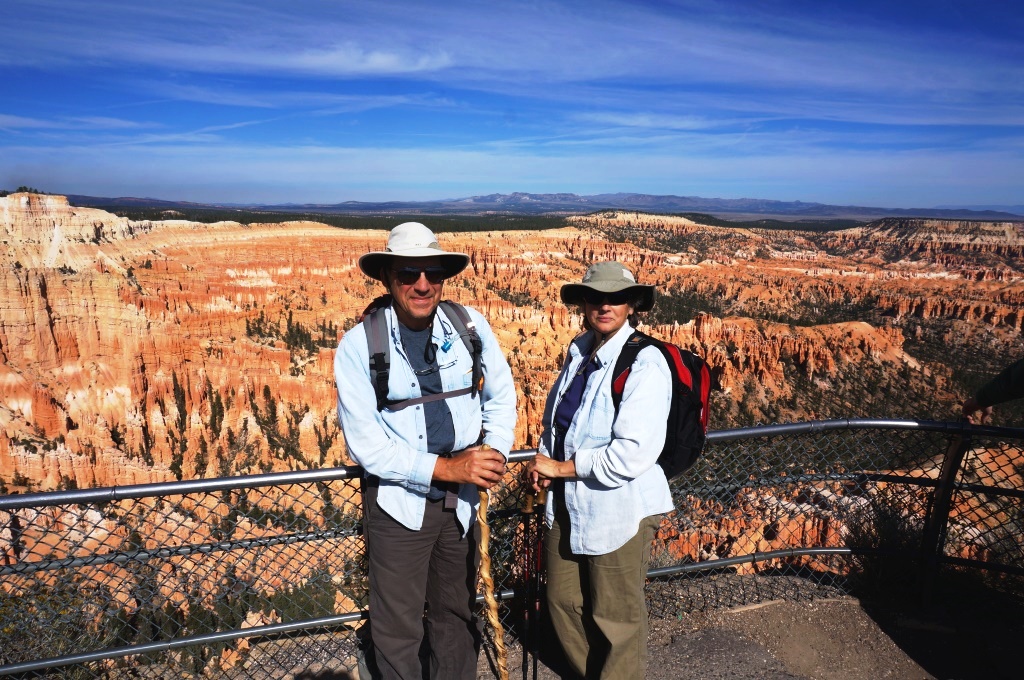
Bryce Canyon as our playground

Bryce Canyon as our playground

We hiked many trails and many miles while at Bryce and loved it. The photo above was taken at Bryce Point. We had just hiked 3 miles with a decent uphill trail for a good way and a really big 800 foot elevation gain on the last leg climbing up to Bryce Point –  but what awesome views! We still had over 2 miles to go on the Rim Trail to get back to the car. What we SHOULD have done is hike the rim trail to Bryce Point, gone down into the canyon on the long, steep trail, then climbed back up the lower rim at Sunset Point. We thought of that just about the time we hit the bottom of the canyon. Note that if the shuttle was running, we would have simply hopped onto it at Bryce Point and rode back to Sunset Point where our car was parked. Since we were there in the off season, with no shuttle, any hikes that went into and out of the canyon via different access points (which is every hike we took), meant an additional walk along the Rim Trail to get back to the car or camp. The upside is that we had ever changing canyon views to distract us.

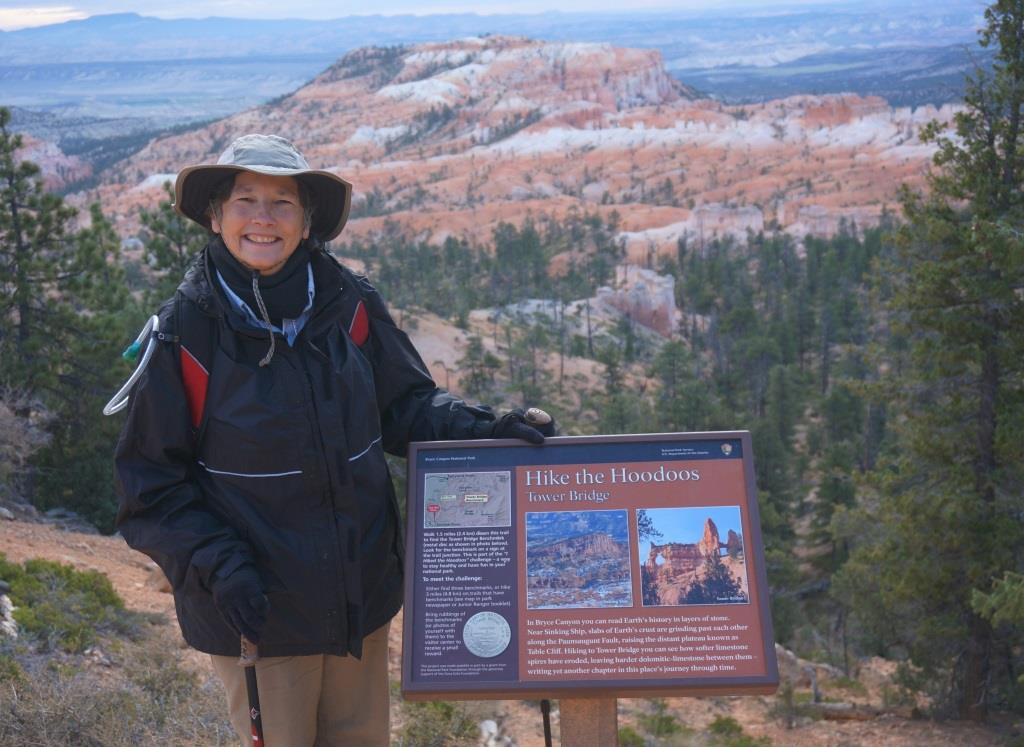
I Hiked the Hoodoos - our first medallion

I Hiked the Hoodoos – our first medallion

“I Hiked the Hoodoos” and have a really cool hat pin to show for it. You can earn a hat pin too. All you have to do is “collect” three of these metal medallions by either take a rubbing or taking your picture with it. There are at least 5 of them in the park, out there on the trails. Once you have your photos or rubbings, you take them to the Visitor Center and the Ranger gives you your cool hatpin. The sign says you can also hike three miles on the trails that have these medallions. I’m not sure how you show you did that so if you plan to earn your pin that way, it would be best to check with a Ranger first to make sure you have what you need to get your pin. We never were able to get a map showing where the medallions are located but it apparently is frequently in their little park newspaper, just not the one they had while we were there.

The visitor center has a nice movie of how the park came to be and the geology of the area as well as a small but good museum and a huge gift shop. They have video displays showing things to do in the park, ranger program schedules and weather forecasts. There are Rangers on hand to assist you in finding the perfect adventures for your time at Bryce. They offer a lot of Ranger Programs including evening star gazing as this is another “dark sky” park.

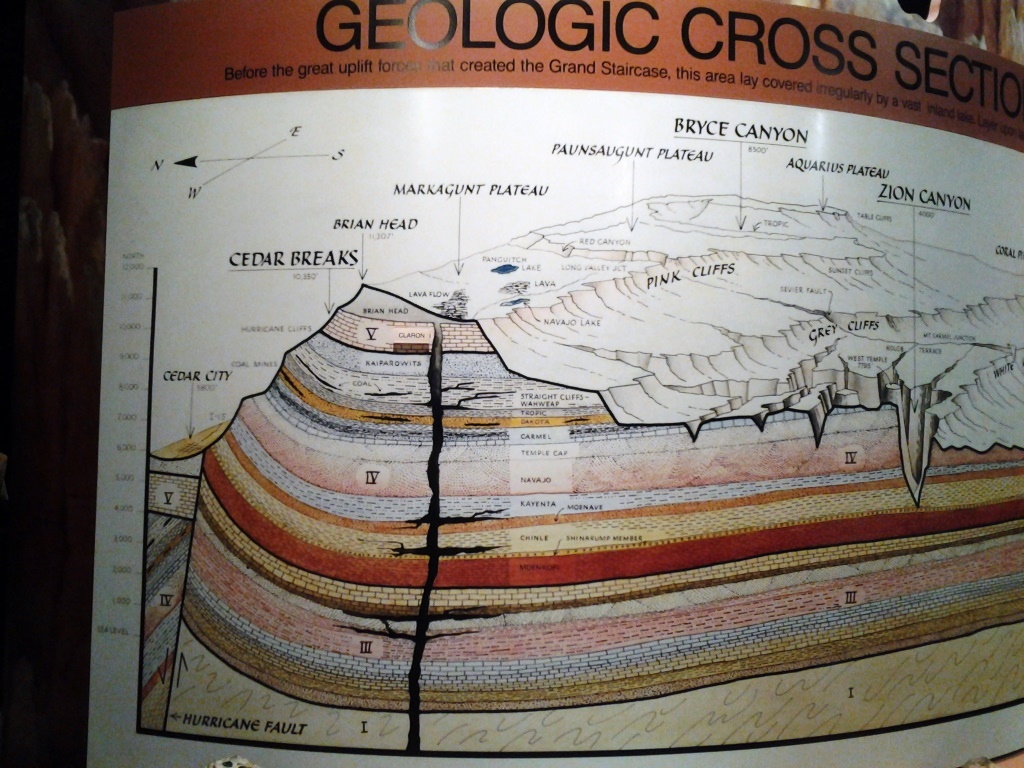
Geology cross section 1 of 3

Geology cross section 1 of 3

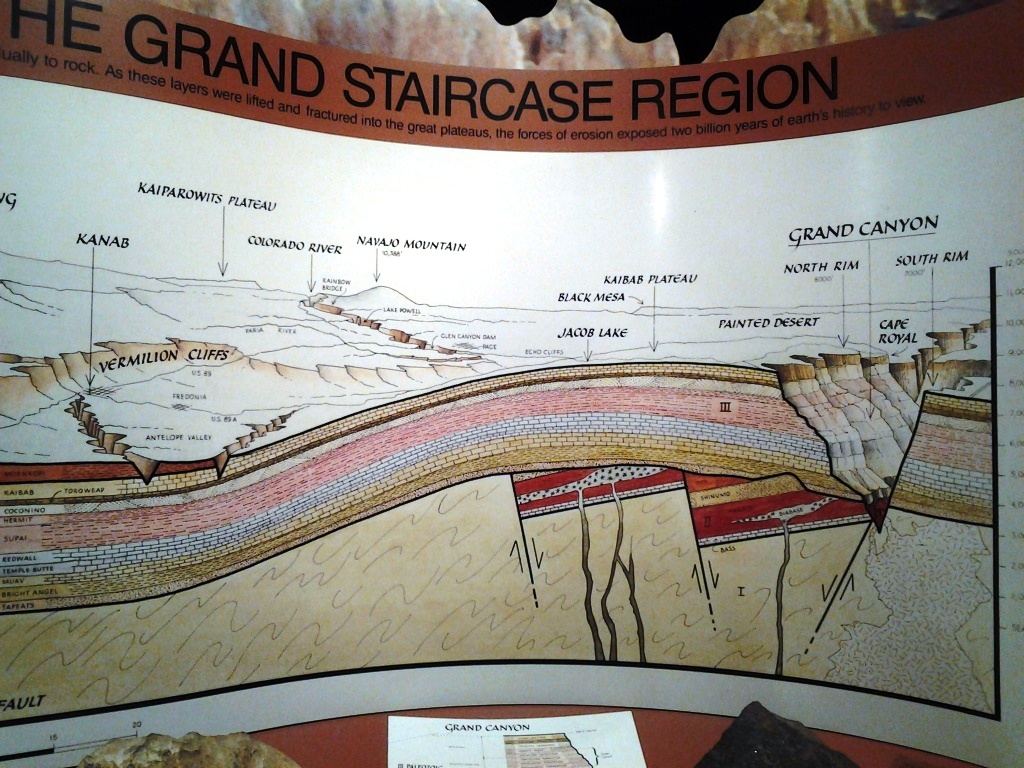
I took pictures of the Geologic Cross Section display in the museum. It was curved with glare but two of the three sections came out decent with a slight blurring on the middle piece. I really like their diagram as I can visualize not just the surface features but what is going on underneath the earth’s crust. All the visitor centers and park displays we’ve seen so far on the Colorado Plateau did not click with me the way this one did. I can see fault lines and volcanic rifts. It kind of makes you wonder when the next earthquake will hit this area and what will happen to the really tall hoodoos when it does. Hopefully any seismic activity will occur after we leave.

Geology cross section 2 of 3

Geology cross section 2 of 3


Geology cross section 3 of 3

Geology cross section 3 of 3

They also had a 3-D map showing the Escalante Grand “Staircase” but I thought the diagram was clearer.

There is a lodge in the park with a restaurant, gift shop that carries some beautiful upscale items as well as the standard souvenirs, and an auditorium where evening ranger programs are held. There is also a General Store a little up the road that has hot dogs, pizza, soup, chili, lots of snacks and beverages as well as camping gear and souvenirs (and ice cream, don’t forget the ice cream).

We did leave camp for one dinner and went out to Ruby’s Inn where they have an all you can eat buffet. The food was good, the prices not outrageous and we enjoyed it a lot. The night we were there they were expecting 16 tour buses for dinner so go early if you go. Ruby’s also has a general store but a box of basic cereal was $8.00 so we decided we needed to eat what was in our cupboards instead.

If you leave the park and bypass Bryce City, about six miles west on Rte 12 is the Bryce Pines Restaurant with large portions of good, home cooked food for a reasonable price. We actually moved to Bryce Pines Campground after leaving Bryce Canyon. Nice campground, full hookups, laundry, showers, etc. It’s behind the Chevron station which is actually kind of convenient. It is also on a paved bike trail that runs west all the way through Red Canyon. I’m not sure how far it goes to the east.

H
Posted in National Park, Parks | Tagged , , , | Leave a comment

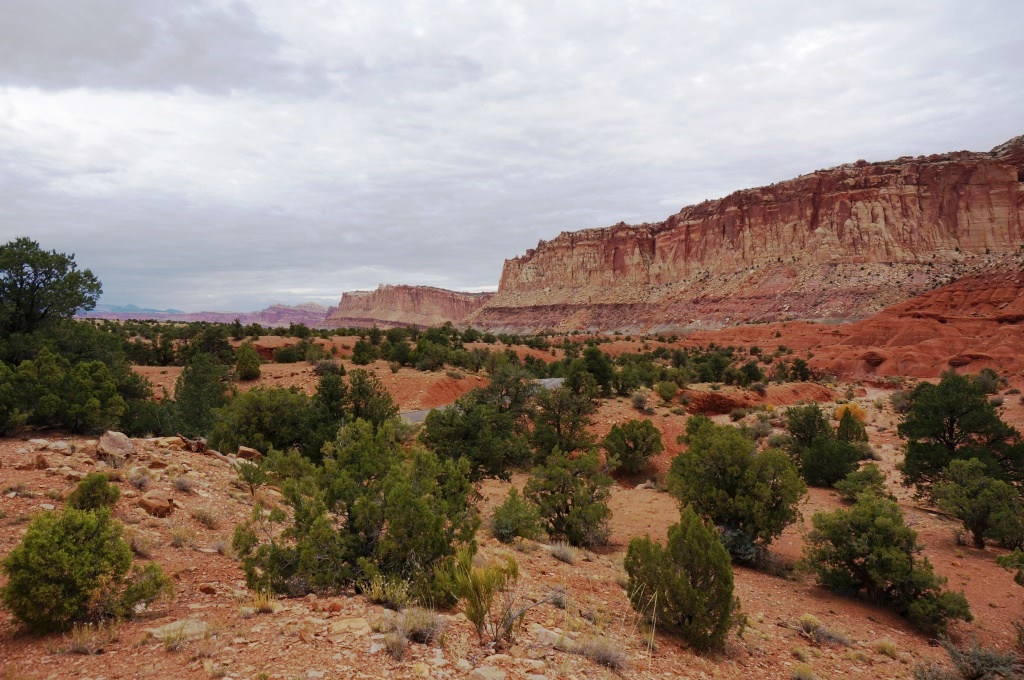
Capitol Reef for the non-hikers out there

You do not have to stagger up the side of the cliffs, huffing and puffing in the skimpy, high-altitude, low-oxygen air to see awesome sights at Capitol Reef. We did, and we loved it, but we just might be a little tetched in the head.

This post will cover a few of the easier hikes and scenic drives.

Scenic Drive

Scenic Drive

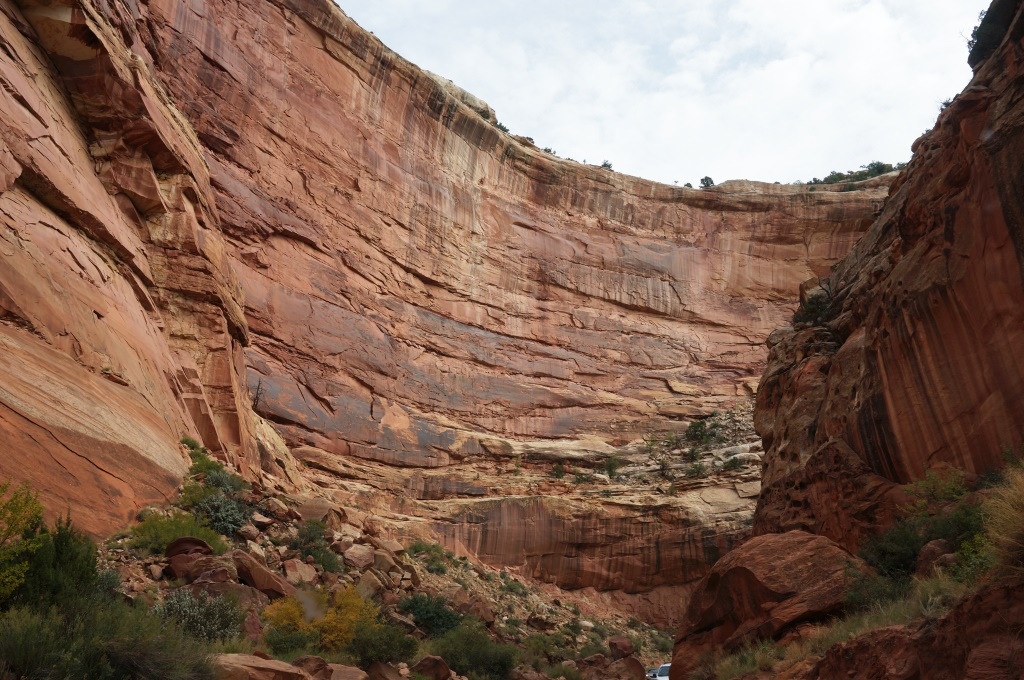
Scenic Drive – this is a ten mile paved road that goes past the visitor center, through historic Fruita, past the campground (stop at the Gifford House for pie) and on down the valley. You can then continue another 2.4 miles on a maintained gravel road that takes you part way into the narrow Capitol Gorge. You will get beautiful views of the multi-color layers in the ridges along this drive as well as a good taste of what it would be like to travel through the narrow gorge over a hundred years ago. This WAS the main road back then. There is a parking lot at the end of the gravel road where you can then hike farther into the Gorge. This easy trail has its own blog post. The strenuous Golden Throne Trail also starts from this point but we didn’t do that one.

Driving in Capitol Gorge

Driving in Capitol Gorge

Burr Trail Road loop – this has its own post but I want to mention here that it can be traveled in a passenger car IF the roads are dry. The Rangers at Capitol Reef or the people at the Torrey Visitor Center can give you road updates.

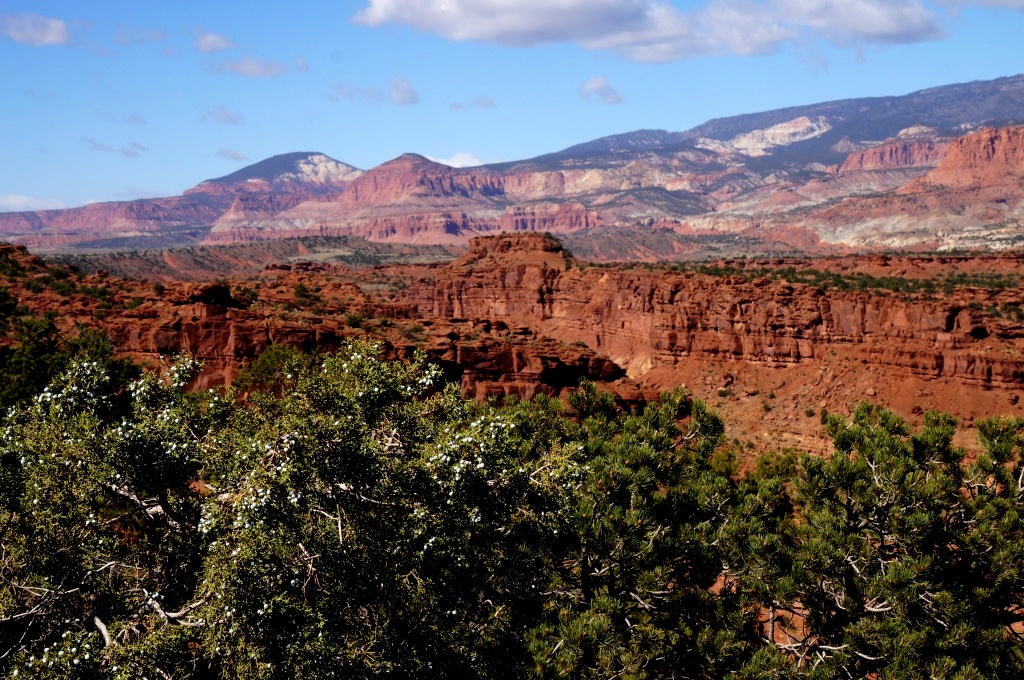
View from Panorama Point

View from Panorama Point

Panorama Point – this is along Hwy 24, three miles west of the visitor center. There is a parking area and a short walk up a knoll where you can get some great views of the Waterpocket Fold. This is also where one of the Rangers recommended we go for the lunar eclipse so it is a good place to view the beautiful dark skies (no joy on the eclipse as the clouds rolled in at sunset – the first night we had in weeks that wasn’t crystal clear).

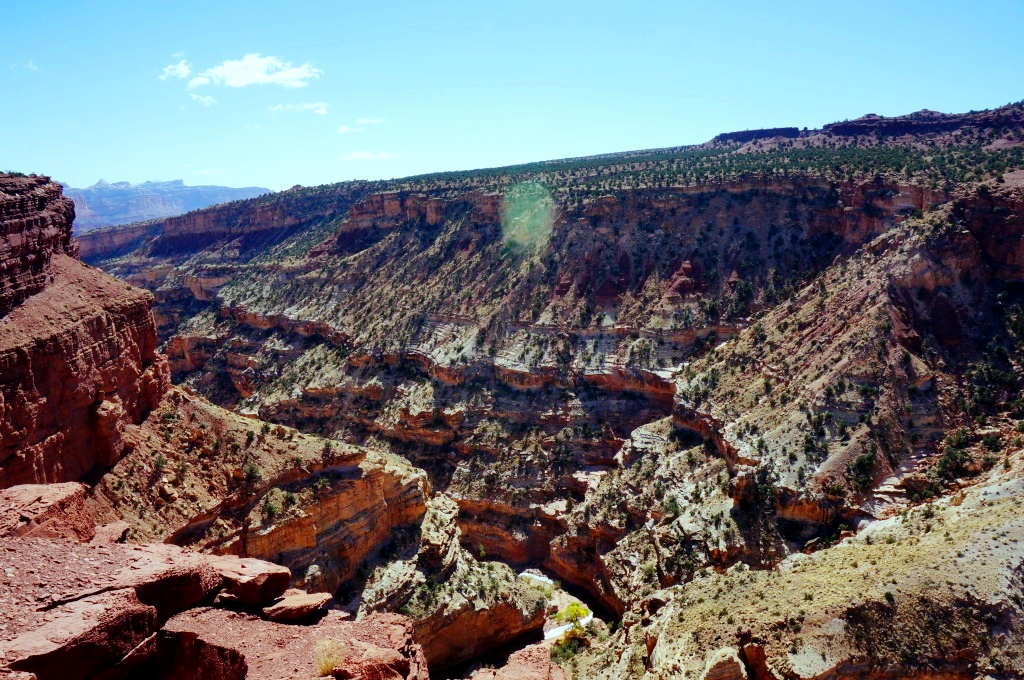
View from Goosenecks Overlook

View from Goosenecks Overlook

Goosenecks Overlook –  this is a one mile long, maintained gravel road that comes out of the Panorama Point parking lot and ends in another small parking lot. A short trail (.1 mi/one way) goes off to the right from the parking lot to Goosenecks Overlook. It is an easy trail but you do have to go up over a few rocks. At the end of the trail is a viewing deck that sticks out over the beautiful Sulphur Creek Gorge. The viewing area has fencing and rails so you don’t fall off. This is good because the day we were there a storm was rolling in with 40 mph wind gusts and it was ripping through that canyon.

View from Sunset Point

View from Sunset Point

Sunset Point Trail – (.4 mi/one way) goes to the left from the Goosenecks road parking lot. This is a fairly easy trail that goes out on a point and gives excellent views down the canyon. There is a nice bench along the way for those wishing to relax while enjoying the view.

Petroglyphs – there is a parking lot along Hwy 24 with boardwalks and viewing decks for the petroglyphs. There are others in the park but these are super easy to get to and it is a long panel with many rock art drawings. These are covered in another blog post but are listed here as an easy access item. There is a very good daily Ranger program here on the Petroglyphs and the Fremont Culture.

The park also has a nature center but it was closed for the season by the time we were there so we can’t comment on that but there were indications that they run many programs there during the summer season.

So, as you can see, even if you don’t hike, you can still enjoy many of the wonders of Capitol Reef. Happy adventuring!

H

Posted in Hiking, Parks | Tagged | Leave a comment

Anasazi State Park Museum

Saturday October 11, 2014

We visited the Anasazi State Park Museum which is just off Highway 12 in Boulder, UT. The park isn’t very big, encompassing only the museum building, the Coombs archaeological site which has only been partially excavated, a six-room replica of part of the Coombs Site, and a cutaway replica of a pithouse. The entrance fee was $5.00 per person, well worth the cost. Besides museum exhibits, there’s a short film and a gift shop.

The word Anasazi in Navajo means ancient enemies or enemy ancestors. Because of that some archaeologists adopted the term Ancestral Pueblo. I’ve seen both terms used during my wanderings in Anasazi territory.

While the Anasazi grew corn, beans and squash, they supplemented their diet with wild game and native plants. Their lives were far from easy, and most did not live past 45, with an average life expectancy of about 35.

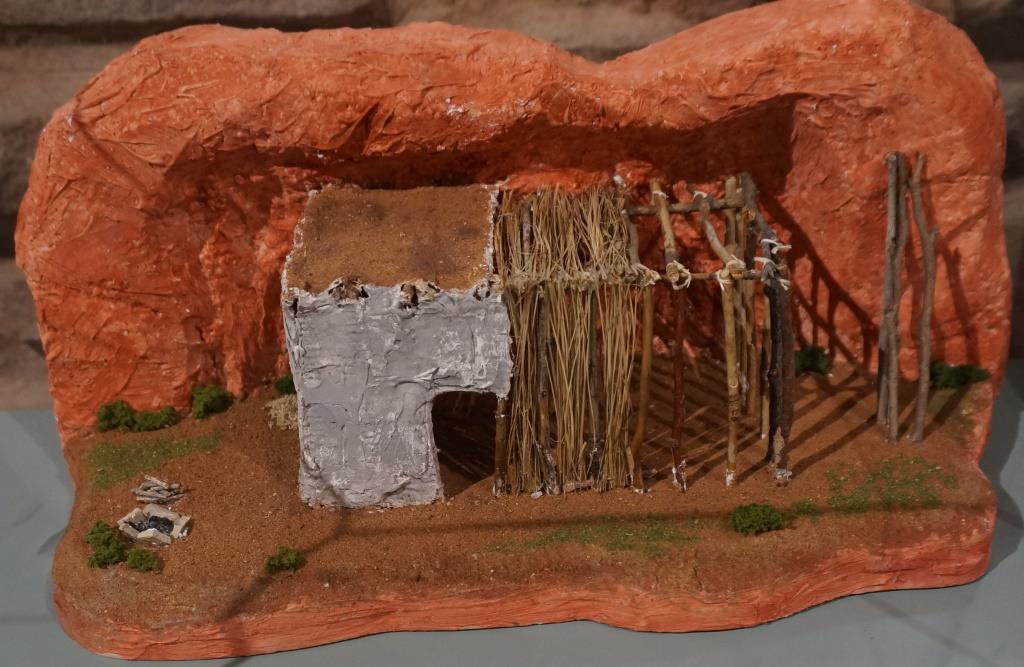
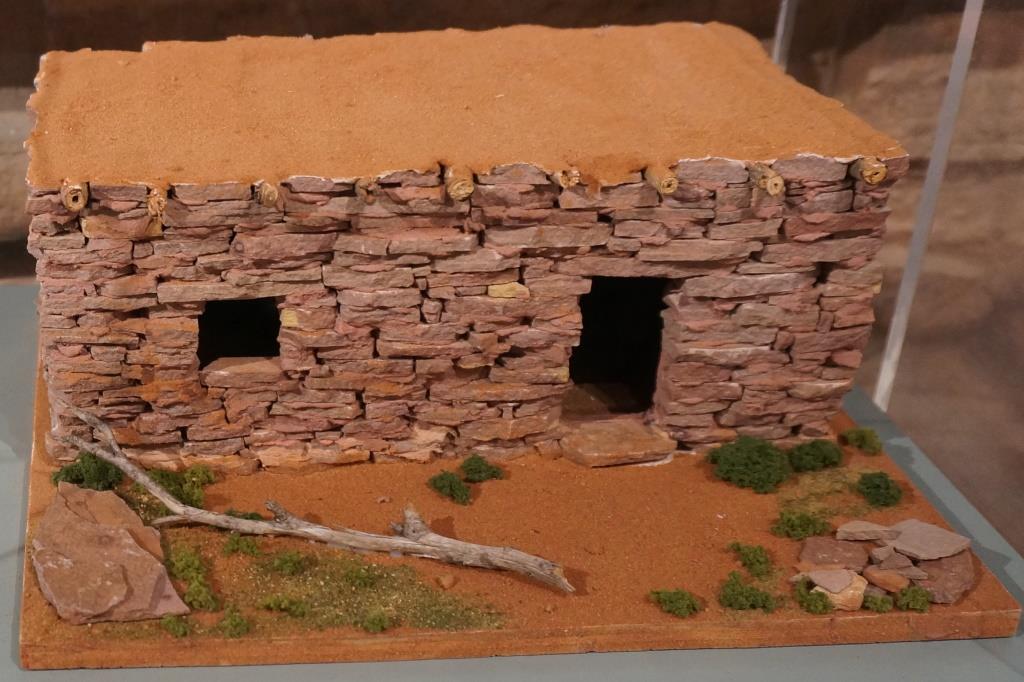
The museum, though small, was well done. They had some very good models of the various types of construction – pithouse, jacal construction, and kayenta masonry.

Pithouse construction

Pithouse construction

Jacal Construction

Jacal Construction

Kayenta Masonry

Kayenta Masonry

The museum also had quite a few artifacts on display, such as a 1,000 year old atlatl. I could almost picture an Anasazi hunter stalking a mule dear with it.

Initial excavation of the Coombs site began in 1927 by the Peabody Museum. Major excavations took place in 1958 and 1959 by the University of Utah. State park staff continued the excavations between 1970 and 1991.

In addition to hundreds of thousands of artifacts, these excavations uncovered 97 rooms and 10 pit structures. To date only about half of the site has been studied.

The Coombs site was occupied in the mid-twelfth century and abandoned around 1175AD. Like many Anasazi sites, no one knows why they left or where they went.

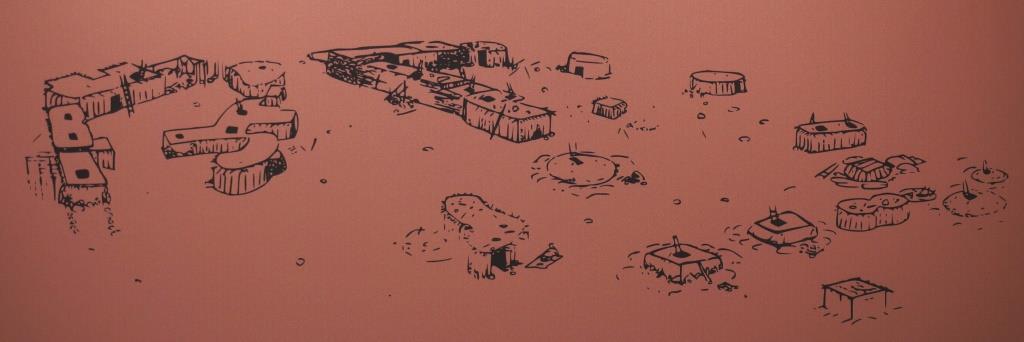
An artist’s rendering of what the site may have looked like is shown below.

Coombs site artist's rendering

Coombs site artist’s rendering

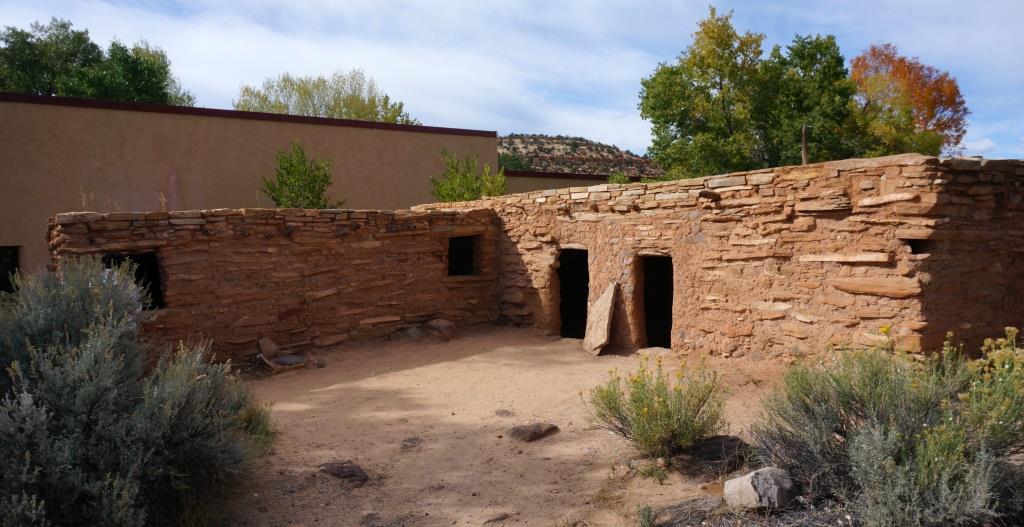
Park staff (and I suspect lots of volunteers) painstakingly reconstructed part of the Coombs site – three living rooms (on the right) and three storage rooms (on the left).

Coombs site replica

Coombs site replica

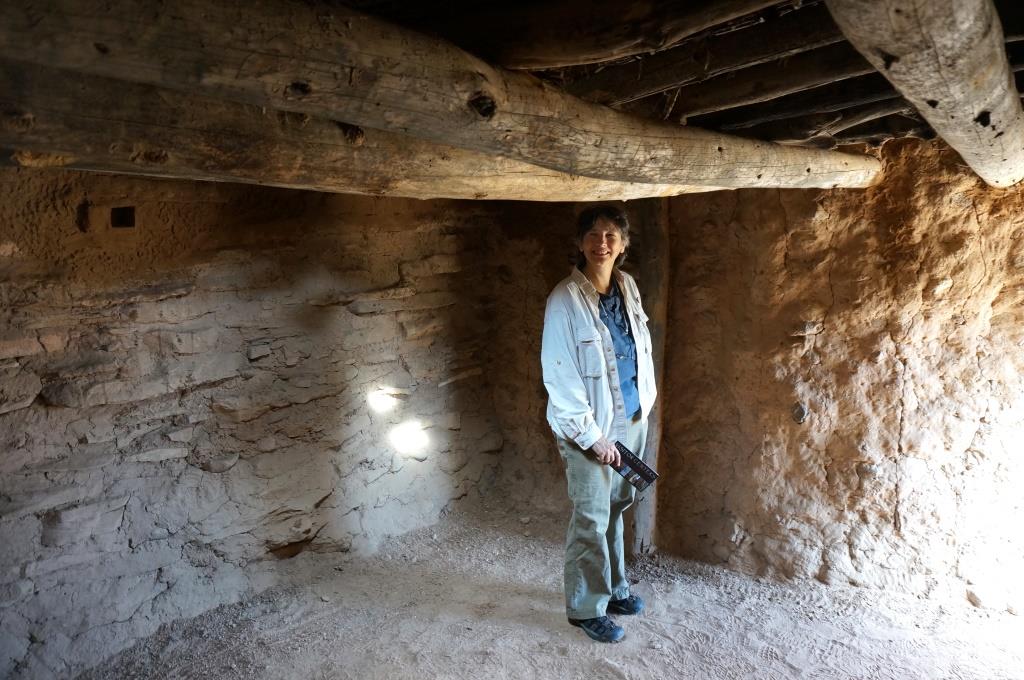
Using Holly’s height (5’5”) for scale, you can tell the Anasazi had to have been short (5’4” for men and 5’2” for women). Considering how much labor would be required to build these structures, extra headroom was not an option.

Replica living

Replica living room

Can you imagine Anasazi children playing in the yard, women grinding corn with manos and matates, men preparing their weapons for a hunt, and smoke wafting from the roofs of the living areas?

The park also built a cutaway replica of a pithouse. As the name implies, the Anasazi dug a circular pit and built a roof out of timbers and brush and coated it with a thick layer of mud. That made them cooler in summer and warmer in winter. There’s a firepit in the center beneath the roof opening. There’s also a ventilation shaft at the far end of the pit to pull in fresh air and push the smoky air out the roof opening.

Pithouse

Pithouse

The Anasazi certainly knew how to adapt their buildings to accommodate their natural environment. “Modern” humans go to great expense to create artificial environments that waste energy and resources. Just because we can doesn’t mean we should.

(Side note from Holly: To all those friends that teased John that I would have him living in a mud hut – his previous statement shows that my slow, insidious influence is working. There will be mud in our future!)

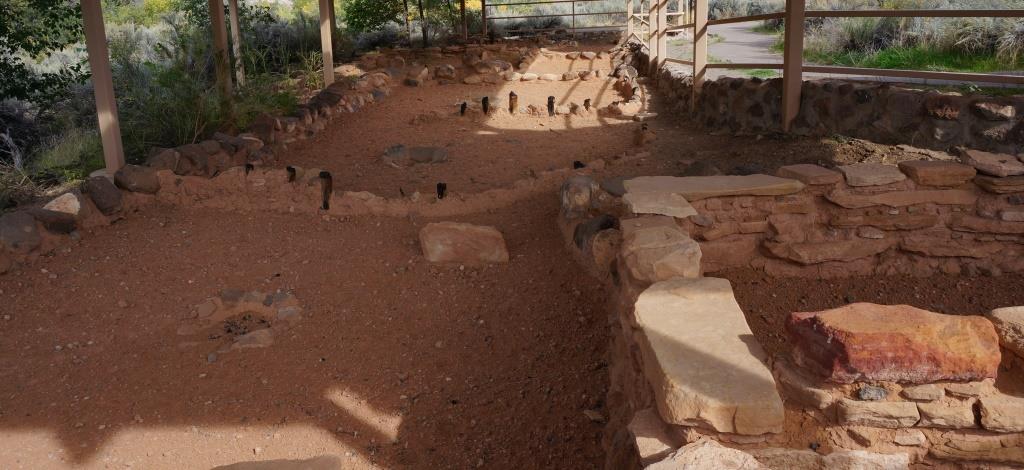
The park built a metal roof over the excavated site which is nice for those of us who can’t tolerate the brutal sun beating down on us. Even on a cool October day, the sun sucked the energy out of us.

Living rooms line the left side of the image while a storage room is to the right. Note the burned timbers sticking out of the remnants of the masonry walls. My recollection is that all the excavated sites had been burned but archaeologists aren’t sure why.

Coombs site excavation

Coombs site excavation

I can’t imagine moving to a new home and burning my old one. Maybe their homes had spiritual value and leaving it for a stranger to move into would have been sacrilegious. It’s a question we will never know the answer to.

All in all, I found this tiny park to be a real gem and thoroughly enjoyed my visit.

J

Posted in Museums, Parks | Tagged | Leave a comment

Burr Trail Loop Drive

Capitol Reef NP

Saturday October 11, 2014

We gave our toad a workout today by traveling about 115 miles down the very bumpy and dusty Notom-Bullfrog Road, the equally bumpy and dusty Burr Trail, and back to the campground on Route 12 also known as Scenic Byway 12.

Before turning onto the Notom-Bullfrog Road we stopped at the Behudin cabin. This one-room cabin was built in 1882 by Elijah Cutler Behunin and his family. They lived here for less than a year before relocating. Fremont River floods destroyed their irrigation system as well as their crops. The landscape and environment here can be very unforgiving. They eventually settled in Fruita. By 1896 the Behunin’s had 13 children. The sign had an 1896 photo of the Behunin family. By estimating the ages of the kids in 1896, we figured that ma and pa Behunin and five to six kids lived in this cabin. And some people think our 28 foot motorhome is too small for the two of us.

Behunin Family Cabin

Behunin Family Cabin

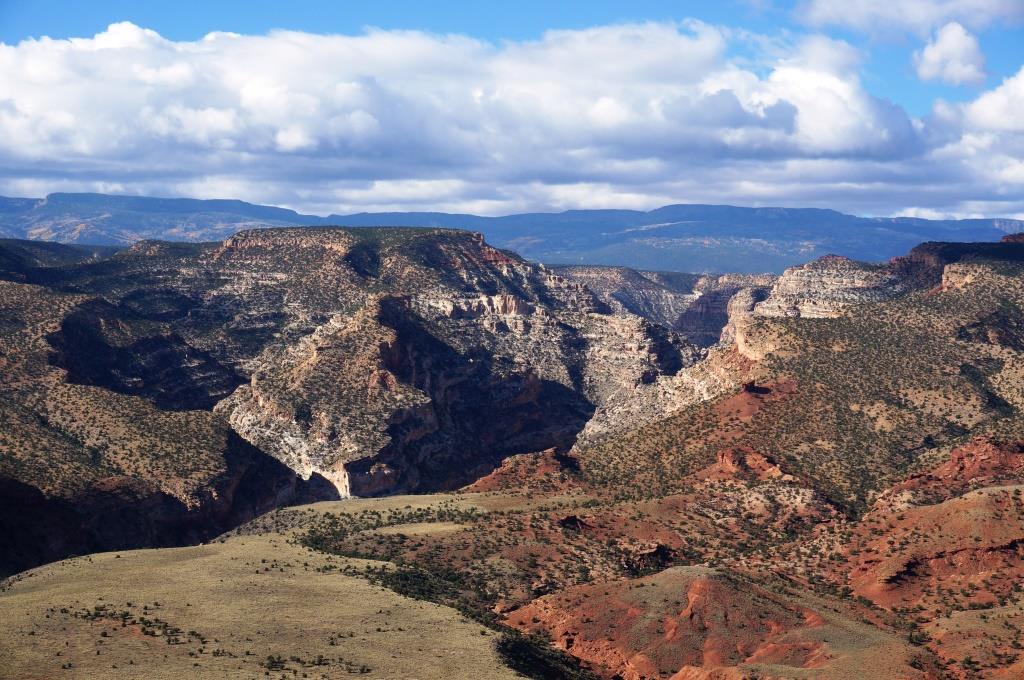
The Notom-Bullfrog Road tracked straight, sort of, down the Waterpocket Fold for 34 miles. The first 11 miles are paved.

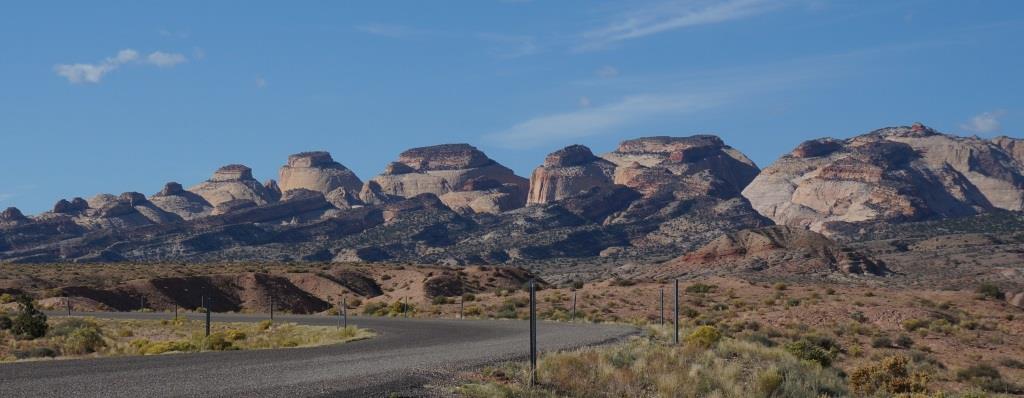
You can see how the weather has sculpted the mountains along the Waterpocket Fold.

Sculpting the Waterpocket Fold

Sculpting the Waterpocket Fold

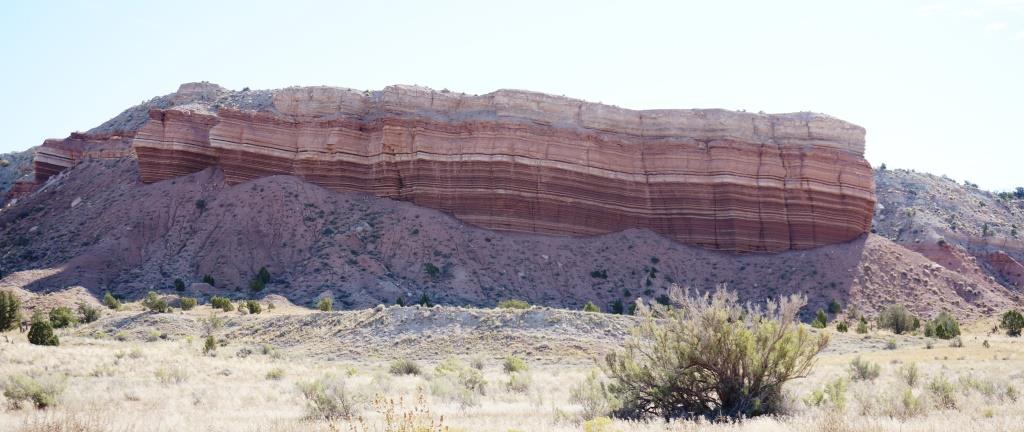
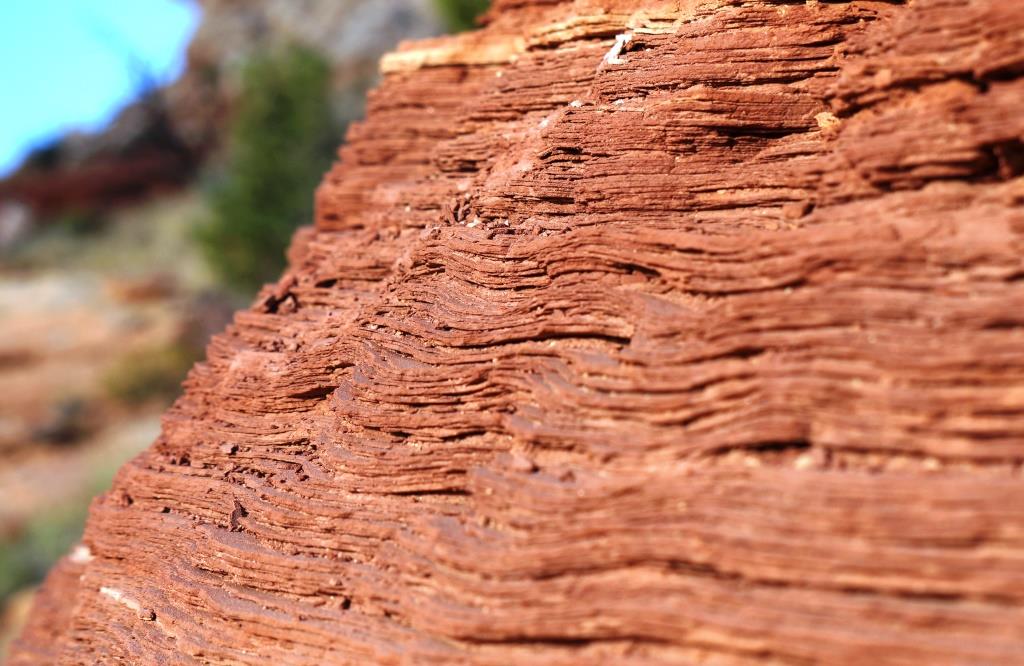
You can also see nearly perfect sandstone layers, like a geological Napoleon pastry. (I’m seeing a pattern here. Lots of my analogies refer to food.)

Delicately layered cliff

Delicately layered cliff

The next 23 miles of the Notom-Bullfrog Road definitely aren’t paved. We bounced and bumped through numerous gravel washes and rutted and washboarded dirt roads. Our tires kicked up plumes of powdery red dust that coated the car. We’ve been hoping for rain to wash the dust off. We’re still waiting. And the car’s still dusty.

Here’s another view of this fascinating landscape.

Waterpocket Fold landscape

Waterpocket Fold landscape

The Burr Trail was named after John Atlantic Burr who built it to move cattle from Boulder Mountain to Bullfrog Basin. It became a “real” road in the 1940s to support mineral exploration (coal, oil and uranium). The mines have since been abandoned and are now encompassed as part of the Grand Staircase-Escalante National Monument, which is tasked with cleaning up the mess.

When we turned onto the Burr Trail we wound up and down 6 miles of dirt and gravel switchbacks cut into the west side of the Waterpocket Fold. More often than not there were no guardrails to spoil our view (good) or to keep us from rolling down the side of the canyon (bad). Needless to say, the driver (me) kept a sharp eye on the road and a firm two-handed grip on the steering wheel.

Still there were plenty of places to pull off the road and pry my hands off the steering wheel to take a look at the scenery, which was jaw-dropping.

Burr Trail crossing over Waterpocket Fold

Burr Trail crossing over Waterpocket Fold

Shortly after we reached the top of the canyon, we were in the Grand Staircase-Escalante National Monument. There was no shortage of beautiful scenery in the National Monument either.

Burr Trail Road through a canyon

Burr Trail Road through a canyon – we are on the road and the part we just drove  can be seen below us

Thirty miles of paved road wound its way through the park until we intersected Route 12 in Boulder, UT. We passed several small primitive campsites on BLM land, in Capitol Reef NP and in Grand Staircase Escalante NM. Large RVs wouldn’t fit but we saw some small RVs in them. Just remember we’re serious when we say primitive.

Burr Trail Road in Escalante

Burr Trail Road in Grand-Staircase Escalante

We didn’t do much sightseeing in Boulder, but we did stop for a few hours to wander the Anasazi State Park Museum, which is covered in another blog post.

Between Boulder and Torrey, Route 12 winds through the beautiful Dixie National Forest. The section of the road north of Boulder (toward Torrey) wasn’t completed until 1985 so locals had to make a 200 mile loop around Boulder Mountain.

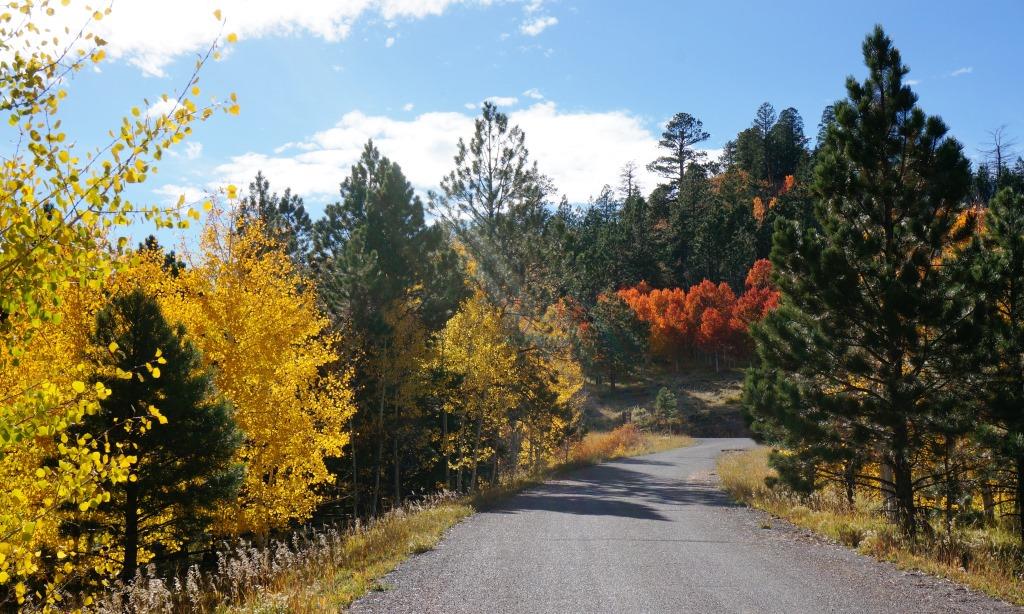
I did learn something new while reading one of the informational signs next to Highway 12 on Boulder Mountain. Aspens produce seeds but usually reproduce by root sprouts. Thus an aspen stand can be composed of genetically identical trees. This means that an entire stand of aspen may change color at the same time.

Fall colors on Boulder Mountain

Fall colors on Boulder Mountain

We took a peek at the Oak Creek Campground just off the highway and thought it was very nice. It can’t accommodate large RVs. The Singletree Campground right up the road is even nicer and can. Although there are no hookups, there is a dump station and potable water at Singletree.

Oak Creek Campground

Oak Creek Campground

J & H

Posted in Scenic Drives | Tagged | 1 Comment

Hickman Bridge and Rim Trail Overlook Hikes

Capitol Reef NP

Thursday October 9, 2014 and Sunday October 12, 2014

The trail head for both hikes started at the same parking area off Route 12.

The Hickman Bridge trail was about 2 miles round trip. We got started at mid-morning, which we quickly realized was too late. The sun beat down on us and we started to swelter even though the air temperature was fairly cool. Where ever we could find shade – which wasn’t often – we’d stop to catch our breath, have a drink of water, and cool off.

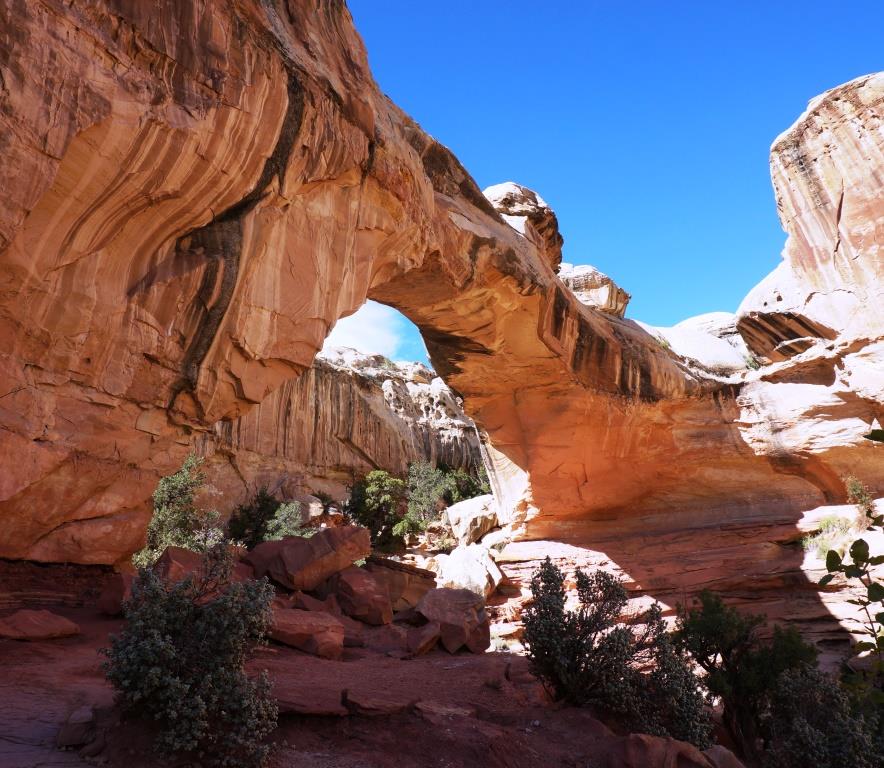
It took us a good hour to reach Hickman Bridge but it was worth it. For perspective, Hickman Bridge is 133 feet wide at the base.

Hickman Bridge

Hickman Bridge

The Rim Overlook Trail (4.6 miles round trip) was part of a longer trail that could take us to Navajo Knobs (9.4 miles round trip). Given the intensity of the sun, we opted to stop at the Rim Overlook.

We tried to be a little smarter by starting several hours earlier but, given the longer distance we had to hike, the sun wilted us long before we got to the overlook.

What amazed me, and lots of things have amazed me, was how delicate some of the sandstone layers are, like a flaky pastry. I wish I knew how long it took to make each layer. Hundreds of years? Thousands?

Sandstone pastry

Sandstone pastry

When we got to the rim overlook, we were not disappointed.

We were graced with a spectacular view of Fruita nestled in the canyon and the masterful landscape of the Waterpocket Fold to the east.

Overlook of Fruita and Waterpocket Fold

Overlook of Fruita and Waterpocket Fold

The view westward was no less spectacular but was of a very different landscape.

Westward view from Rim Overlook

Westward view from Rim Overlook

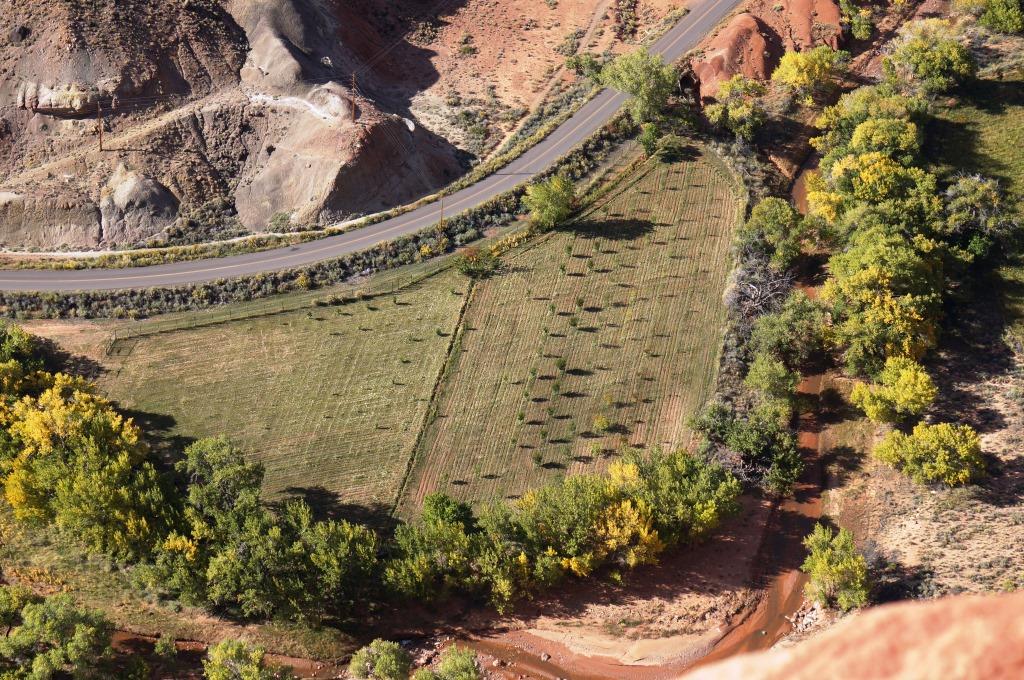
The overlook was a good 1,100 feet above the road. I took this picture looking straight down. There was nothing but air between the rock I was perched on and the ground.

Fruita orchard from Rim Overlook

Fruita orchard from Rim Overlook

We found a relatively shady spot that was protected from the wind to eat our lunch and to rest for the hike down.

What more could you ask for? We had solitude, awesome views, and time to contemplate nature’s mysteries.

J

Posted in Hiking | Tagged | Leave a comment