Far View Trail and Mesa Top Drive

Mesa Verde National Park

September 26, 2014

Far View Trail

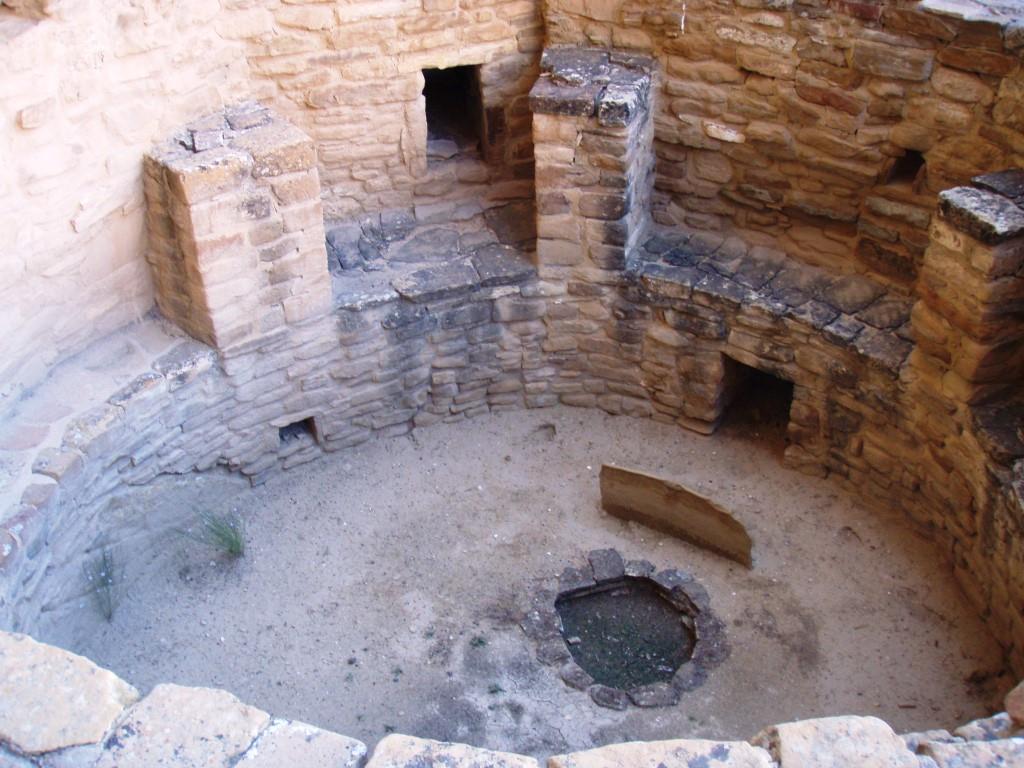
Far View Trail is a 3/4 mile loop trail that passes six archaeological sites. At each site, there are signs requesting you to stay out of the site, but no real barriers to keep you from doing that. Unfortunately, some people, AKA morons and idiots, ignore the signs and tramp into the sites. We saw recent footprints at the bottom of a kiva. Resist the temptation to get a closer look. To modern Puebloans these sites are sacred, a link to their past.

Far View existed from about 900AD until 1300AD when Mesa Verde was abandoned.

While walking from Coyote Village to Mummy Lake we heard a clip-clop sound. I glanced through the trees and toward the sound. I saw something large and brown. If not for the clip-clop sound, I would have thought it might be a bear – a very large bear. The animal walked into a clearing in the trees and we were staring at a dark brown horse with a black mane and tail. As soon as it spotted us it sped up and disappeared into the trees on the other side of the clearing. Not what we were expecting to find on our hike.

When we got back to the museum we mentioned seeing a horse to a park ranger. He gave us a knowing look and said, “Wild horse.” He told us that there is, unfortunately, a herd of wild horses that escaped from one of the nearby reservations in the park.

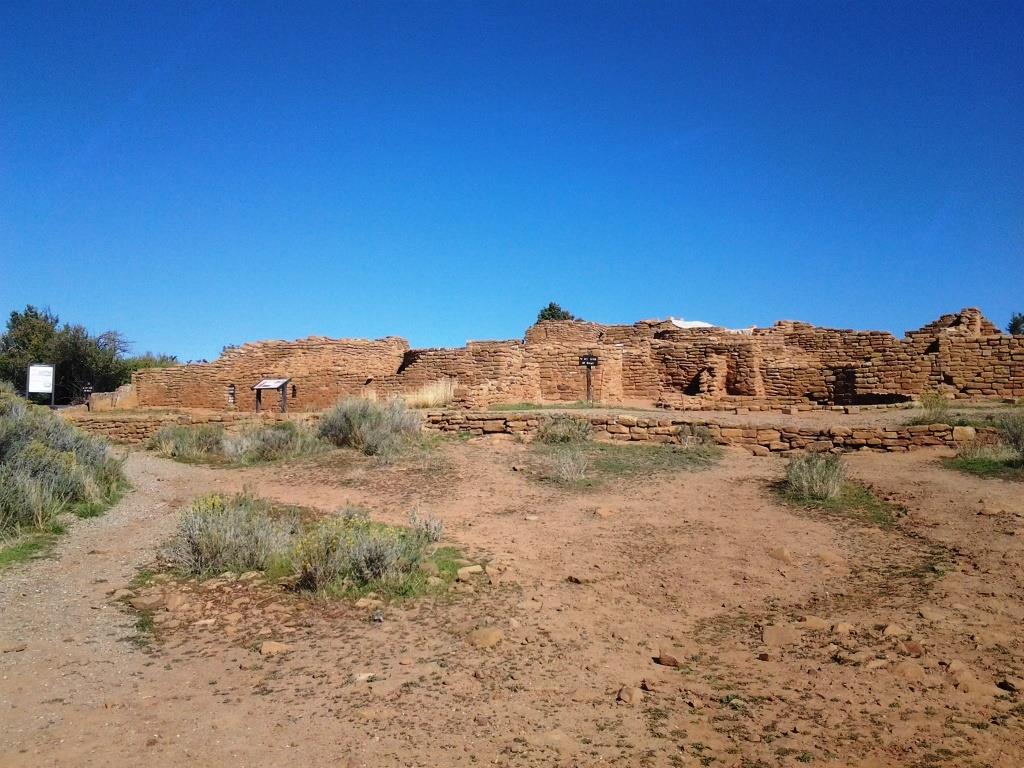
Far View House

Far View House consists of 40 ground floor rooms, an unknown number of second story rooms, and five kivas. Because of its size, archaeologists speculate that Far View House may have been a public house.

Far View House

Far View House

Pipe Shrine House

Pipe Shrine House is virtually next door to Far View House. What’s distinct about this house is that the north side’s walls are single-coursed masonry while the south side’s are double-coursed.

Symbol at Far View House

Symbol at Far View House

We’re not sure what the above symbol means, but one theory is that it represents the seasons.

Coyote Village

Coyote Village consists of 30 rooms, five kivas, and a circular tower.

Coyote Village drying racks or shelves

Coyote Village drying racks or shelves

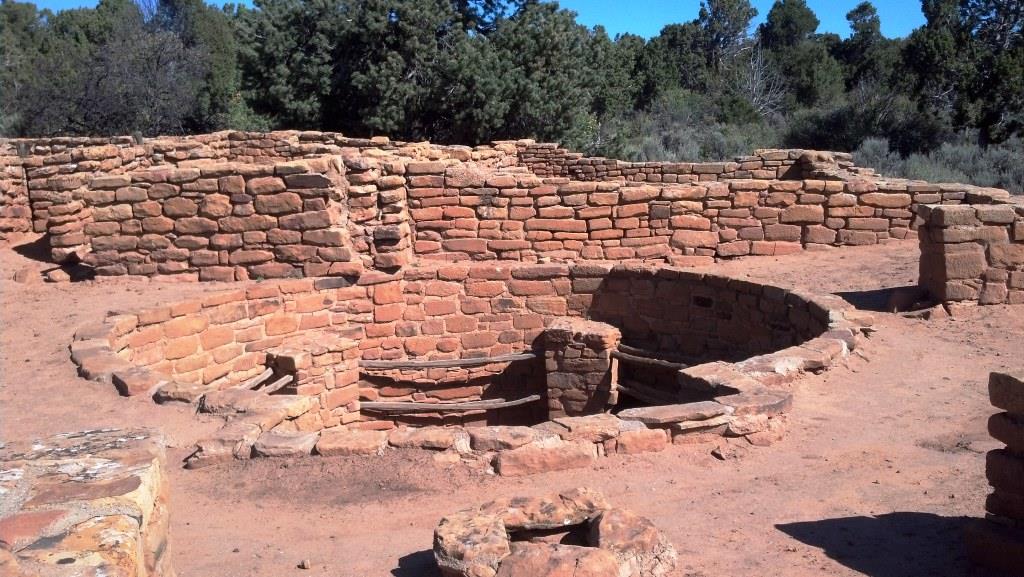
In the above image of a Coyote Village kiva, you can see several wooden beams extending from one pilaster to another. Archaeologists think these may have been used as drying racks or shelves.

Mummy Lake

Ancestral Puebloans built Mummy Lake as a reservoir. It was 90 feet in diameter and twelve feet deep. Being the reformed geek that I am, by my calculations Mummy Lake can hold 570,000 gallons of water. Embankments built outside the reservoir created a catchment area of 25 acres.

Mummy Lake

Mummy Lake

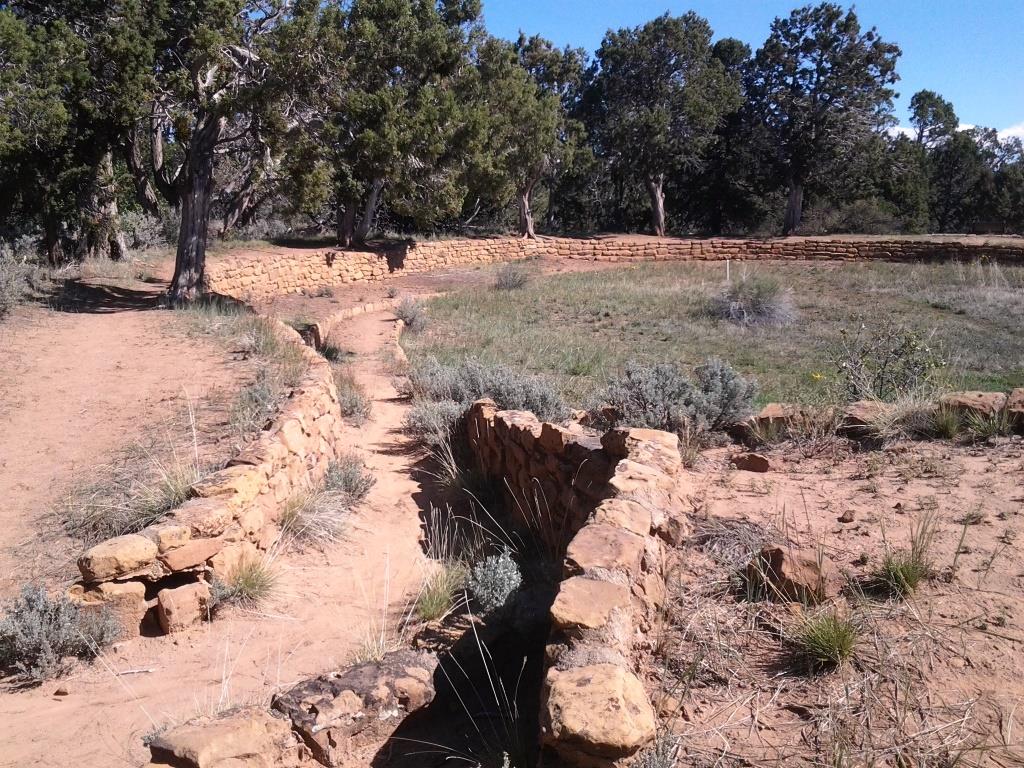
In the above image you can see where water was channeled into the reservoir.

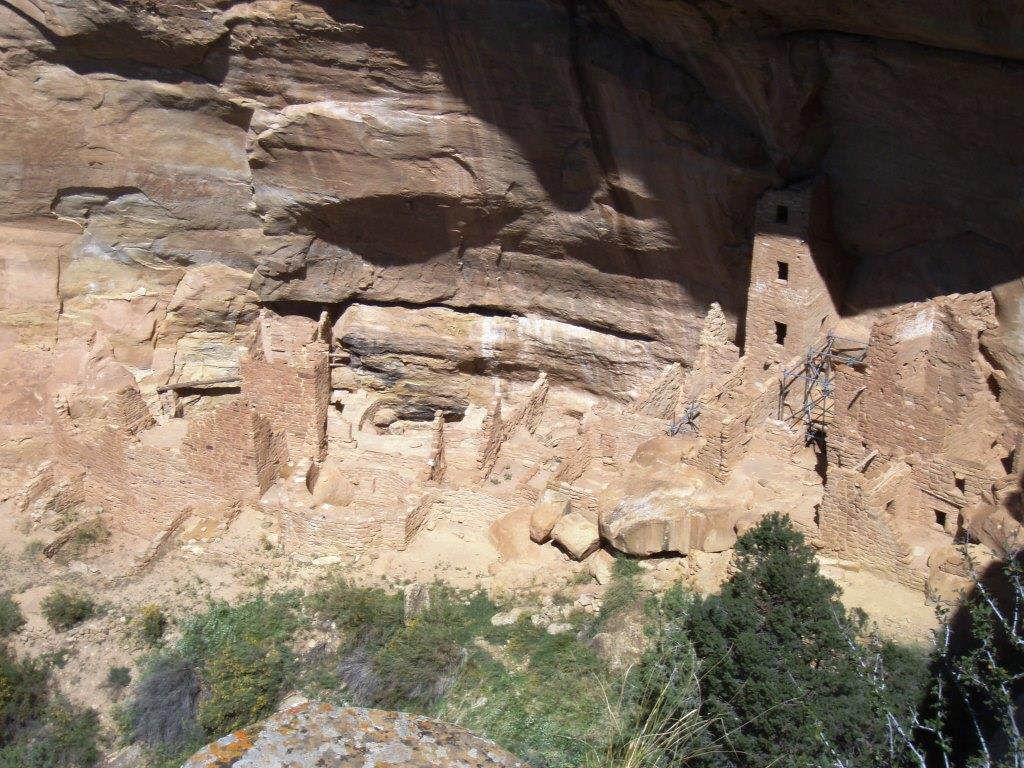
Far View Tower

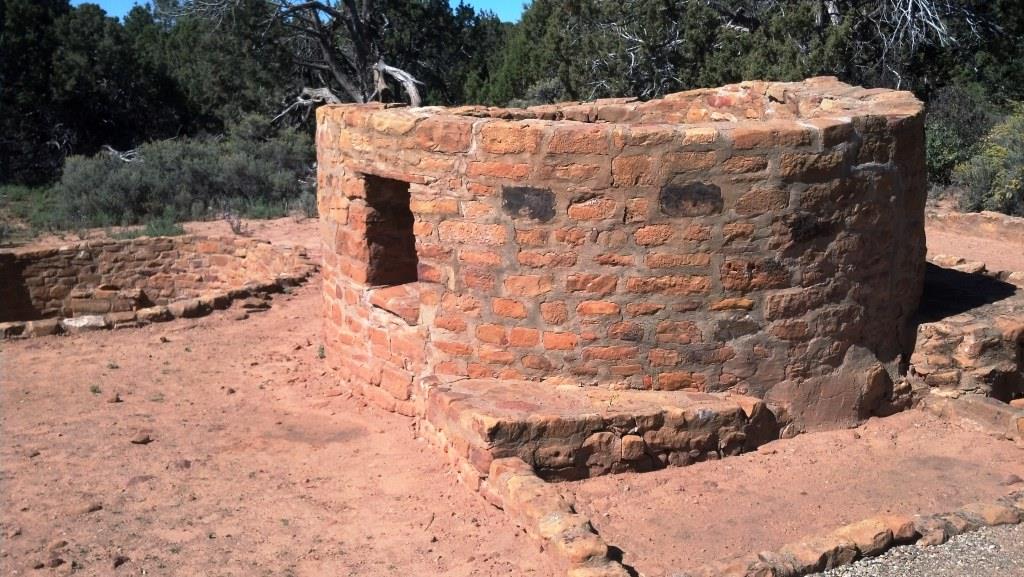
Far View Tower consists of 16 rooms, three kivas (one of which was abandoned), and a two story circular tower. The rooms’ walls were single-course masonry while the tower was double-walled.

Far View Tower

Far View Tower

Mesa Top Drive

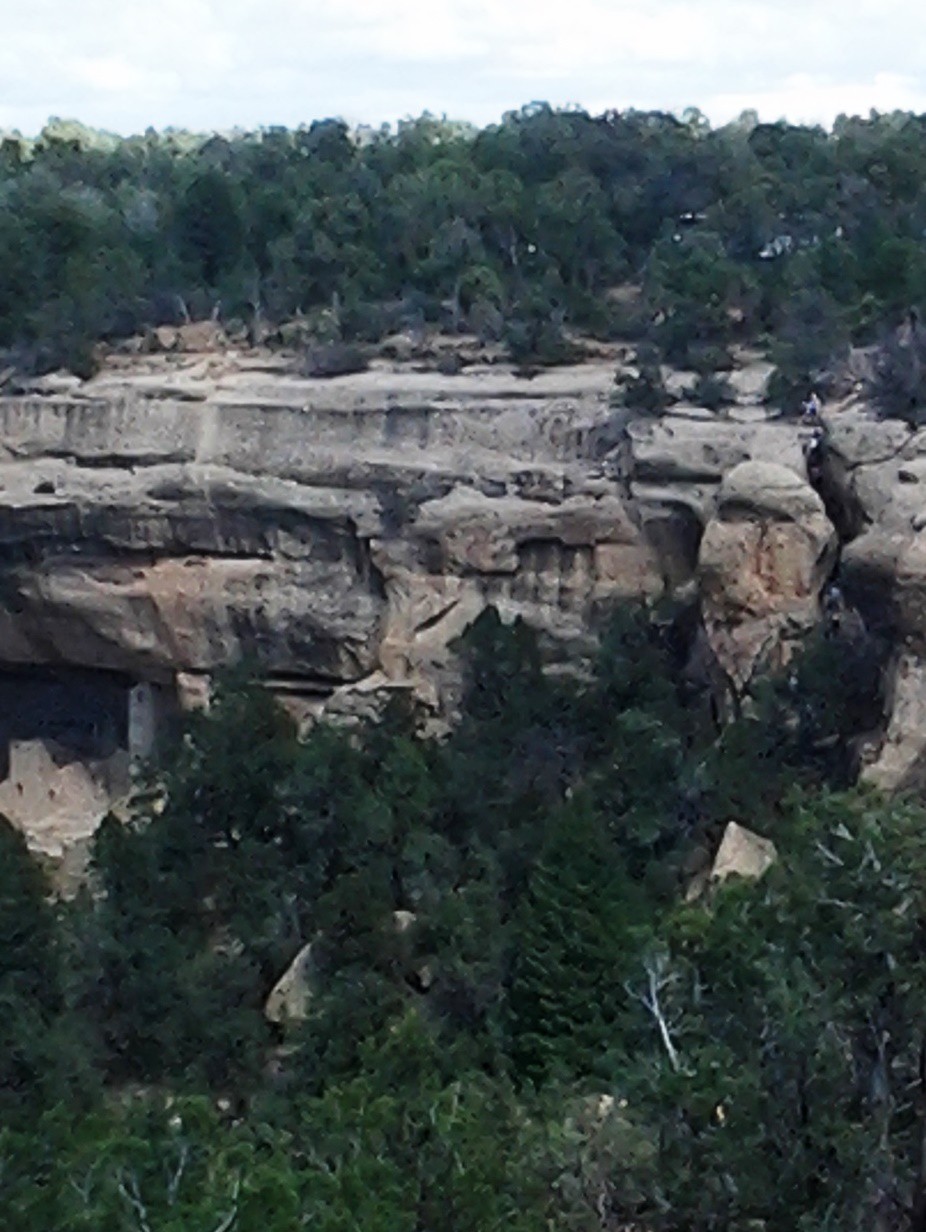
We got some spectacular views of cliff dwellings across the canyon as well as examples of early mesa-top dwellings.

I had always thought that cliff dwellings were isolated from each other. Boy was I wrong. What I learned from Mesa Top Drive is how close together some of the cliff dwellings are, almost like next door neighbors. With the Ancestral Puebloans skill at clambering up and down the cliffs, paying a visit to a neighboring cliff dwelling would be as easy as us walking a couple of blocks to a neighbor’s house.

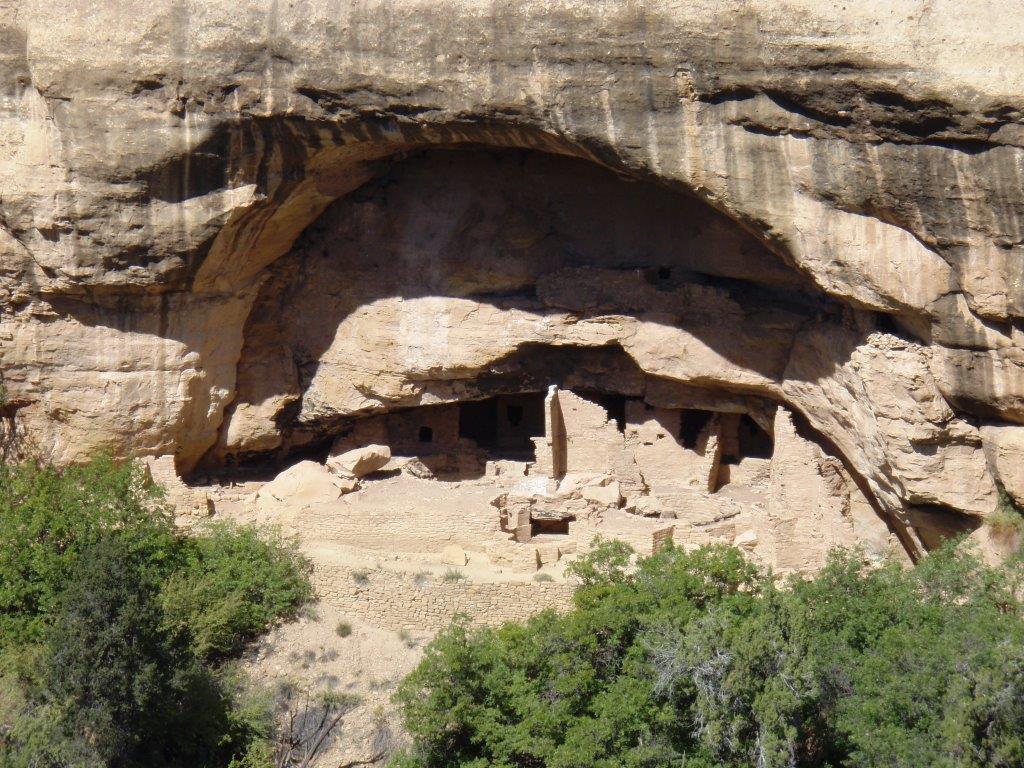
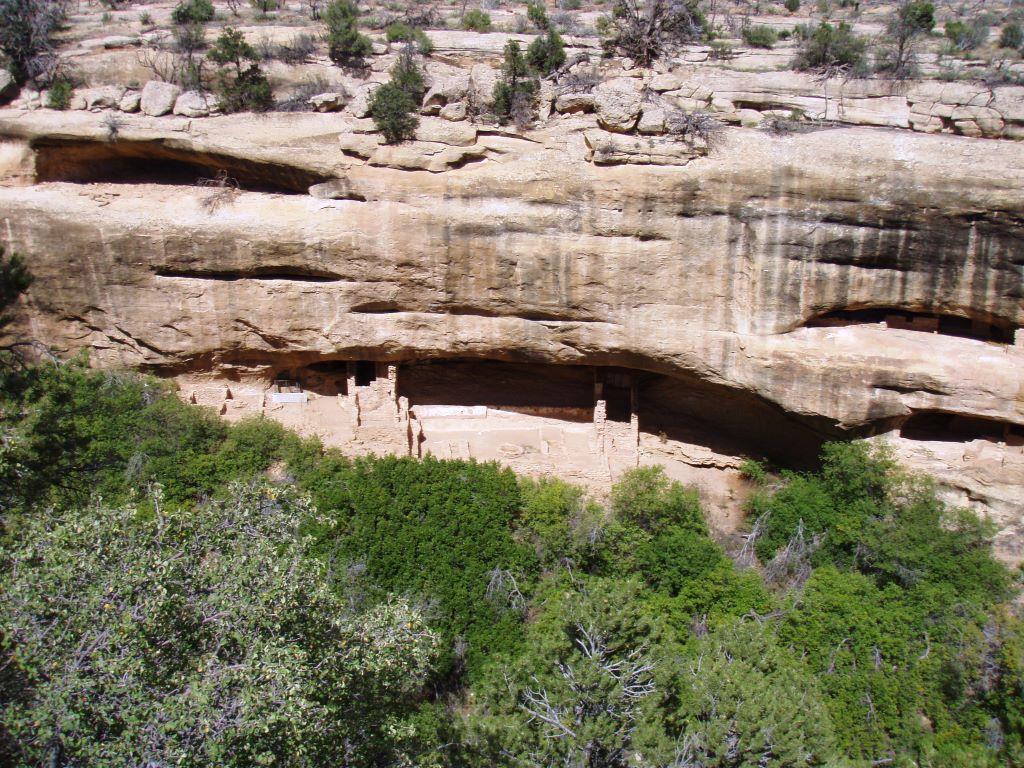
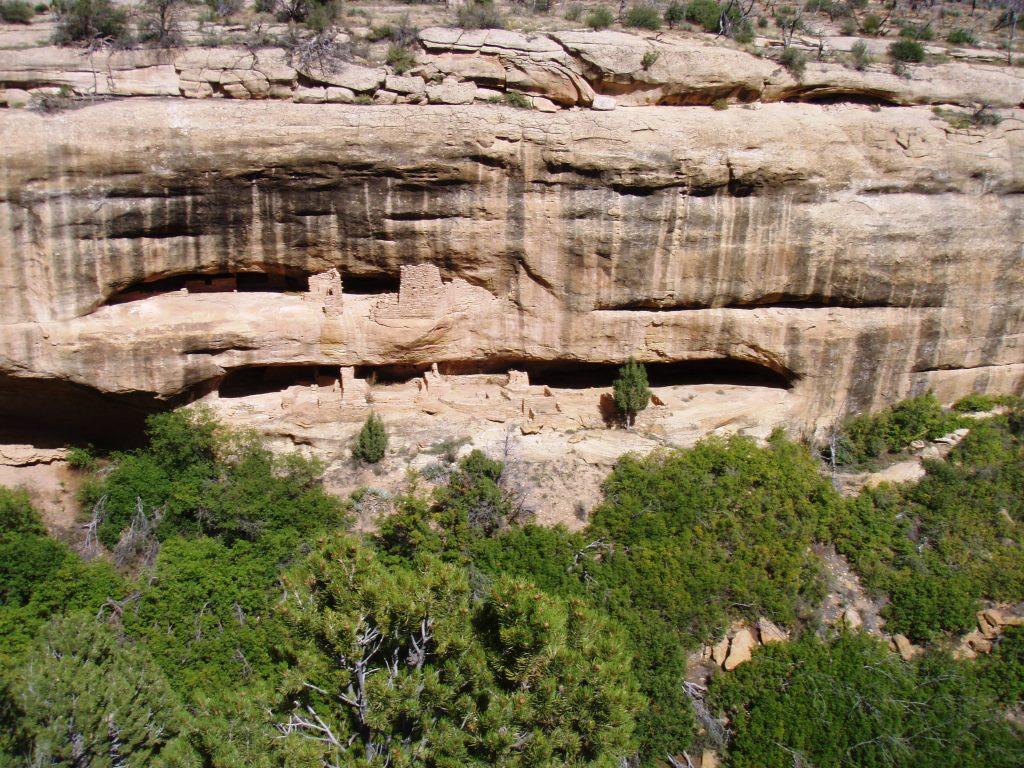
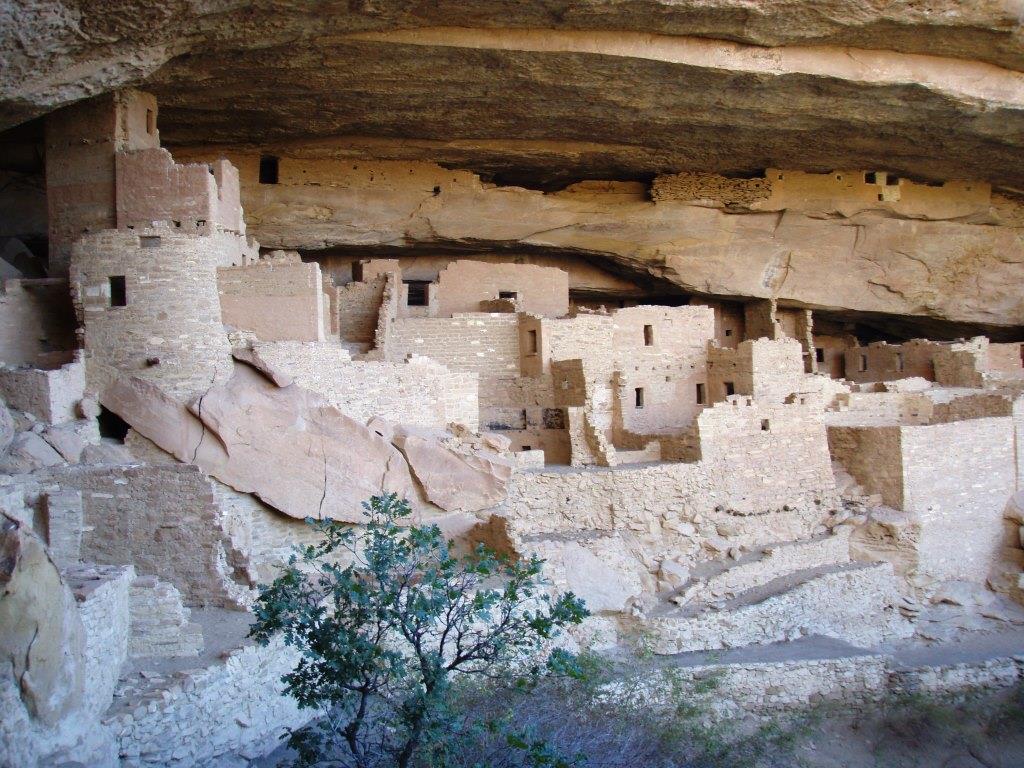
I took the following images from across the canyon. All these cliff dwellings, and more, were clustered in a mile or two long line.

Square Tower House

Square Tower House

Square Tower House

Oak Tree House

Oak Tree House

Oak Tree House

 Fire Temple House

Fire Temple House

Fire Temple House

New Fire House

New Fire House

New Fire House

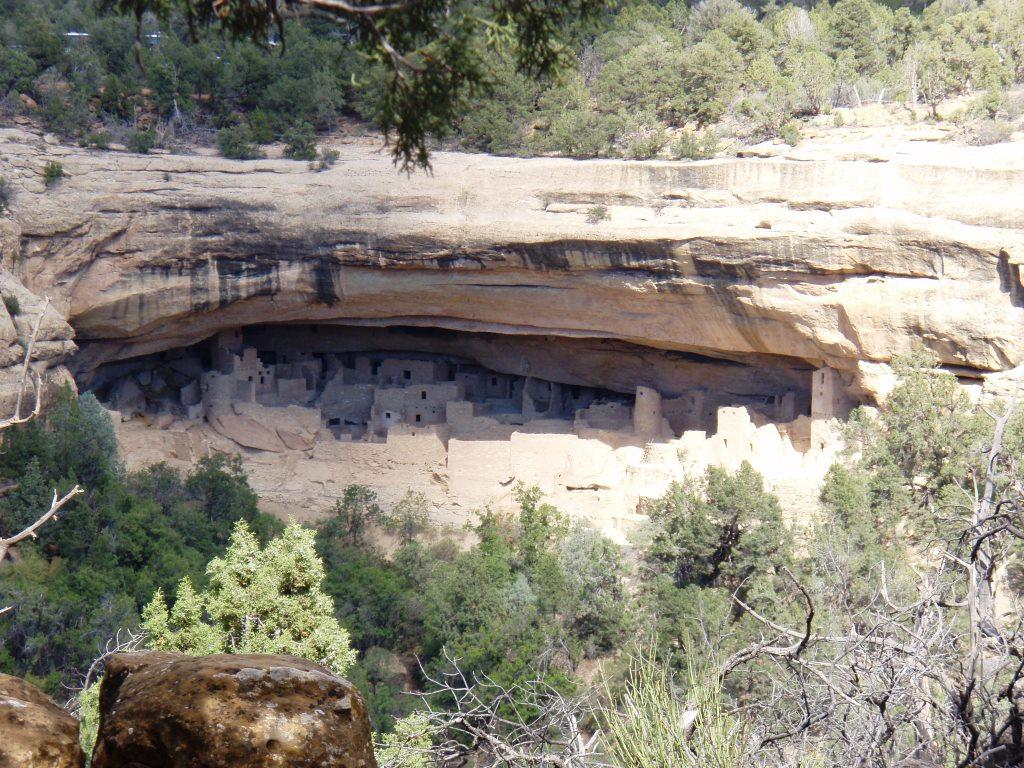
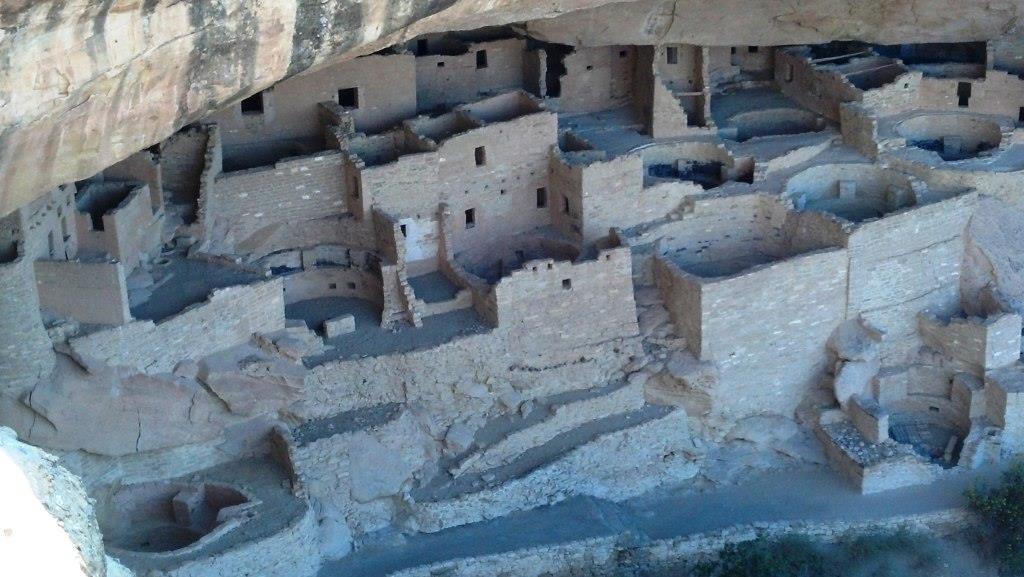
Cliff Palace

Cliff Palace

Cliff Palace

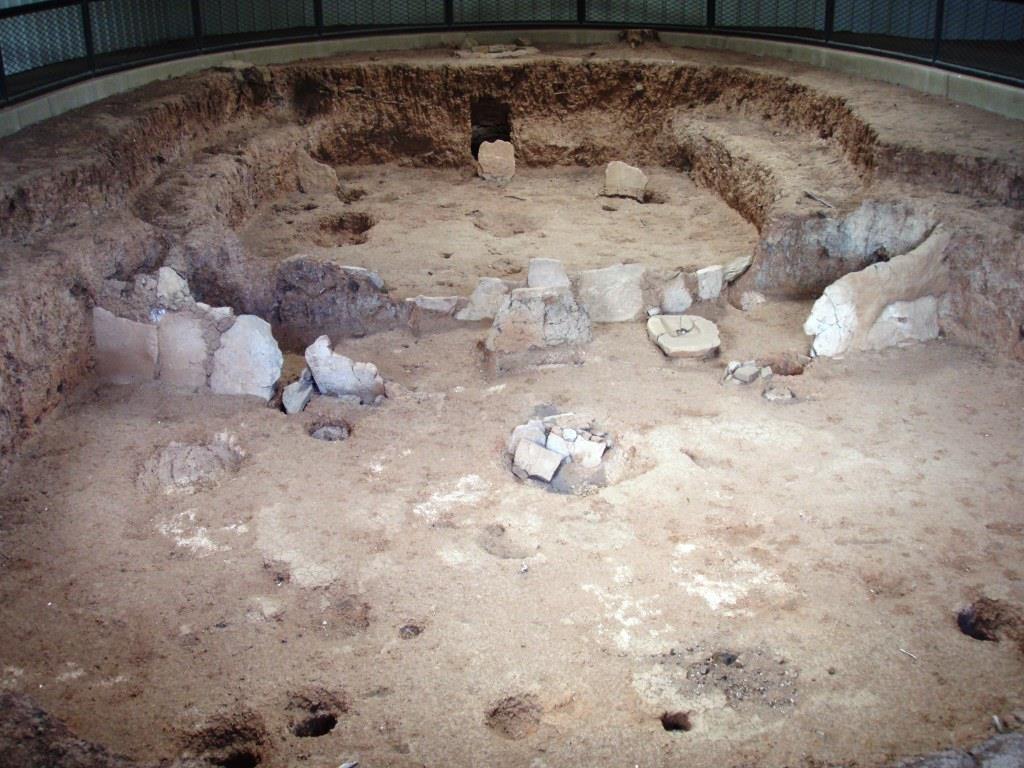
Ancient Pithouse

This pithouse dates from about 600AD. What’s missing are the walls and roof. The walls were angled in with a square roof placed on top. Both would have been constructed of logs and mud. Access to the house would have been through a hole in the roof, above the firepit.

Pithouse

Pithouse

This image shows a typical pithouse which consisted of a living area (bottom of image) and an antechamber (top of image) for storage of food and firewood. The holes in the foreground show where the corner poles supporting the roof would have been. The shallow hole in the center of the image is the firepit.

It might not be obvious, but a pithouse was a firetrap. Archaeologists have determined that most of the pithouses they excavated had burned down. The outside walls and roof may have been plastered with mud, but the inside walls and ceiling were not. Over time, the logs would have dried out and easily caught on fire. No human remains were found inside the burned pithouses so the residents either got out during an accidental fire or burned the pithouses deliberately.

J

Posted in Hiking, National Park, Parks | Tagged | Leave a comment

Cliff Dwellings

Mesa Verde National Park

September 24-25, 2014

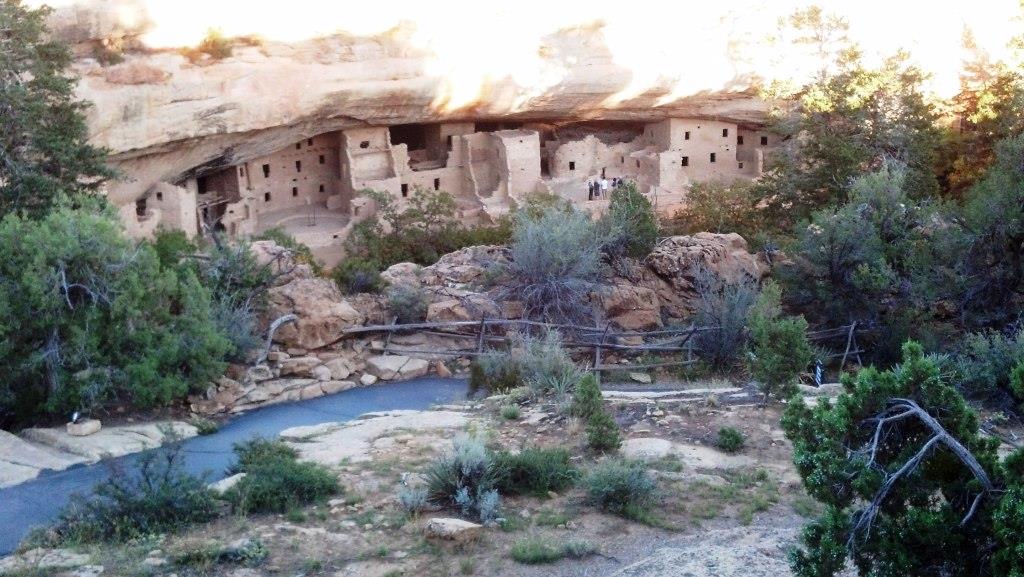
Spruce Tree House

We visited Spruce Tree House on our first day in the park. No sense in wasting time.

Spruce Tree House is the only cliff dwelling on the Chapin Mesa you can visit without having to sign up for a tour. A 1/4 mile paved path leads from the museum to the site and a park ranger is always at the site to answer questions and ensure no one messes with the buildings or artifacts.

On the way down you get a terrific view of the entire house.
IMG_20140924_182146_826

Spruce Tree House

The term “house” is a misnomer as the house is really a community. The house consists of room blocks, ledge rooms (for food storage), courtyards, and kivas. The house contains quite a few two and three story structures. Pretty amazing considering that the sandstone blocks are only held together with a clay mortar.

Many of the door openings are T-shaped. One theory has it that these openings allowed people to enter while carrying wide loads.
Door openings at Spruce Tree House

T-shaped openings in second floor structure at Spruce Tree House

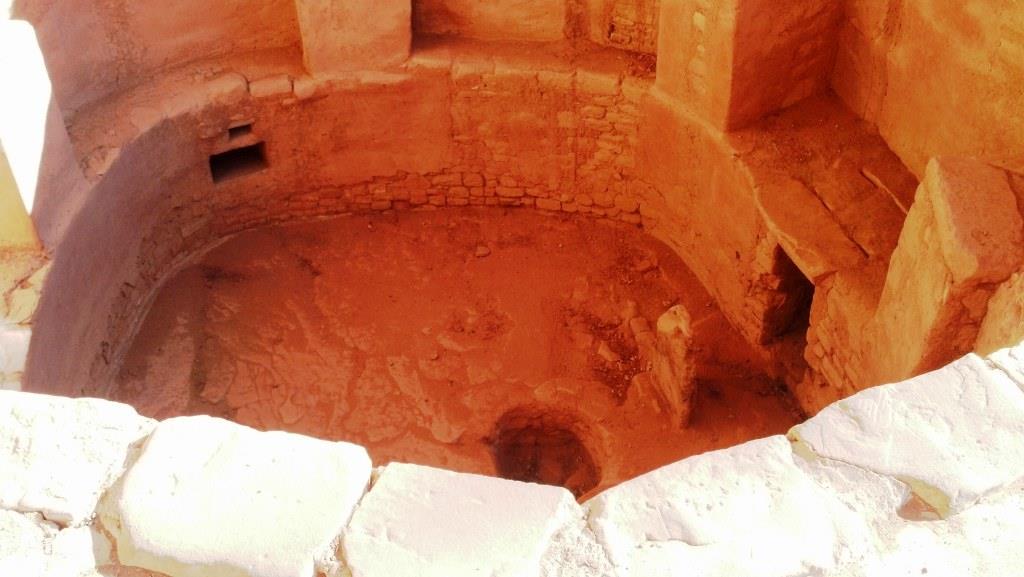
Kivas are circular rooms dug into the ground. There’s an air shaft for ventilation and a short air deflector wall between the air shaft and the firepit. In line with the air shaft and firepit is a small hole called a sipapu that allows spirits to move between the past and the present. If you stand at the air shaft and face the sipapu, you are facing south.

A bench with six pilasters surrounds the kiva.The pilasters end about three to four feet below the top of the kiva. The roof structure starts at the top of the pilasters and ends at ground level. This makes a kiva well-insulated and a place where the inhabitants spent most of their time in the cold winter months. The roof of the kiva was used as a courtyard.
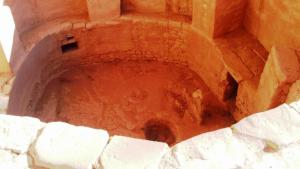
Kiva at Spruce Tree House

Kiva at Spruce Tree House

Spruce Tree House has a replica of a kiva you can climb into. At first look, you see a large courtyard with a square hole with a ladder sticking up out of it. You do not realize you are standing on the roof of another room. Climb down the ladder and you’re in. It is cool and quiet. A square of light shines down from above. You realize you are in a deep hole with 3-4 feet of earth over your head and people are walking there without knowing that you are down below. This is where you might shelter with your family in the winter or go to cool off in the heat of the summer. You may be weaving or grinding corn here. The fire in the hearth would warm you. Your entire family may be sheltered here. Other times or other kivas may be for ceremonial use.

This is not a kiva roof that stood the test of time. The park service rebuilt this so people could experience what it was like to be in a kiva. Tests show that the inside temperature of the kiva was around 50 degrees no matter what the outside temperature was.

While exploring Spruce Tree house, take note of the beautiful stone work and remember that these stones were shaped without modern tools. There are marks showing blocks chipped out using another, harder stone, perhaps a river stone. The guide book includes a picture taken long ago. Compare the picture to the current view and note how much of this dwelling is the original structure that has stood the test of time.

Cliff Palace

Compared to Spruce Tree House, Cliff Palace is huge. It’s the largest cliff dwelling in North America. The really amazing thing is that it only took 20 years to build, from 1260AD-1280AD. Even more amazing is that the Ancestral Puebloans abandoned Mesa Verde a mere 20 years after Cliff Palace was finished.
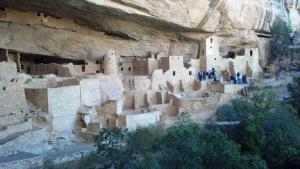
Cliff Palace

Cliff Palace

Most of the sandstone blocks were hand shaped. The mortar was a mix of sand, clay and ash. But like people today, there were some builders who weren’t as meticulous as others. A few sections of the walls were haphazardly built, whether on purpose or as an emergency patch isn’t known.

Left side of Cliff Palace

Left side of Cliff Palace

Cliff Palace contains about 150 rooms, 75 open spaces or courtyards, and 21 kivas.

Living rooms, indicated by the presence of a hearth, were rectangular and measured about 8′ by 6′. Cliff Palace contains only about 25 living rooms, which leads archaeologists to estimate that 100 to 120 people lived here.

Food storage rooms were built into shall shallow alcoves near Cliff Palace. They were well protected from the elements and from birds and animals.

Storage room in shallow alcove above Cliff Palace

Storage rooms built in shallow alcove above Cliff Palace

Open areas included kiva rooftops, courtyards, and plazas.

The round tower shown was probably surrounded by living rooms. There were no interior ladders (except for kivas), so exterior ladders were used to access upper stories and roofs

Round tower

Round tower

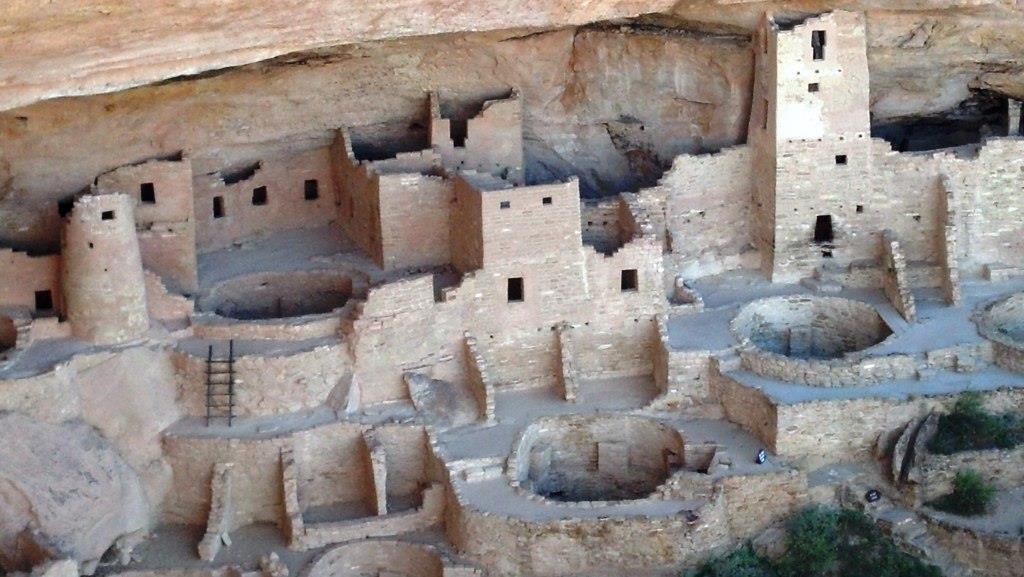
The next image shows more details of the right side of Cliff Palace.
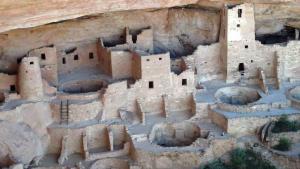
Right side of Cliff Palace

Right side of Cliff Palace

The circular holes are kivas. You can clearly see the pilasters that would have supported the kiva roof.

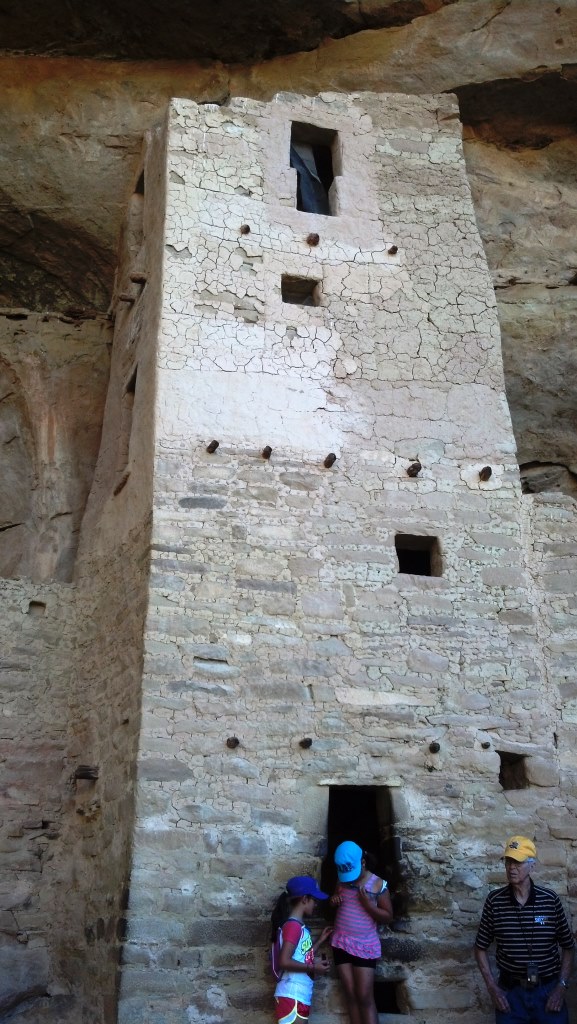
The largest structure in Cliff Palace is the square tower.
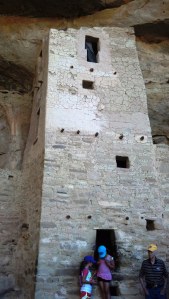
Square tower

Square Tower

It rises four stories above the ground.

The following image shows a closeup of a kiva.
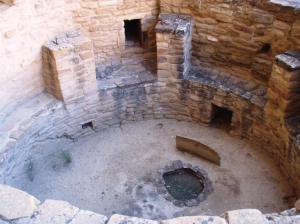
Kiva at Cliff Palace

Kiva at Cliff Palace

The hole in the center of the kiva is a firepit. The short rectangular wall is an air deflector. Outside the kiva, the air shaft is dug vertically until it is level with the kiva floor. The air shaft makes a right angle and comes out at the square hole just behind the deflector wall. The height of the roof can be measured from the top of the pilasters (three are visible in the image) to ground level above – roughly three to four feet. There’s a square hole in the roof directly over the fire pit. A wooden ladder is used to get into and out of the kiva.

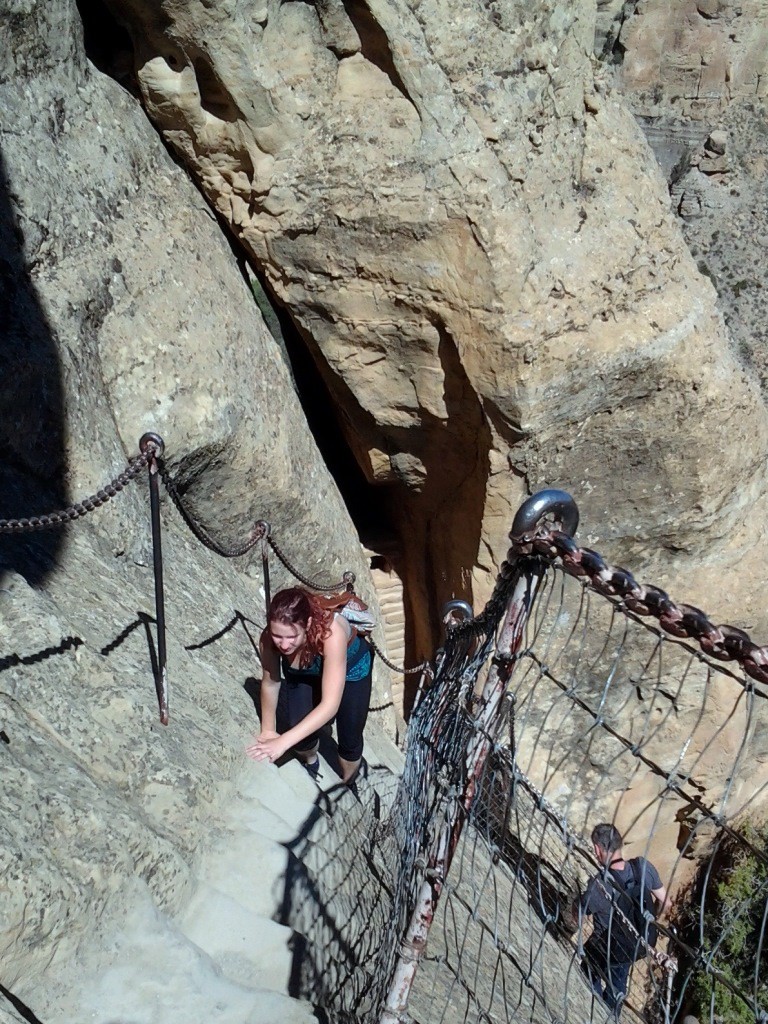
To get into and out of the Cliff Palace, the Ancient Puebloans used hand and toe holds that were chipped into the cliff face. To bring modern Americans in and out the Park Service had to make it a little easier. The tour takes you down stone stairs carved and built into the rock wall by the Civilian Conservation Corps, then across a ledge to Cliff Palace. Getting out takes a bit more work. First you follow the ledge to the right, climb a few more of those nice stone stairs, step into a narrow cleft in the rock then start climbing.
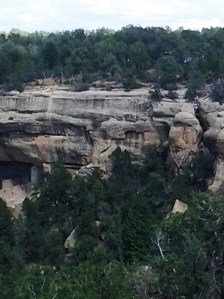
Cliff Palace exit - stone steps, three 10 foot ladders in cleft in cliff - far right

Cliff Palace exit – stone steps, three 10 foot ladders in cleft in cliff – far right

There are three 10-foot ladders to climb. Since you are in the cleft, there is no view of the drop off below so you only have to contend with the tight climb. As you climb, if you look to the right, you can see the toe and hand holds going up the sheer cliff face beside you where the original cliff dwellers climbed. Once done with the ladders, there are more steps and a trail on the top of the cliff to follow back to your car.

Balcony House

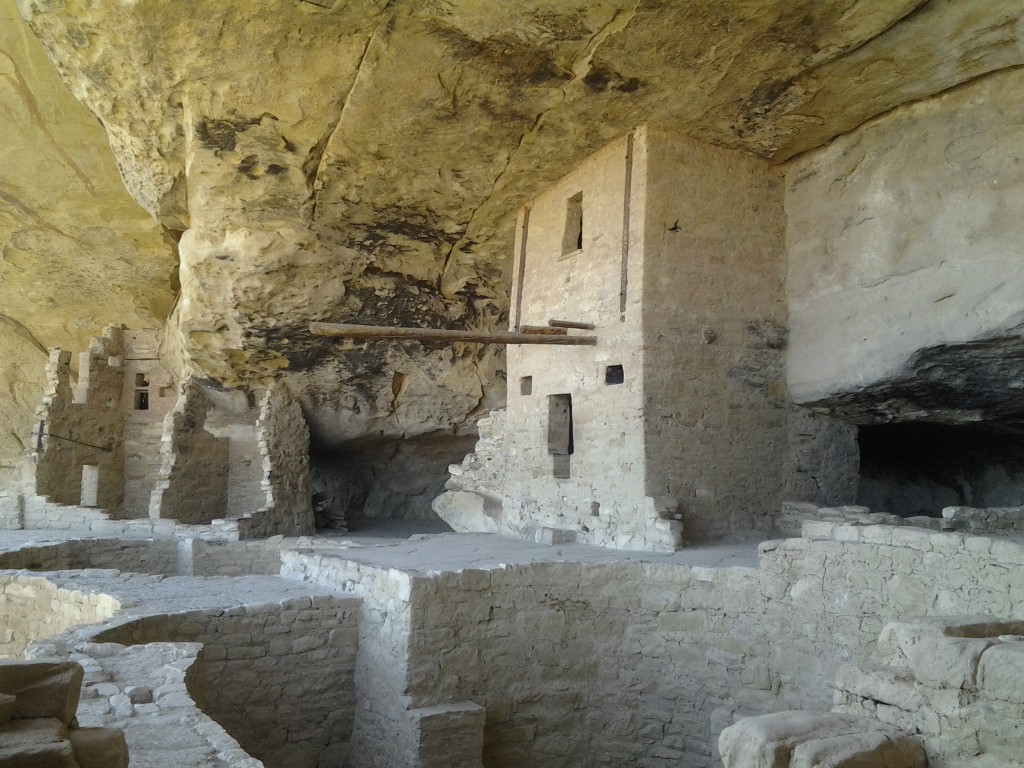
Compared to Cliff Palace, Balcony House was a bit of a letdown. It was still fascinating, but was much smaller than Cliff Palace and in a much higher state of disrepair. If you only have time for one tour, do Cliff Palace.
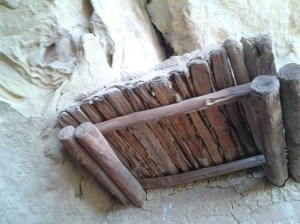
Balcony House small balcony

Balcony House small balcony

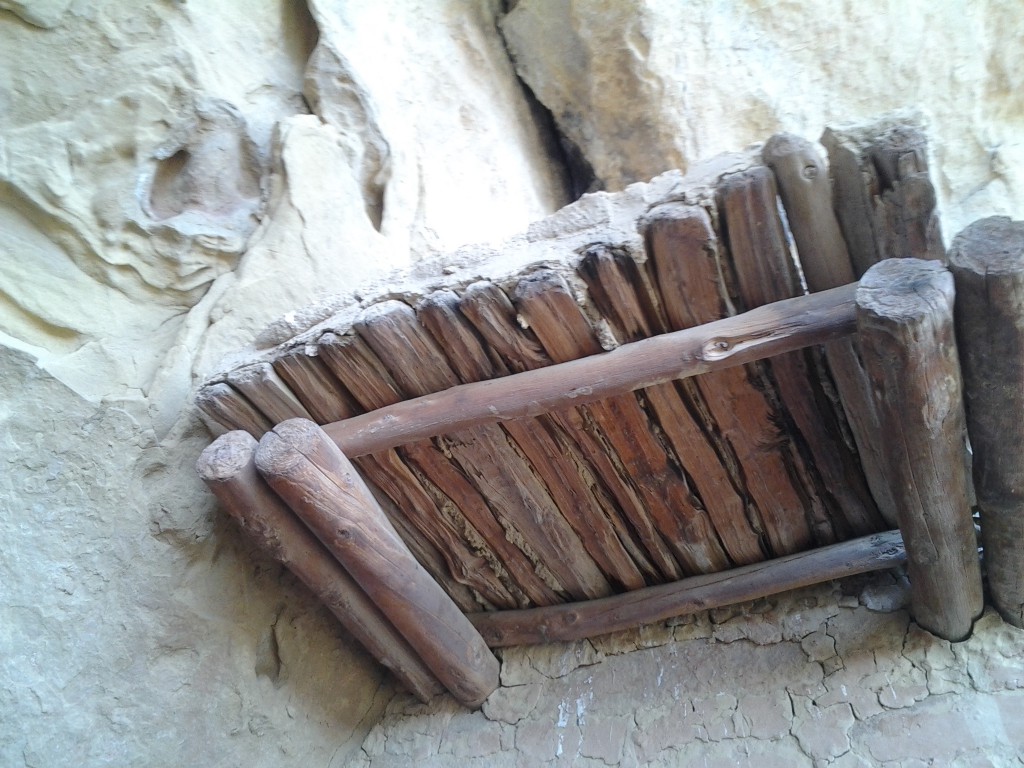
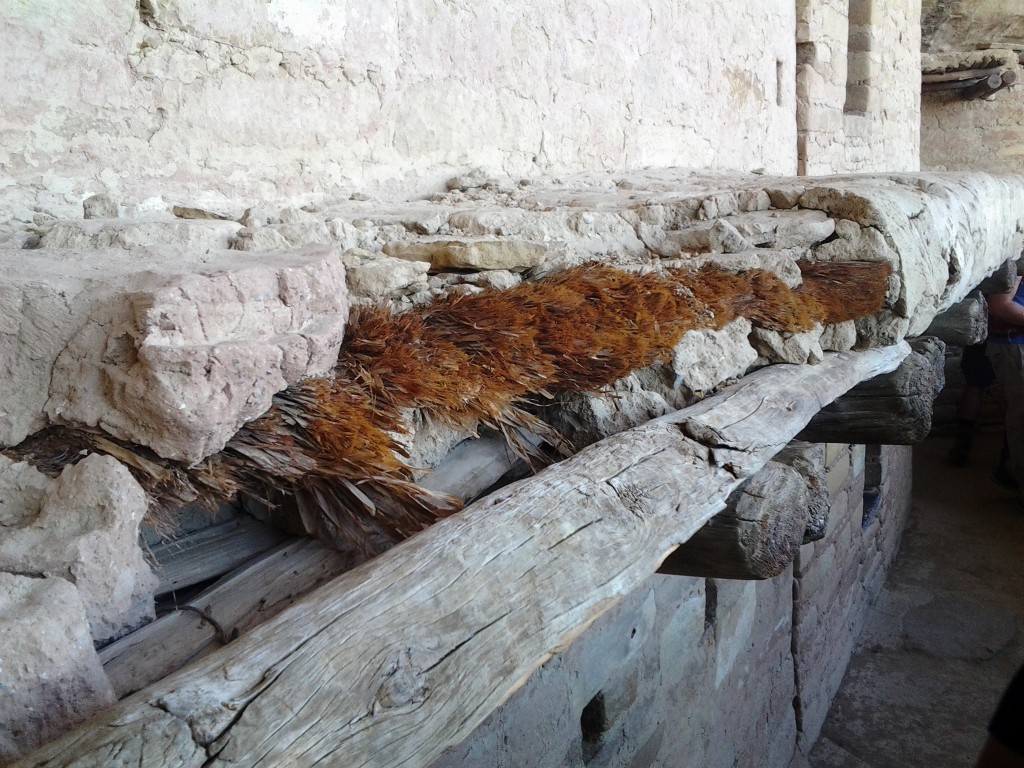
Balcony house was named for the second floor balconies that still exist on several of the buildings. They are the original wood supports with the original fiber filling and clay topping. That would be more than 700 year old wood, fiber and clay. The balconies were used as walkways to access the upper floors of buildings. Some second story buildings would have a single story building beside it so the roof of the lower building became the courtyard of the taller building. For those with no lower levels to walk on, the balconies became the sidewalks.
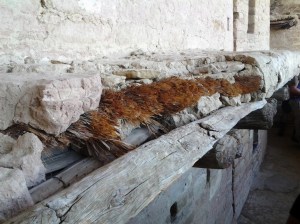
Original Fiber and clay in balcony

Original Fiber and clay in balcony

Our tour guide gave us some great insights into what life, and death, was like for the Ancestral Puebloans.

They used dry farming techniques to grow corn, beans, and squash in fields on the mesa top. All three crops were grown together – beans were planted so they would coil up the cornstalks, while squash was planted between the corn, which helped shade the roots of all the plants and retain moisture.
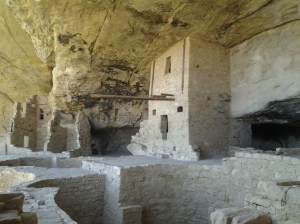
Balcony House main courtyard

Balcony House main courtyard

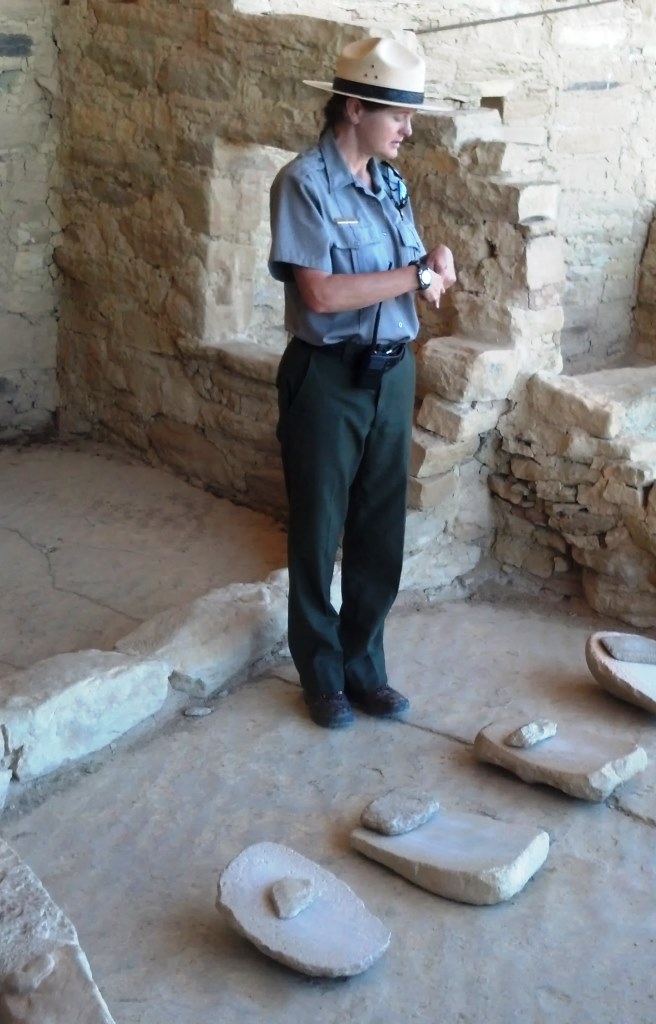
After harvesting the corn, it was ground using a mano (small stone) and a matate (sandstone slab). Because sandstone is relatively soft, the grinding process mixed sand in with the ground corn. The corn was used to make a gruel. Over time, the sand in the gruel ground down a person’s teeth, exposing the roots. These got inflamed and infected and caused a great deal of pain. The infection could spread throughout the body and result in death. Ouch.
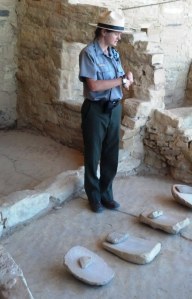
Mano and matate

Mano and matate

Infant mortality was high among the Ancestral Puebloans. Archaeologists who examined the remains of children between 0 and 5 noticed many had broken bones. They also noticed fewer broken bones among those who survived their early childhood. Living in a cliff dwelling was very hazardous to young Ancestral Puebloans. Even those who survived past their childhood often died in their 30s.

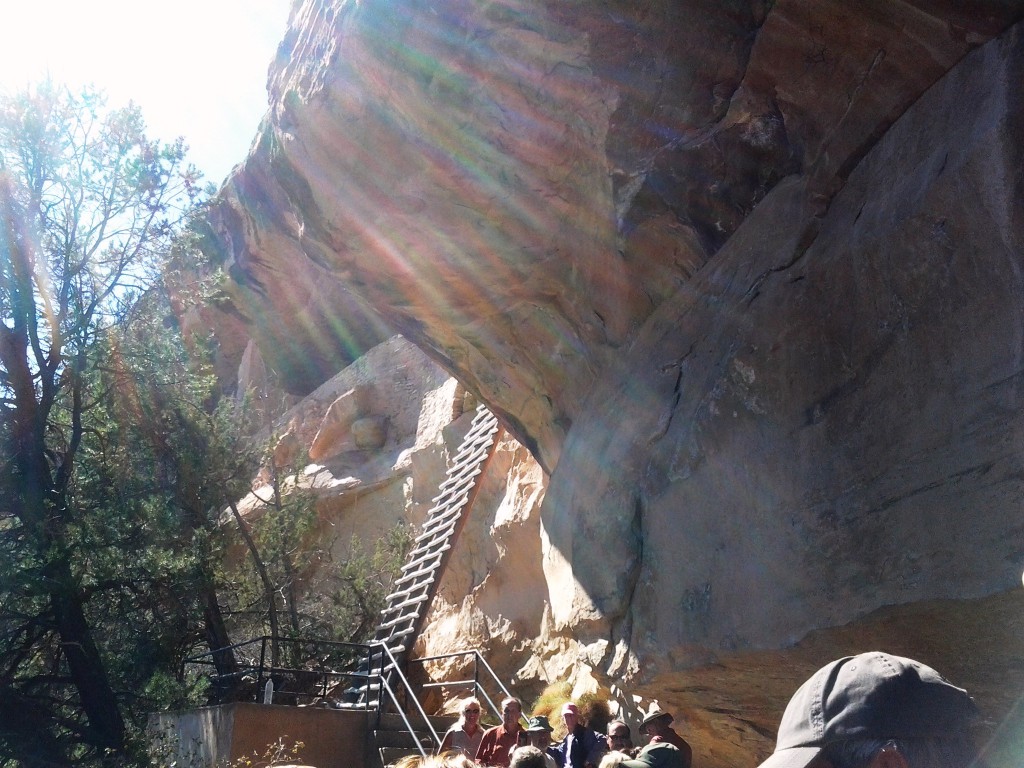
The Balcony House tour shows that the National Park Service has a sense of humor. To get in you go down stone steps, across a ledge and then up a double-wide, THIRTY FOOT tall ladder.

Balcony House tour entrance - 30 foot ladder

Balcony House tour entrance – 30 foot ladder

There is no evidence a ladder was here 1100 years ago and thirty feet is far longer than any timber in the area would grow so this seems to be purely a Park Service addition. The ladder is placed on a little concrete platform that is at least 15 feet wide but if you look down while climbing, your eyes are drawn past that little platform and down, down, down into the canyon floor below. While the ladder must be a challenge to many, it still beats those little chipped out hand and foot holds that the Ancient Puebloans used. Once up the ladder you are in the first courtyard where you can admire the balconies that gave the house its name. But you aren’t done climbing. There were hand and foot holds chiseled into a boulder and the only way to the rest of the house is up and over. Thankfully the park service chiseled them a little wider and deeper to accommodate our footwear. Once over the boulder you crawl through a tight little crevice and up a little ladder to the main courtyard. Phew! You’re in…

Getting out is even more fun.
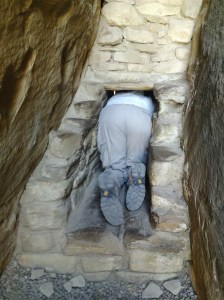
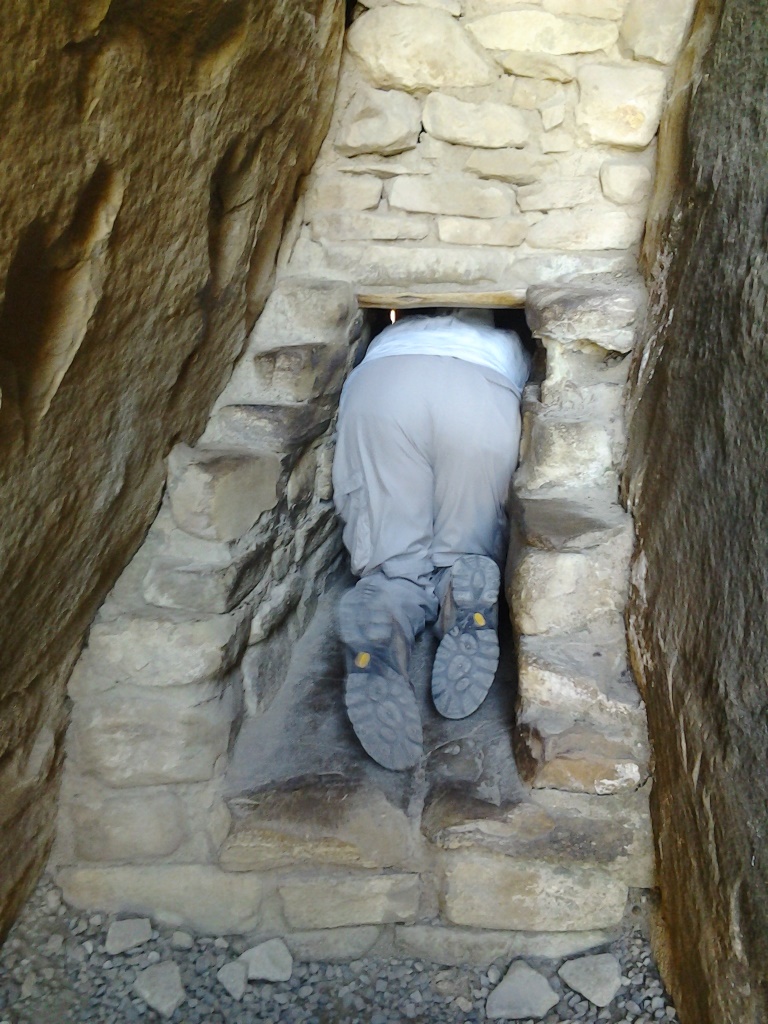
Squeezing into Balcony House

Squeezing into Balcony House

First you crawl through a tunnel which is believed to be the only entrance/exit way back when, then up a ten foot ladder and across a little ledge (chain handrails are imbedded in the rock to keep you from sliding off the cliff – thank you Park Service!),
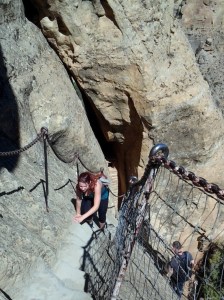
Balcony House Exit - stage 3 - hand and toe holds and steps

Balcony House Exit – stage 3 – hand and toe holds and steps

then up some more of those enlarged hand and foot holds, then up some carved steps, across another ledge, up another 10 foot ladder, and you’re done! Piece of cake.

Note: if you are worried about fitting through that tunnel, there is a “sample” tunnel in the visitor center near Rte 160 before you go through the actual park entrance station. You can go in by where they sell tickets and check it out.

J&H

Posted in National Park, Parks | Tagged | Leave a comment

Mesa Verde National Park

September 24-28, 2014

Summary of Our Visit

Mesa Verde has to rank among the top parks I have visited so far. There’s something mystical about walking in the footsteps of an ancient culture. You can almost feel their presence, hear them speak, see them going about their everyday lives.

Mesa Verde

Mesa Verde

Mesa Verde traces nearly 700 years of Ancient Puebloan, more commonly known as Anasazi, architecture and culture. Exhibits in the museum and visitor center traced their culture throughout all 700 years that Mesa Verde was occupied. Open historical sites traced the evolution of Anasazi architecture, from their initial occupation of the mesa tops to their construction of the cliff dwellings.

We arrived on Wednesday, September 24 and spent 3 full days exploring Mesa Verde. Daytime highs ranged from the mid-60s to mid-70s, although the bright sunshine made it feel much, much hotter. Keep plenty of water handy, you’re going to need it.

My first questions on seeing Mesa Verde were –

How did they find this place? Why did they settle here? Why did they move off the mesa top and build their homes in cliff alcoves?

While they may be considered a primitive culture by today’s standards, they were quite advanced. They farmed the mesa tops, built check dams and reservoirs, wove baskets, and made exquisite pottery.

There are two mesas you can visit: Chapin Mesa and Wetherill Mesa. By the time we arrived, Wetherill Mesa was closed for the season. Chapin Mesa was still open and the park offered guided tours of two of the three accessible cliff dwellings – Cliff Palace and Balcony House. We took both tours ($4.00 per person, per tour, no senior discounts). See separate tour posting for info on the individual dwelling sites.

After checking into the campground – more on that later – we drove the 25 mostly uphill miles to the Chapin Mesa Archeological Museum. From there we hiked down to Spruce Tree House, the only cliff dwelling you can visit on your own, although a park ranger is always present to answer questions and keep people from going where they shouldn’t.

The next day, Thursday, we took guided tours of Cliff Palace and Balcony House. Maybe we should have done Balcony House first because Cliff Palace’s WOW factor was much higher than Balcony House’s. However, Balcony House was much more challenging and fun getting into and out of.

The park sells booklets describing the cliff dwellings, driving loops, and self-guided hiking loops for 50 cents to $1.00. We bought the booklet for each site we visited. Because the booklets give additional insight into each site they were well worth the money.

On Friday, we took the self-guided hike along the Far View Trail. This trail takes you though a mesa-top farming community that existed from about 900AD until about 1300AD.

We also took the Mesa Top Loop Drive that winds around the top of the mesa. We saw remains of some of the earliest dwellings on Mesa Verde, pithouses, as well as spectacular views of up to a dozen cliff dwellings. We hadn’t realized just how close the various cliff dwellings were to each other. Until then we had only seen each cliff dwelling in isolation.

We managed to spend several hours in the visitor center and museum, both of which had excellent exhibits about the life and culture of the Ancestral Puebloans.

We ate lunch at a small cafe near the museum. We both ordered Navaho Tacos and shared a side of French fries. The prices were about what we expected but the portions were much bigger than we had expected. The fries were heaped on a dinner-sized paper plate and the Navaho Taco was about 10 inches wide and 3 inches deep – talk about being super-super-sized! The food was very good and we did our best to consume it but we wound up taking half a taco and half the fries home with us and we were stuffed!

 Visitor Center and Museum

The visitor center is located at the only entrance to the park. The museum is located near the top of Chapin Mesa. Both have excellent exhibits.

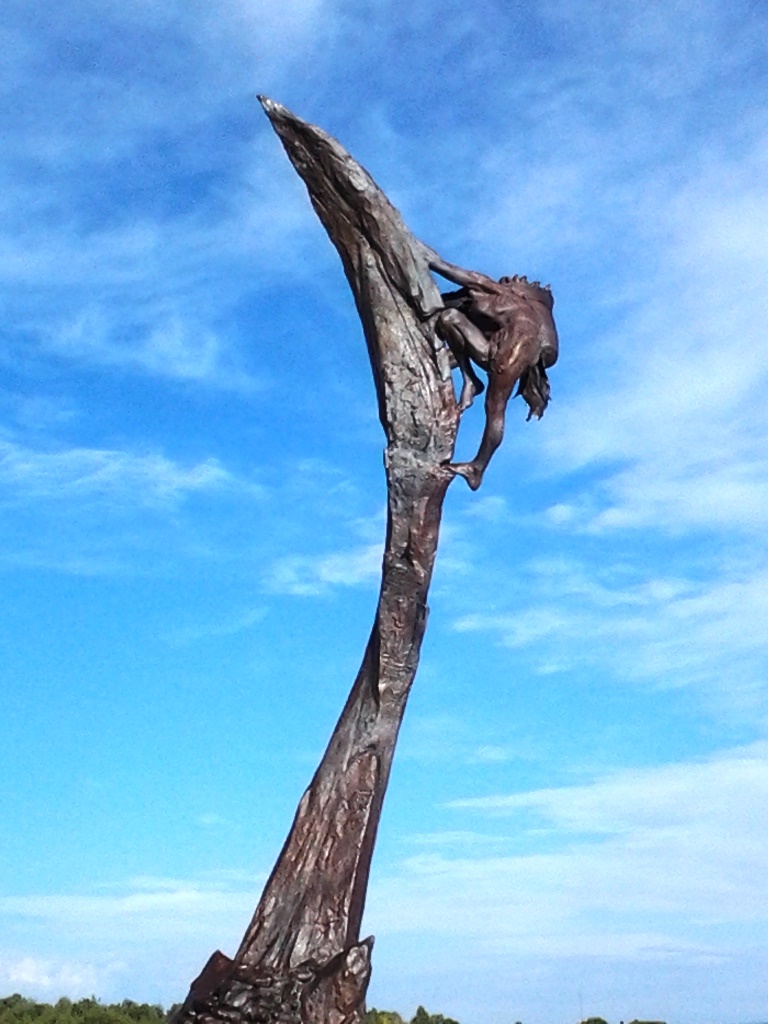
There’s an awesome sculpture at the entrance to the visitor center showing an Ancestral Puebloan climbing a cliff using hand and toe holds with a basket on his back.

What I found amazing is how close together some of the cliff dwellings were, almost like next door neighbors.

Sculpture outside visitor center

The exhibits at the visitor center are well done and informative about the life and times of the Ancestral Puebloans.

Typical Visitor Center Exhibit

Typical Visitor Center Exhibit

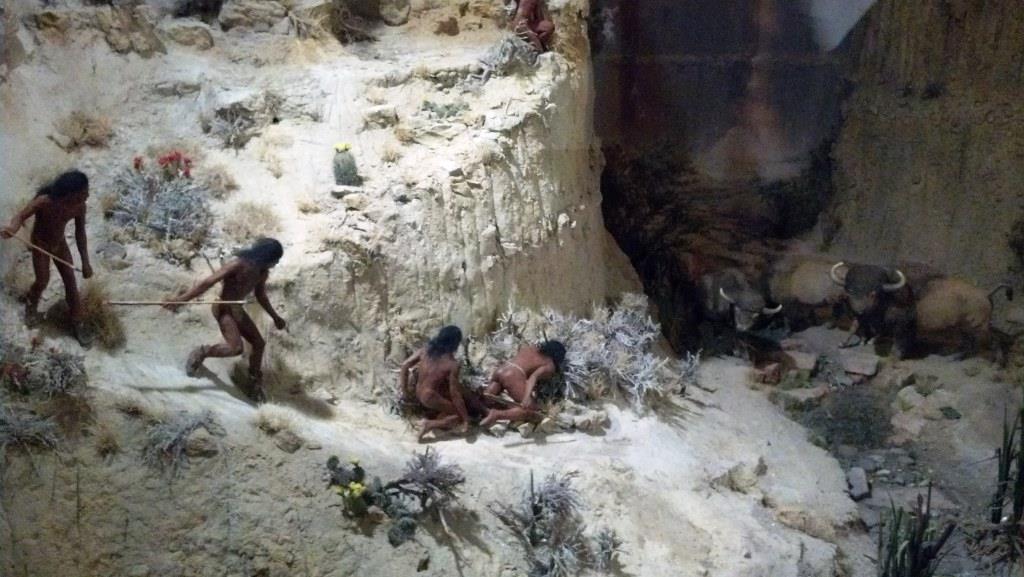
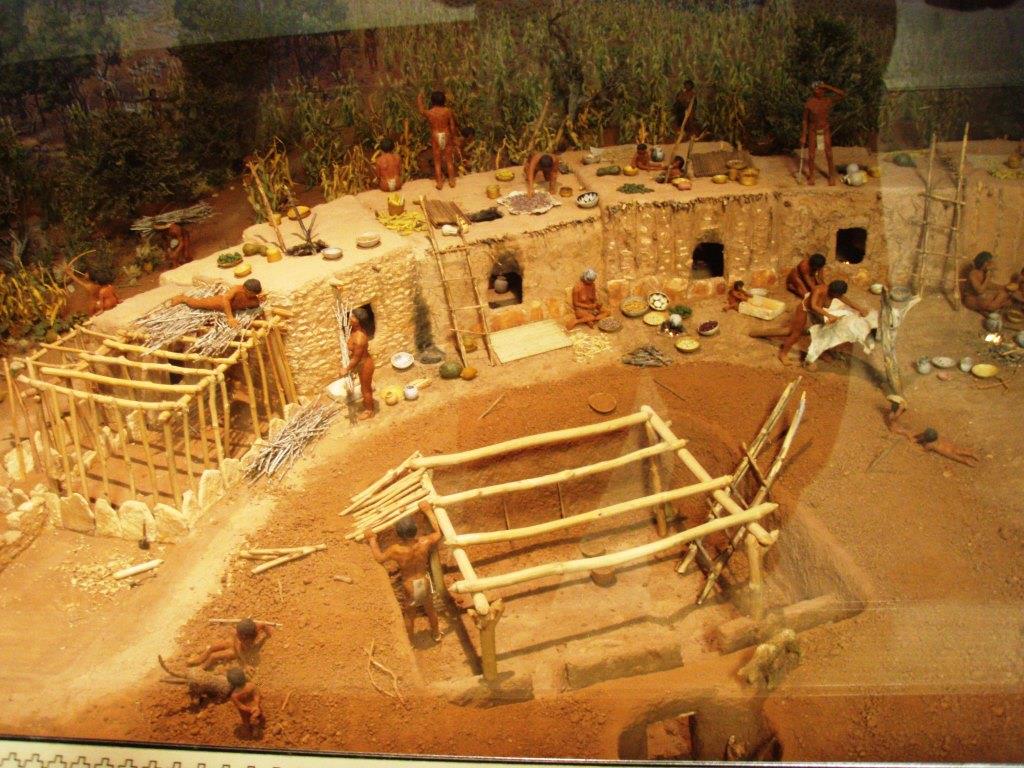
The Chapin Mesa Archaeological Museum also has excellent exhibits, including dioramas showing what life was like in various time periods.

Early inhabitants on the hunt

Early inhabitants on the hunt

Cliff-top dwellers

Cliff-top dwellers

The museum also has an extensive collection of artifacts including 1100 year old corn, baskets, pottery, sandals, tools, and the like.

Campground and Facilities

The campground, while huge (400 sites), was not impressive. The sites are gravel and overgrown with grass with a few scrub oaks – not enough to give you any shade – behind them. Out of the approximately 50 sites in our loop, only 2 could qualify as being “shaded” and they were taken, so we wound up in full sun. This meant we had to take extra precautions to keep our kitty, the Camper House Queen, cool and comfy while we were gone during the day. On the plus side, they do have free WiFi that worked quite well. There’s also a very reasonably priced laundromat in the “Morefield Village” that we used. We washed and dried two loads of laundry for $5.25.

The dry campsite fee was $29.00 a night plus tax. We did get 50% off using our senior pass. They have 15 sites with full hookups that are usually booked months in advance and those cost a good bit more with no senior discount available. They are otherwise the same as the other sites (read no shade). Check the lodging webpage before booking as they have specials during the slow season. The campground is only 4-5 miles inside the park entrance so it doesn’t save you much drive time to stay in the park. There is also a lodge probably 15 miles up into the park with what looked like gorgeous views off both sides of the mesa but we did not stop and check it out. Word to the wise: if you camp at the park, set up according to the sun. The afternoon sun is the hottest and will come in under your awning so we set up with our back to the south/south east so that our motor home shaded our outdoor space in the afternoons. While we were there it was chilly at night so the morning sun was nice to have.

NOTES

wild horse

One of the kivas was restored to what they believe is the original condition and you can climb down the ladder to check it out.

Booked the 9:30 Cliff Palace tour and the 11:00 Balcony House tour. The cliff palace was awesome to say the least. It is an entire town tucked into a rock ledge/cave. There are houses stacked on houses with storage bins tucked into a rocky recess way up and back above the town. It is easy to see where roofs of the lower buildings were used to gain entry to the upper levels. One tower is four stories high and reaches from the rock ledge to the ceiling of the cave. To leave, we climbed three 10′ ladders up through a crack in the rocks. Beside us we could see some of the small hand and foot holes that the Anasazi used 700 years ago. The balcony house was much smaller but more creative in the entry method. We climbed a 30′ double wide ladder then ducked through a small opening before reaching the first plaza. Once we viewed that, we used enlarged foot and hand holds to climb a rock and pass behind the first few rooms to enter the main plaza where there were two kivas, more rooms and the kitchen. To leave we had to crawl through a tunnel, climb a ten foot ladder, follow little footcuts back and forth across a rock, then up another ladder. We had lunch at the restaurant near the museum and were pleasantly surprised that the portions were large and the food good. We had Navaho Taco which is fry bread with chili, cheese, onion, salsa and sour cream. It was at least and inch and half high and covered the entire plate for 8.95. The french fries were an ample portion also. We finished our day by going through the entire museum before returning back to camp for some quiet time. Holly noticed that probably half of the RVs in the campground are rentals.

We dined at the café at the top again before heading back to camp.

Posted in Campgrounds, National Park, Parks | Tagged | 1 Comment

Black Canyon of the Gunnison NP

September 21-23, 2014

We approached the canyon from the east, driving along through the Curecanti National Recreation Area where we could see the placid, dammed Gunnison River beside the road. Surely that isn’t the river that carved a massive gorge?

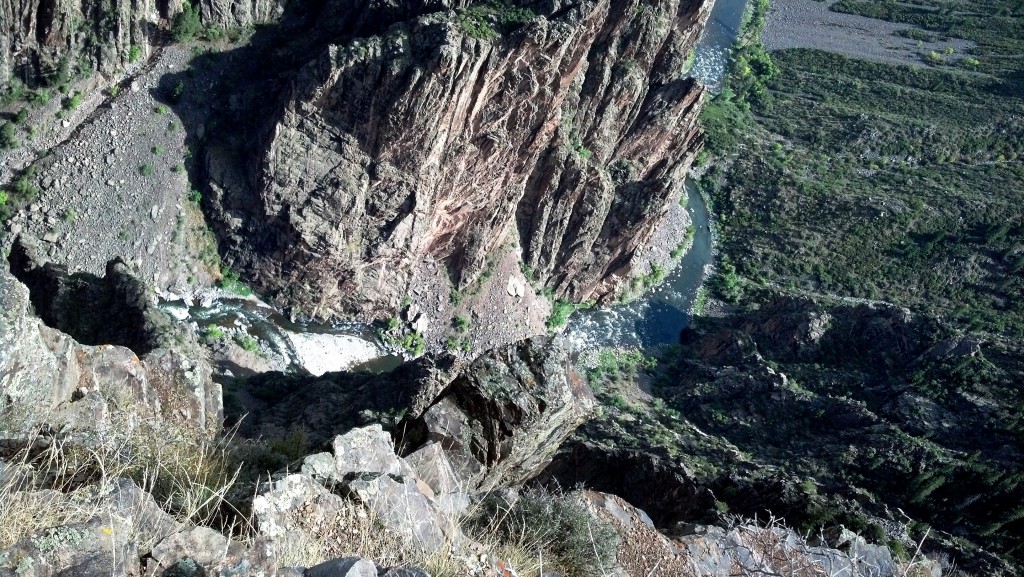
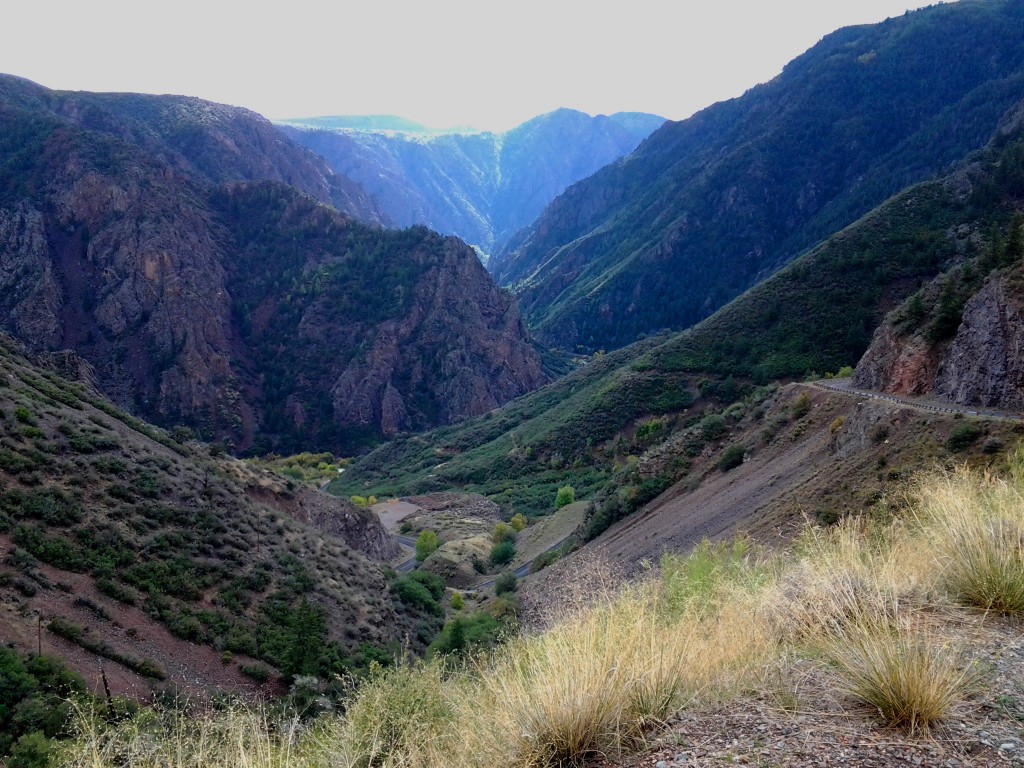
Our first look over the rim confirmed that little river was truly at the bottom. The river has been tamed by several dams but it still rules the canyon. And WOW – this is one beautiful canyon. It isn’t the Grand Canyon but it certainly holds it own. It is deep and narrow like a giant crack split the earth and the little Gunnison River dropped into it. In reality, that little Gunnison River carved this impressive thing. Like I said – WOW!

View down to the Gunnison River

View down to the Gunnison River

There is a beautiful visitor center perched on the edge of the Canyon where you can talk to a ranger, watch a movie, check out the 3D map of the park, learn about the canyon and buy maps, souvenirs and gifts. You can also access several hiking trails and an overlook that hangs out on into the canyon on a ridge of rock. There is a water spigot outside and it is recommended that you take water with you even on short hikes.

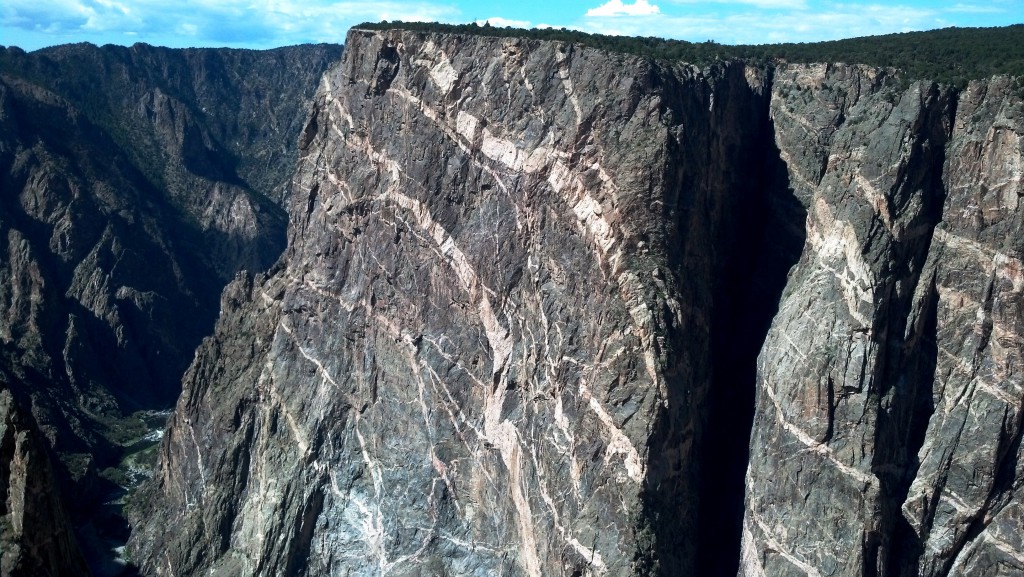
There are many overlooks along the rim road. A few barely require that you leave your car but some have decent hikes across the rocks to get out to the overlook. Several of the overlooks give you an excellent view of the Painted Wall. This is the highest cliff in Colorado. The pink bands of rock flowing through the darker stone walls is Pegmatite. It is a beautiful deep pink rock with sparkling crystals in it.

The Painted Wall - highest cliff in Colorado

The Painted Wall – highest cliff in Colorado

We hiked every trail on the South Rim that didn’t require a wilderness permit. Don’t be impressed, there aren’t that many, most only go out to overlooks (OK, John hiked every one, I sat out a few in the heat of the day).

The Warner Point Trail (1.5 mi.) has a nature trail booklet that was really good and the view at the end of the trail is amazing and the gorge is 2,772 feet deep at the point. It is well worth the hike.

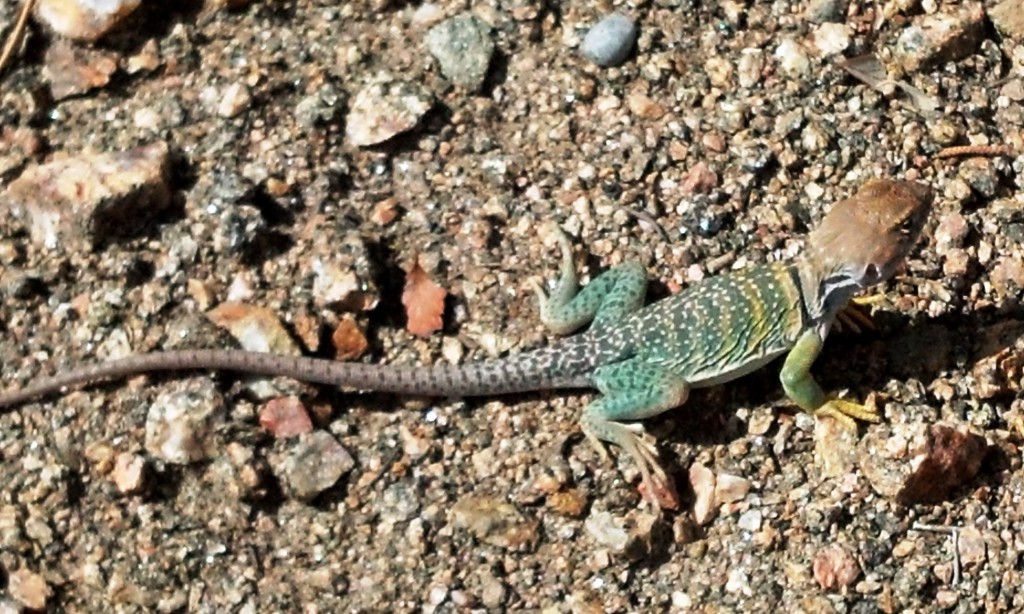
Lizard we found along the trail

Lizard we met along the trail

The Rim Rock Trail (1 mi/1 way) runs from the campground to the visitor center and is also very good and runs the upper edge of the canyon just below the road.

We were less impressed with our return trip on the Uplands Trail (1 mi/1 way) which was just trudging through the juniper and pinion pines in the heat of the day. I wilt in the sun so I would hike from little shade patch to little shade patch and rest at each. John was very patient with me and we did eventually get back to camp.

The short and steep Oak Flat Loop drops you 400 feet down into the canyon but doesn’t really give any better views than you can get from the rim. It is fairly steep in places but it gets you as far down into the canyon as you can go without the wilderness permit (unless you access from the East Portal Road). At the lowest point of the Oak Flat Loop another trail leads off down to the river. The trail called to us and we stared at the sign for a while but we did not have the required wilderness permit. We probably would have been hard put to climb back up out of the canyon, but it sure was tempting (we frequently are not as bright as we look).

East Portal Road

East Portal Road

Speaking of the East Portal Road. There’s another WOW! Vehicles are limited to 22 feet for very good reason. The road starts mildly enough with cattle grazing across it in the open range section (they stare, they moo, they chew – such pretty eyes) but once it drops over the edge – hang on. We had hoped to get a good picture of the hairpin turns but they are so tight that you can barely see one level down from the edge of the level you are on. The road is at a 16% grade. Our Subaru took it like a champ and earned its keep once again. There is a place to pull over part way down in case you need to rest your gears, brakes, knuckles, whatever. It’s also a good spot to take a picture.

Once down, there are signs explaining how an entire town was built down there and their road was steeper than the one that exists now. All those people were there to build a diversion dam and tunnel. That would be a 5.8 mile long, 11 foot x 12 foot tunnel through the sheer rock wall of the canyon so they could get water to the Uncompahgre Valley. Unfortunately all  you can see is the diversion dam and the little building that sits over the opening of the tunnel.

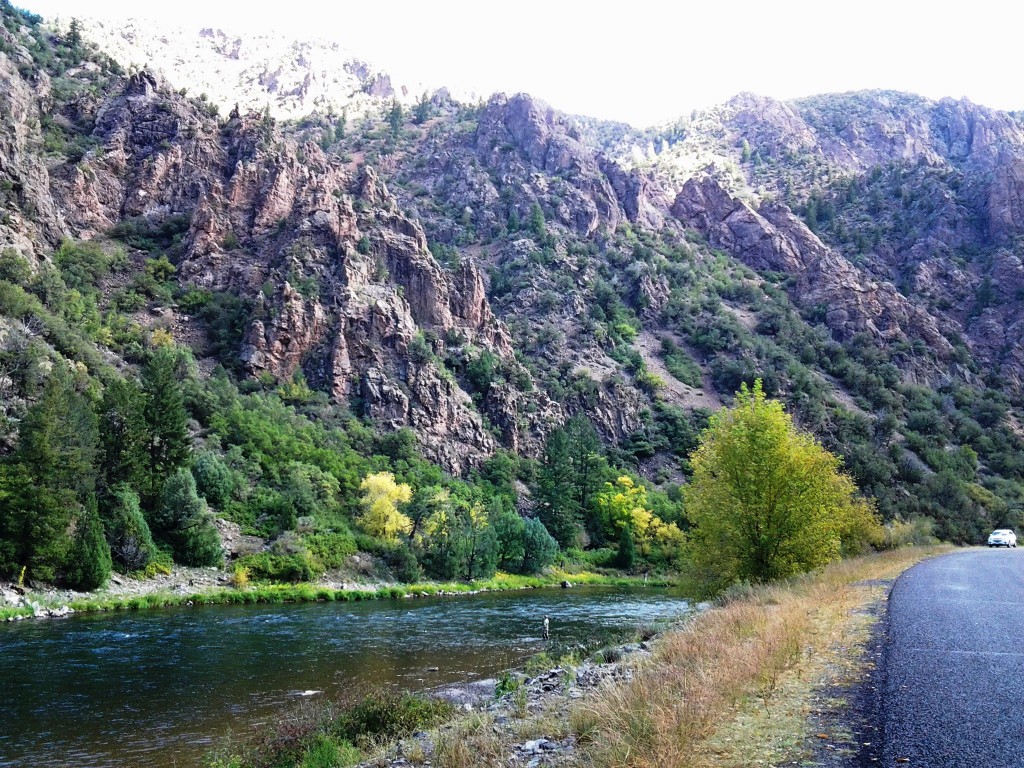
I forgot to mention that this area, with a nice campground along the river, is in the Curecanti National Recreation Area. The only road comes in through the National Park and it dead ends at a bigger dam a little way upstream. There were several fly fisherman standing in the river happily fishing. What a gorgeous place to fish!

Fly Fisherman - look closely, he's there

Fly Fisherman – look closely, he’s there

The Curecanti also offers a boat tour of the Gunnison Canyon that several people recommended highly but they had closed for the season by the time we got there. The boat is accessed from way over in the Curecanti National Recreation Area. If you are interested, check their website first. I read you have to go down several hundred steps and hike a distance to the boat launch so it is an adventure before you even reach the boat. Then, you have to get back up again.

Campground – We stayed at the south rim campground. It is a little back from the edge of the canyon but the Rim Rock Trail leads off below the rim where you can sit and gaze into the canyon below. If you continue 1 mile on the trail, you’ll reach the visitor center. The campsites were good size and reasonably level and very empty. We had no problem finding a nice shady site to tuck into (Site B20). The “B” loop had electric hookups and the days had been hot so we paid the uplift and camped there. The restrooms are somewhat smelly pit toilets and there is water available but a sign at the spigot states “This water has been hauled 14 miles, please conserve”. There are dumpsters for recycling and trash but no dump stations. NO phone signal. Our booster did pick up a bit of an intermittent signal but could not lock on. We did not wander the campground checking for better spots. We just enjoyed being unplugged. The mule deer wander through the campground ignoring the humans and the chipmunks basically own the place. We saw several rabbits and one, cute little baby bunny that tucked itself into the brush and “froze” when we came near. Bear and mountain lion warnings are posted throughout the campground but there were no sightings while we were there. It is a nice campground and we enjoyed our stay there.

H
Posted in Campgrounds, Hiking, National Park, Parks | Tagged | 1 Comment

Zapata Falls Hike

Great Sand Dunes National Park

Friday, September 19, 2014

We took our time getting started today. The road to the Zapata Falls trailhead is a 3 mile long washboard dirt and gravel road. Our Subaru Forrester has been dragged behind our RV for thousands of miles. It is usually spattered with mud, dirt and grime kicked up by the RV. Not very dignified for an All Wheel  Drive Vehicle. But driving up this dirt road, the Subaru got a legitimate coating of dust.

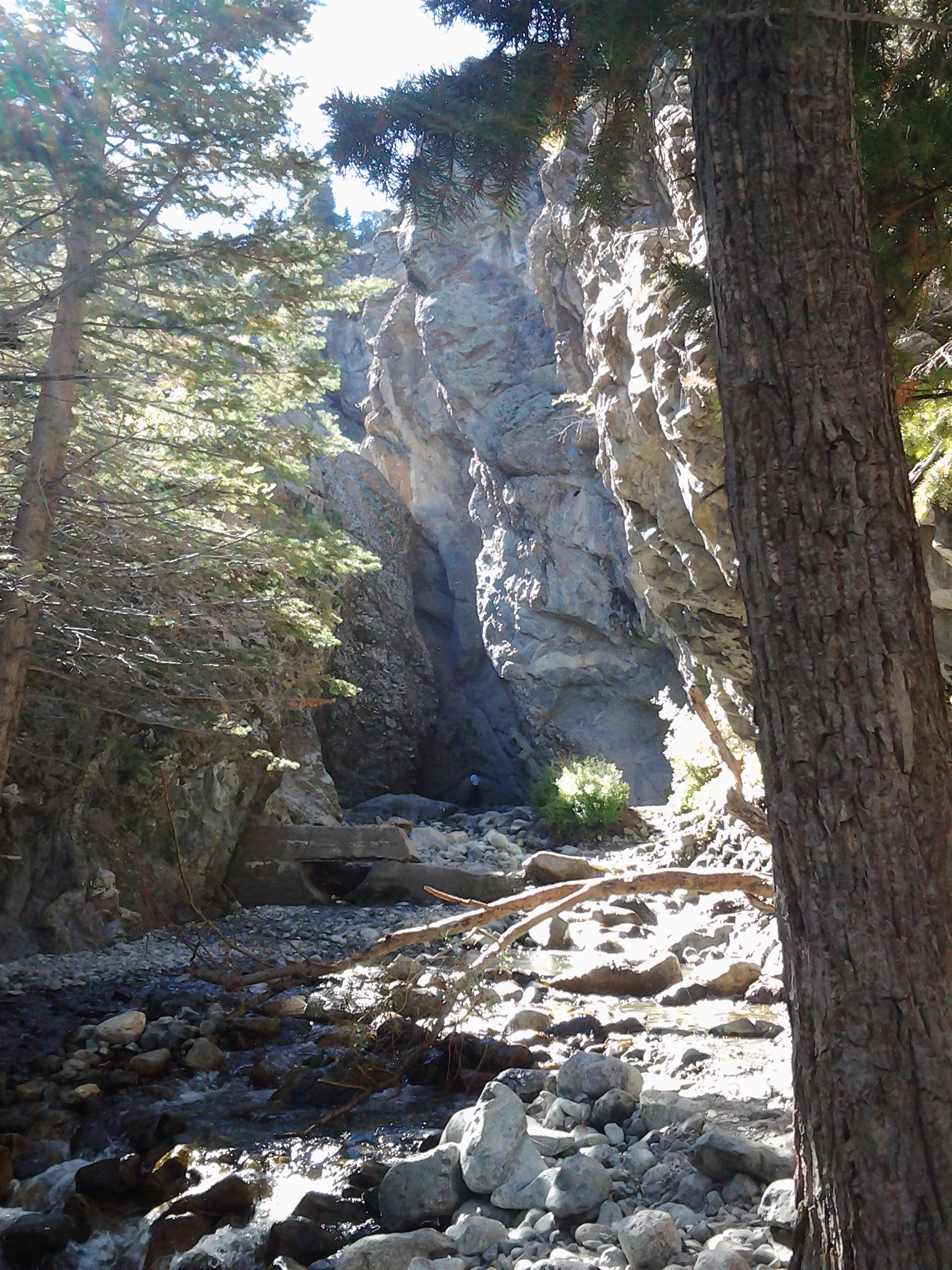
The hike to the falls only took 15 minutes.We could hear the falls but could not see it.

Approach to Zapata Falls

Approach to Zapata Falls

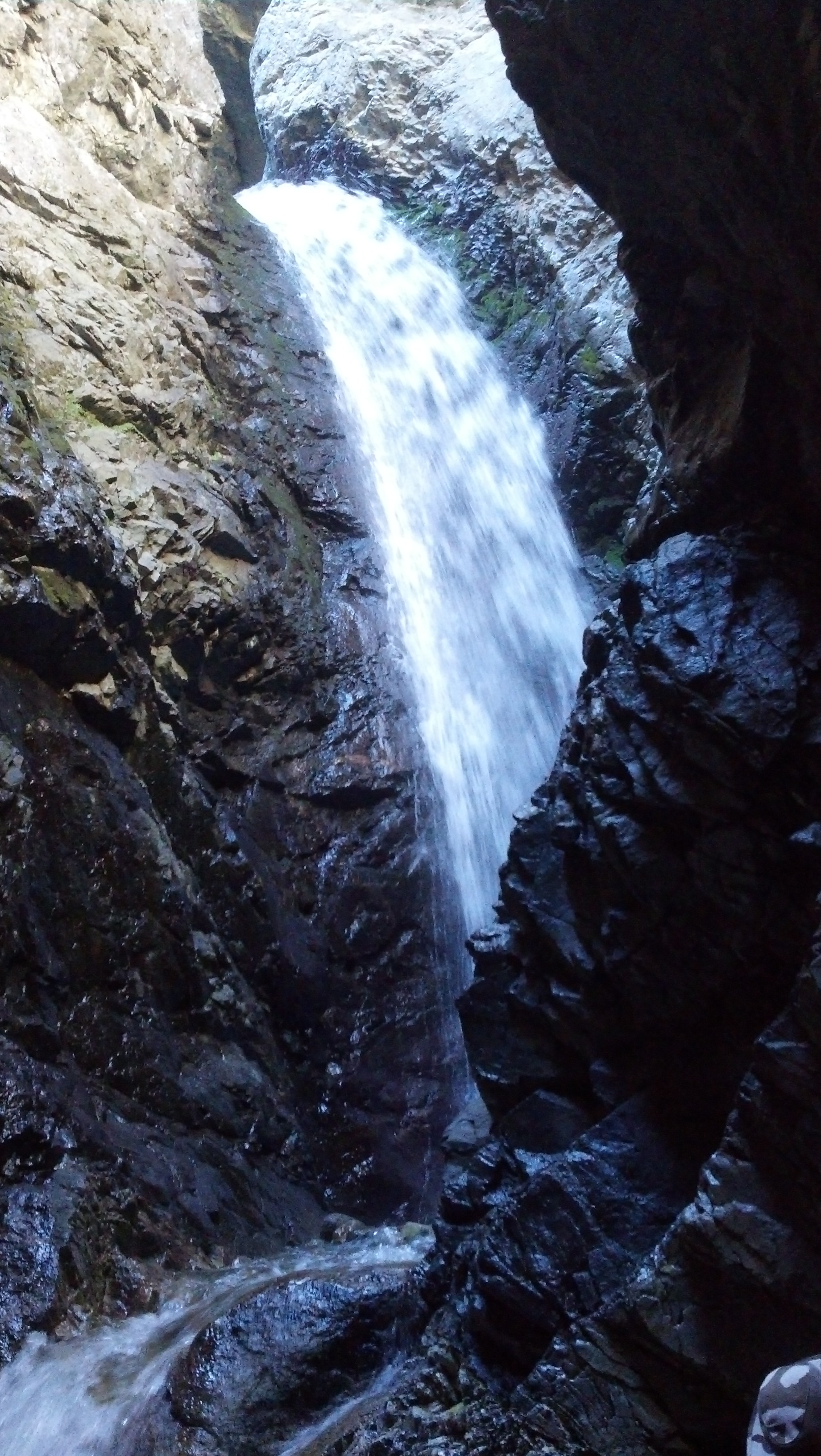
Once at the end of the trail we had to cross the stream three times and side step through a tall, narrow cave to view the falls. It was worth the effort.

Zapata Falls

Zapata Falls

While at the falls we watched a family – grandparents with their son and daughter in law, and their two young children. We watched grandpa piggy backing his 5 year old grandson across the creek, hamming it up in the front of the falls and thoroughly enjoying acting like a kid. Just like me and Chloe.

J

Posted in Hiking, National Park, Parks | Tagged | Leave a comment

Mosca Pass Trail Hike

Great Sand Dunes National Park

Thursday, September 18, 2014

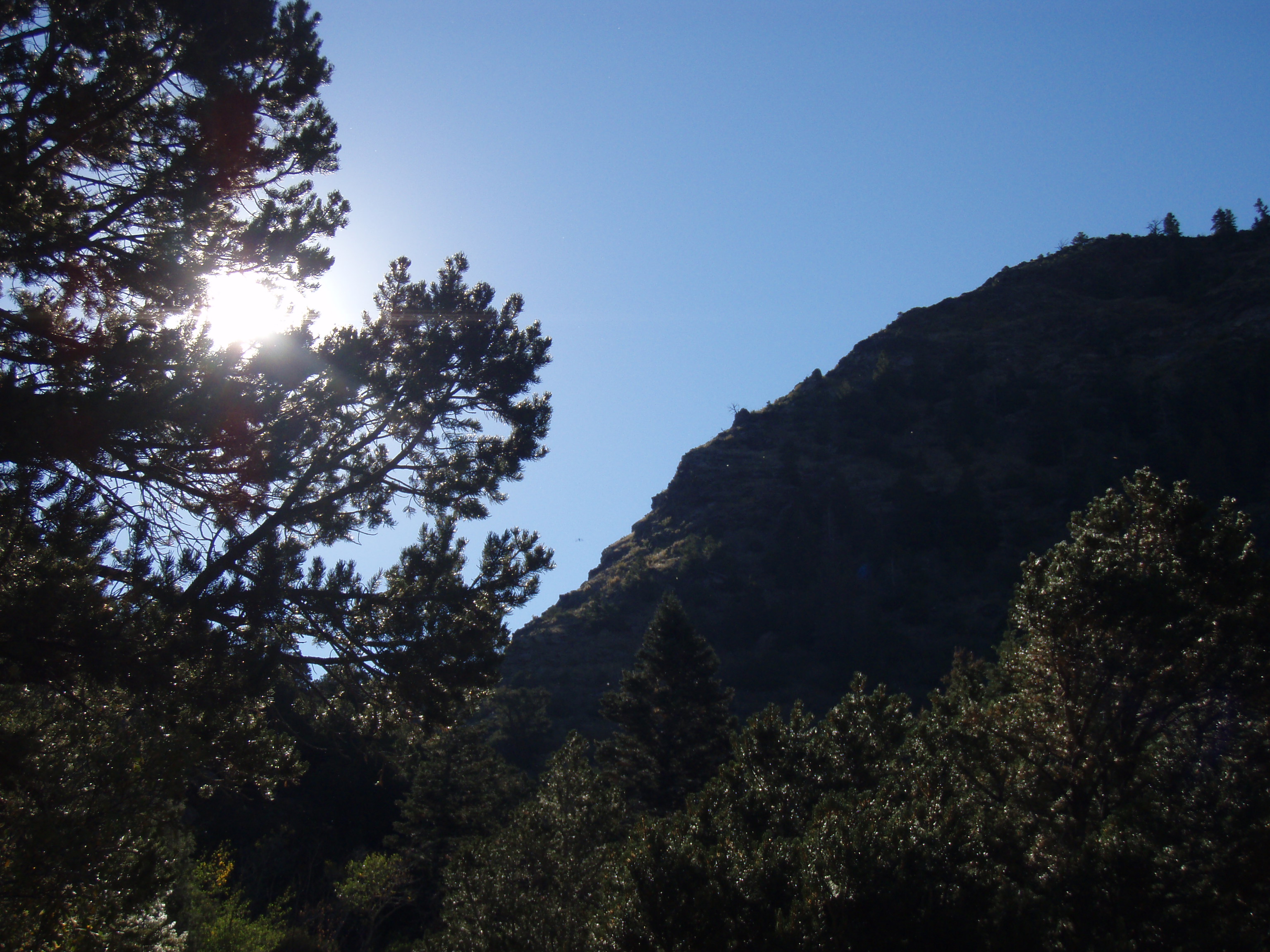
We started hiking up the Mosca Pass Trail at 8:30 a.m. The temperature was a brisk 50 degrees.

Sun over Mosca Pass Trail

Sun rises over the Mosca Pass Trail

Being the geek that I am, as I hiked I tried to calculate how far up we traveled for every 100 yards hiked. I finally came up with 20 feet up for every 100 yards of trail hiked. It helps keep my mind sharp, or at least slows down the dulling.

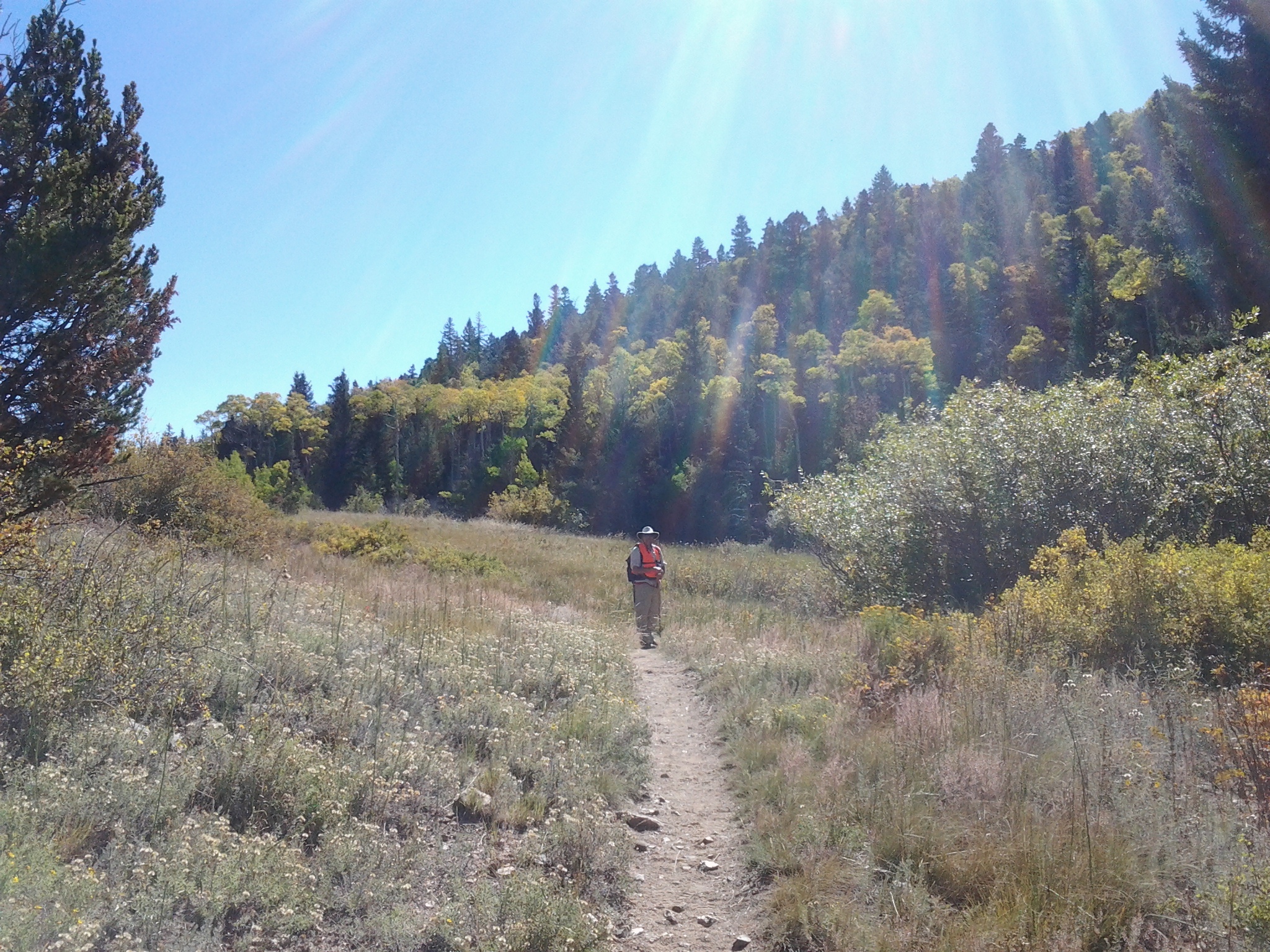
John on the trail

John on the trail

If you look closely at the above image, you’ll see John wearing an orange vest. Another hiker passed us while he was heading down the trail. He told us there was a hunter not far from the trail. So we decided to play it safe and put on our bright orange, we’re-not-in-season vests.

The trail followed the creek all the way to the top. It took us 3 ½ hours to hike the 3 ½ miles to the top of the pass. That included one snack stop, one lunch stop and many, many catch-your-breath stops. The elevation went from 8300 feet to 9700 feet, so breathing was difficult to say the least.

Top of the Mosca Pass

At the top of the Mosca Pass

Although we were tired we had to walk a few hundred more yards to see what was on the other side of the pass.

Other side of Mosca Pass

The other side of Mosca Pass

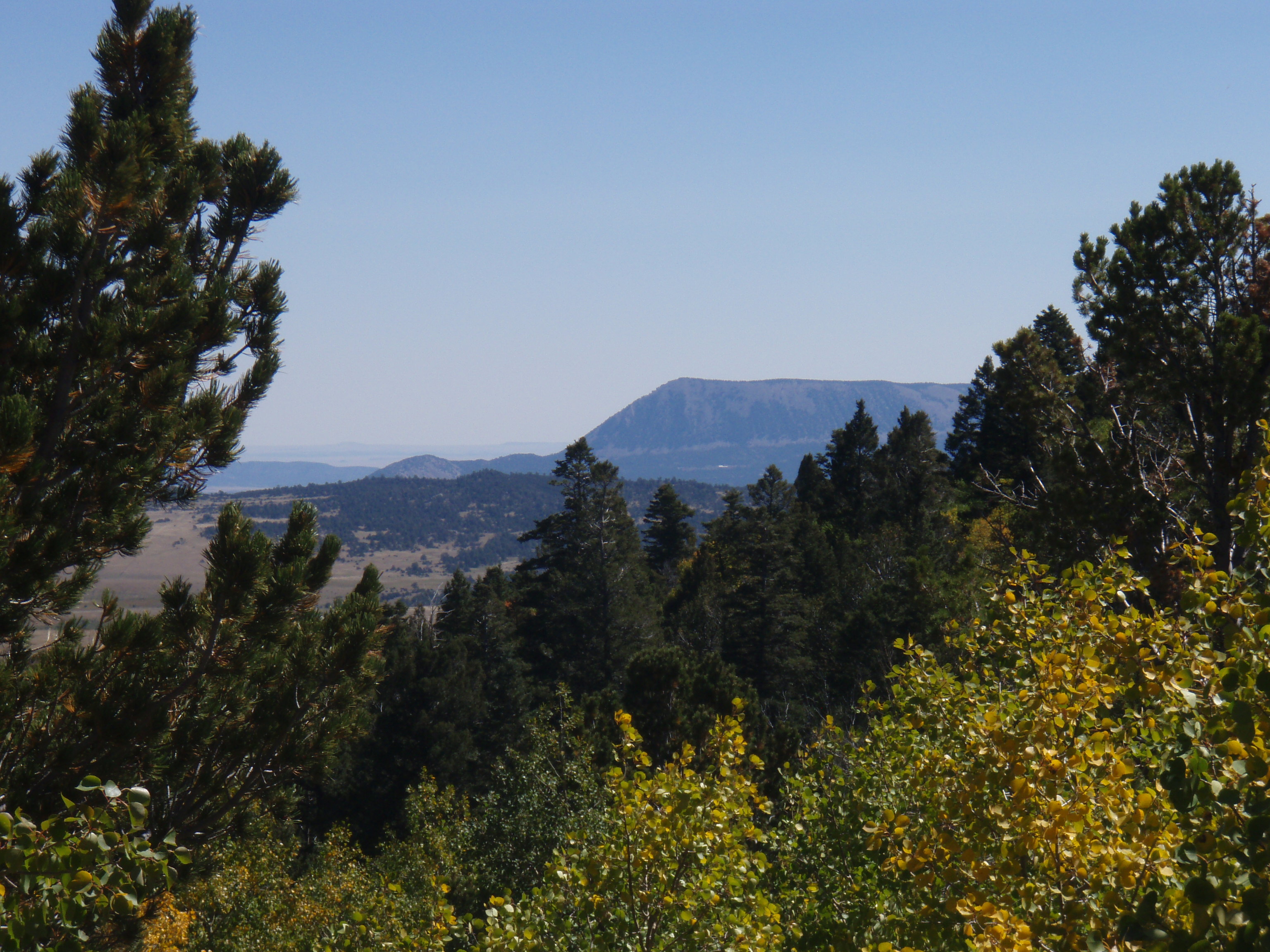
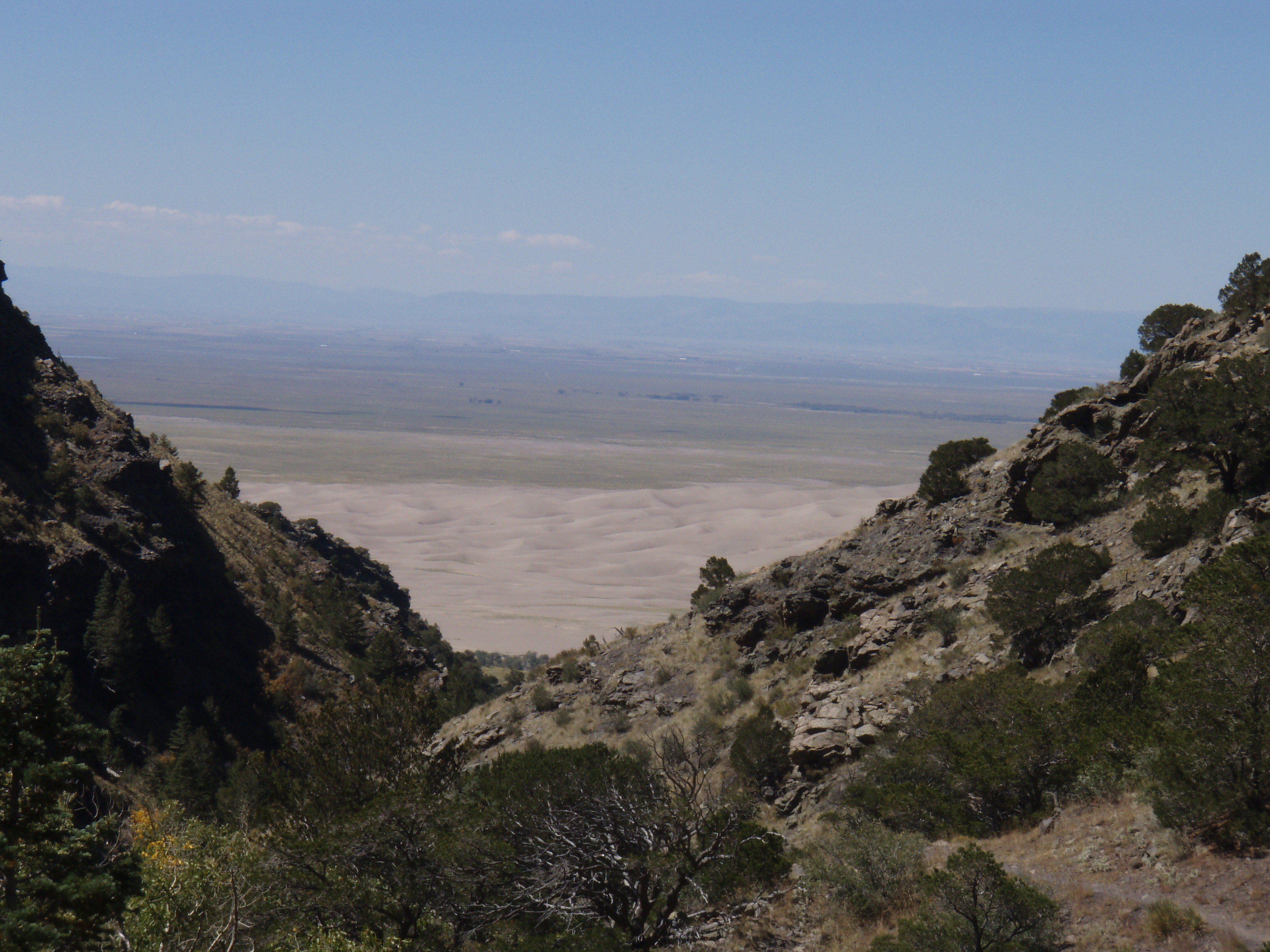
The views along the trail were spectacular. We saw nearly vertical rock walls, meadows, riparian flora along the creek side and views of the San Juan Mountains more than 50 miles away. We also caught glimpses of the sand dunes through the walls of the steep sided canyon.

View of sand dunes from trail

Looking down Mosca Pass toward the sand dunes.

The trail wound around spurs in the mountain one after another. As we hiked and rock stepped up the mountain we wondered where the route was that up to 40 mule drawn wagons a day took over the pass. They certainly couldn’t have been on the narrow, rocky trail we were on and there didn’t seem to be an easier route.

Just before we reached the peak, the creek dried up. The trail map showed that we’d cross the creek  before reaching the top of the pass. We didn’t notice that the creek was dry so we thought we’d made a wrong turn. We weren’t sure how that could have happened because any turn led in only 2 directions – straight up or straight down. Once we convinced ourselves we were “on trail”, we realized that the 10 foot wide, 2 foot dip in the trail was the creek bed and we had, indeed, crossed it.

All in all, we’re doing quite well for an old fart and a mature but slightly decrepit woman. We may not get where we’re going very fast, but we get there.

J

Posted in Hiking, National Park, Parks | Tagged | Leave a comment

Sand Dune Hike

Great Sand Dunes National Park

Wednesday, September 17, 2014

Early on our first full day at the dunes, we hiked to the top of High Dune. The park visitor guide indicated that the hike would be a 2-1/2 mile roundtrip with a 650 foot elevation gain and take 2 hours. Yeah, right.

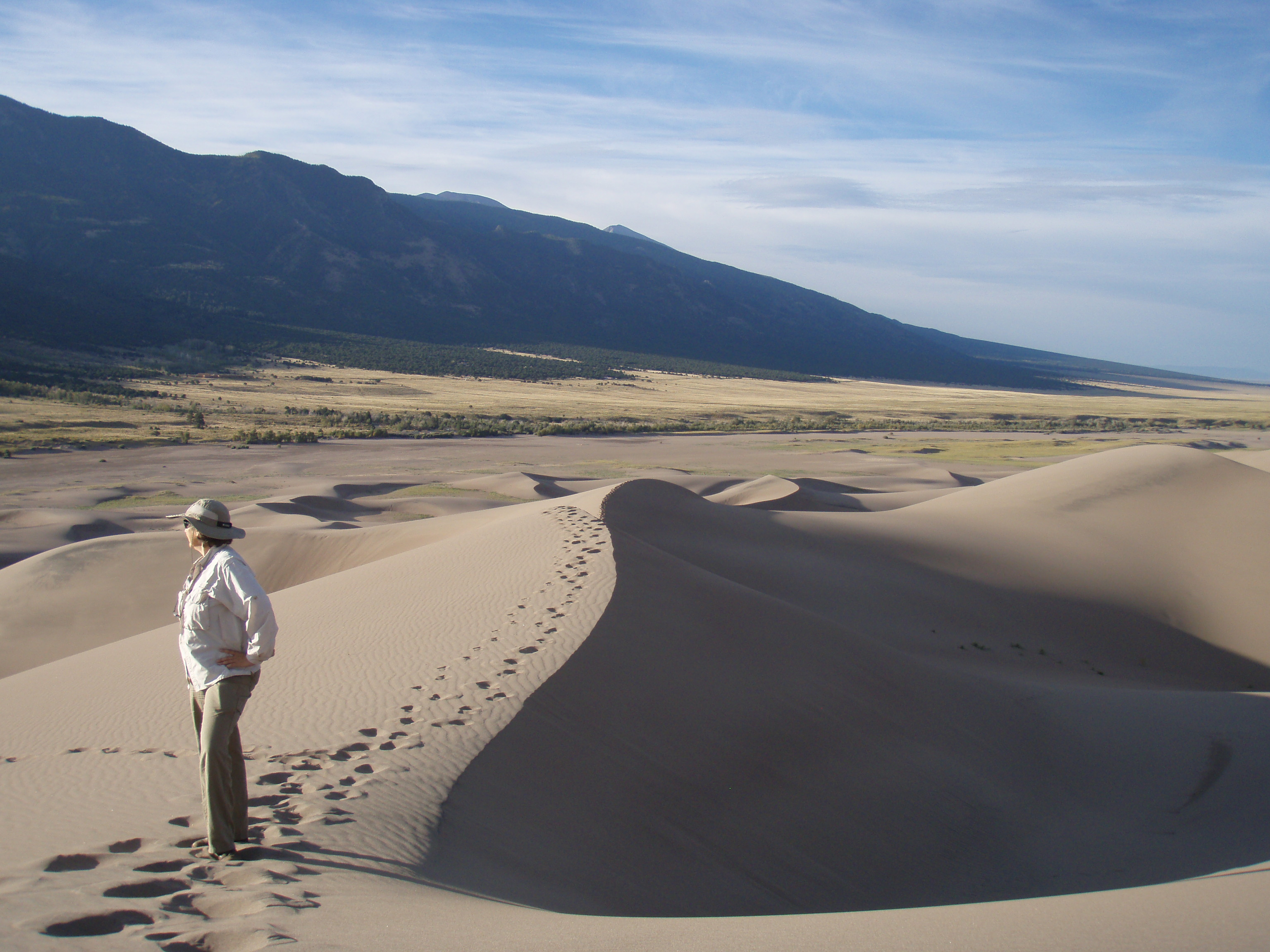
Hiking the dunes was a thigh-burning challenge. We started our trek at 7am and reached the “summit” of High Dune (650 feet) at about 9 am. When we started, the dunes were completely in shadow. As the sun rose over the Sangre de Cristo Mountains, the shadows slid toward the base of the dunes. The sand heated up very quickly.

The sand was very fine, almost a powder. Climbing the dunes was a matter of taking one step forward and sliding a half step backward. By hiking in my footsteps, Holly’s climb was much easier, relatively speaking.

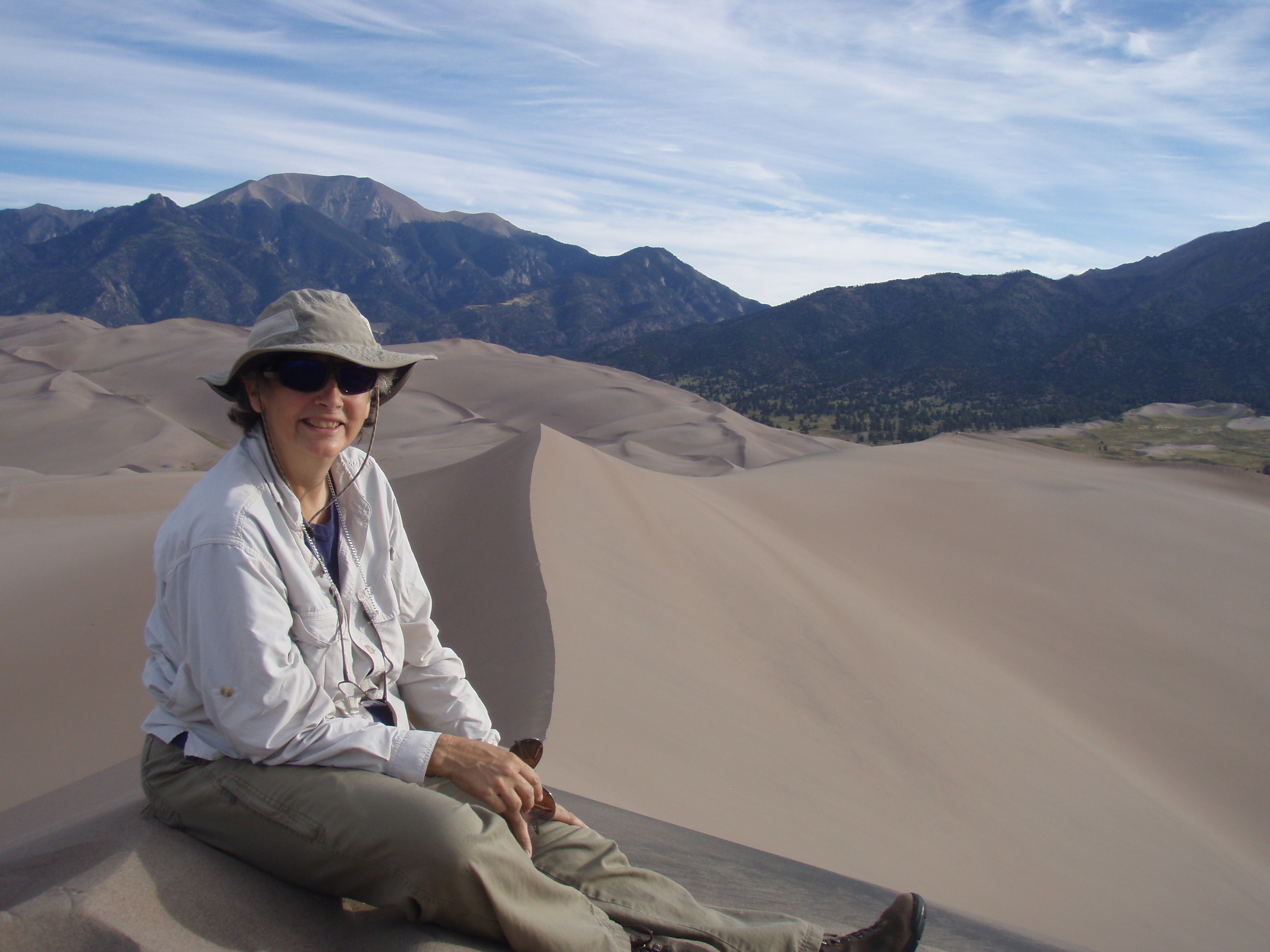
Holly taking in the view

Holly taking in the view

My method of climbing was to take 20 steps and stop to breathe for 30 seconds or so, then take another 20 steps.

We’d climb up a dune to the sharply defined ridge then follow the ridge to its peak. From there we sidled down a ways then slogged up to the next ridge. After 2 hours of heavy breathing and frequent stops to catch our breath, we reached the High Dune’s peak.

Holly at the Summit

Holly takes a well-deserved rest at the summit.

At the summit we tried to take a selfie but we sucked at it. I guess taking selfies is reserved for people much, much younger than us. But that doesn’t mean we can’t be young at heart, at least once in a while.

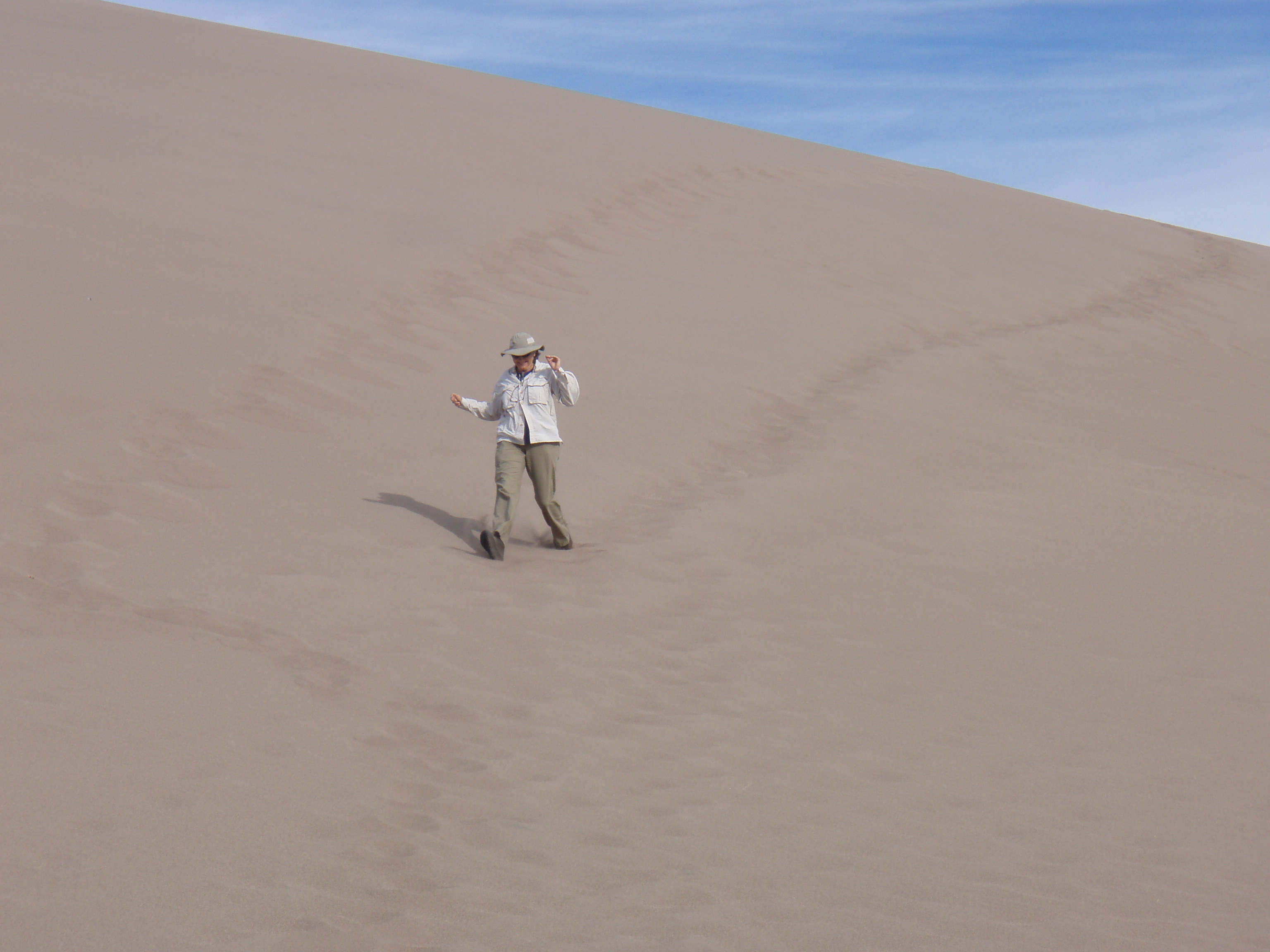
After resting and admiring the view for a few minutes, we started running down the dunes like giddy children. Faster and faster we ran, our hiking boots kicking up showers of sand in front of us. The “hike” down was way, way faster than the hike up. And way, way more fun.

Going down!

Going down is way more fun than going up. And faster!

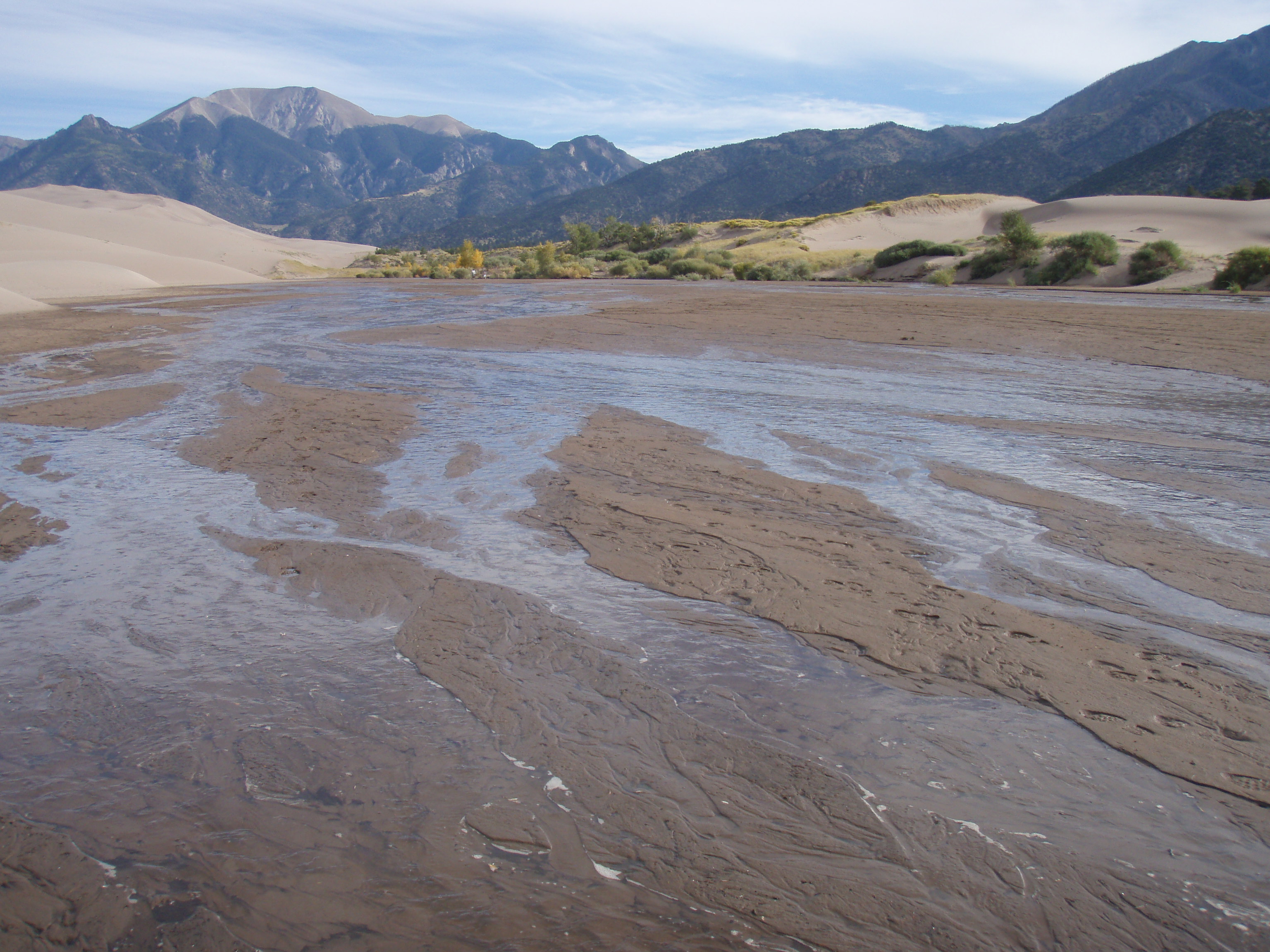
When we crossed Medano Creek, we saw water flowing slowly down toward the valley. It must have rained last night in the mountains.

Medano Creek

Water trickles down Medano Creek

For those who have the inclination and the money (or knows someone who has the money – like maybe mom or dad), you can rent sandboards and sand sleds at the Oasis Store located just outside the park entrance. Just remember that there are no lifts to the top of the dunes.

For us, one crawl climb to the top of a dune was enough to satisfy our curiosity.

J

Posted in Hiking, Parks | Leave a comment

Great Sand Dunes National Park

September 16-21, 2014

Impressions

Fall comes early to the Sangre de Cristo Mountains

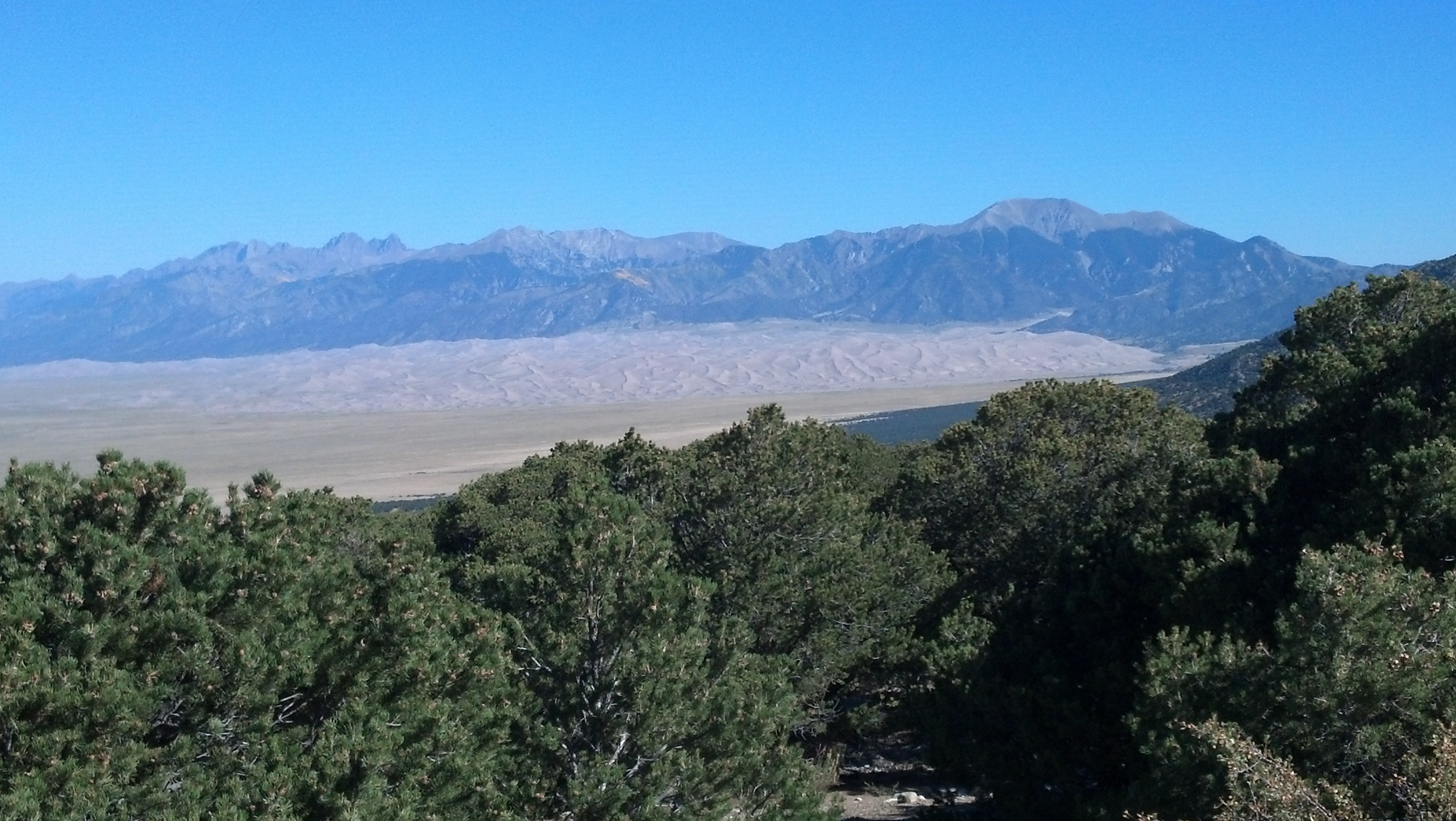
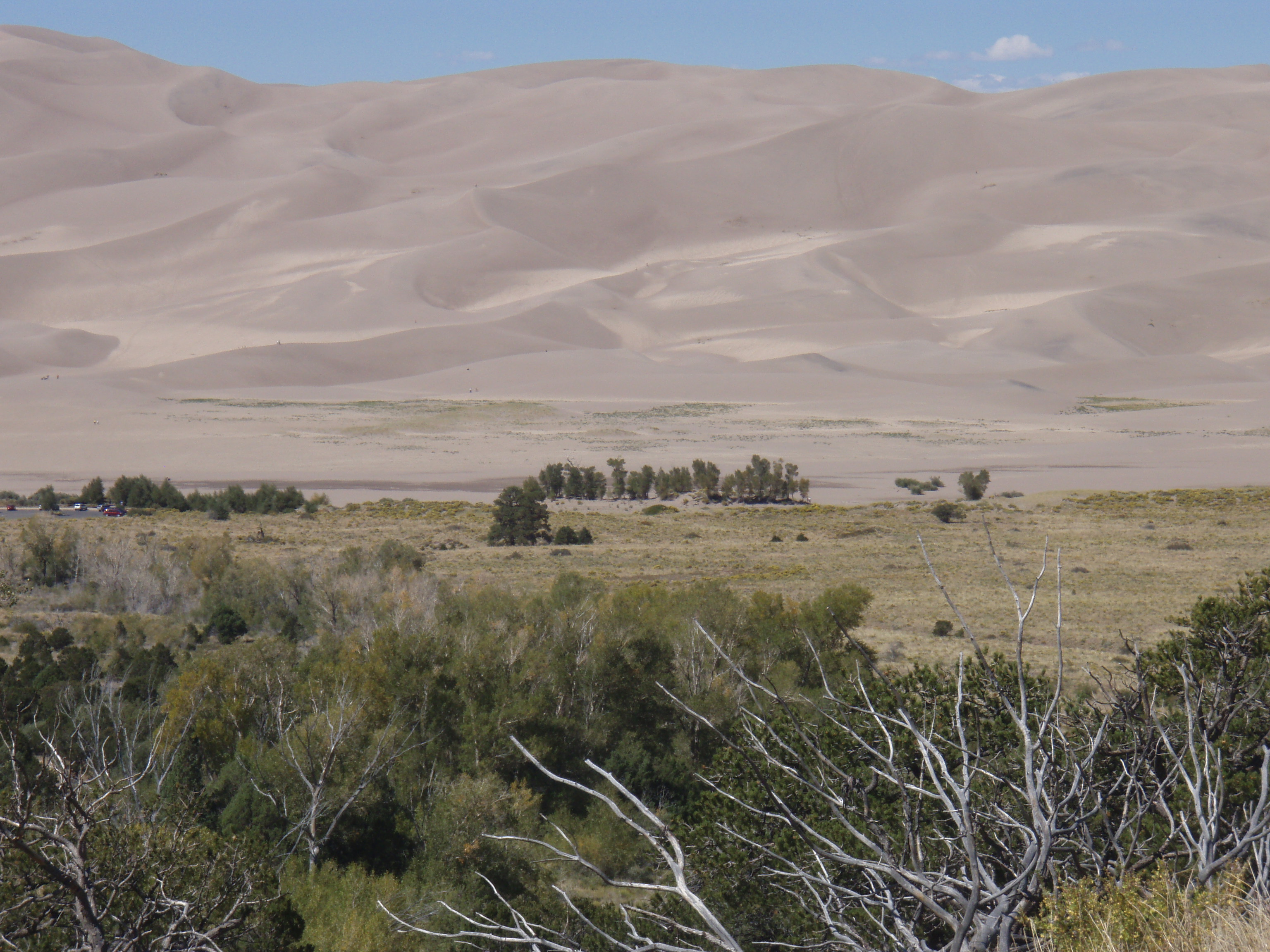
From a distance, the mountain landscape looks bleak – greys, blacks, and browns.

Great Sand Dunes NP and Sangre de Cristo Mountains

Great Sand Dunes NP with Sangre de Cristo Mountains in background

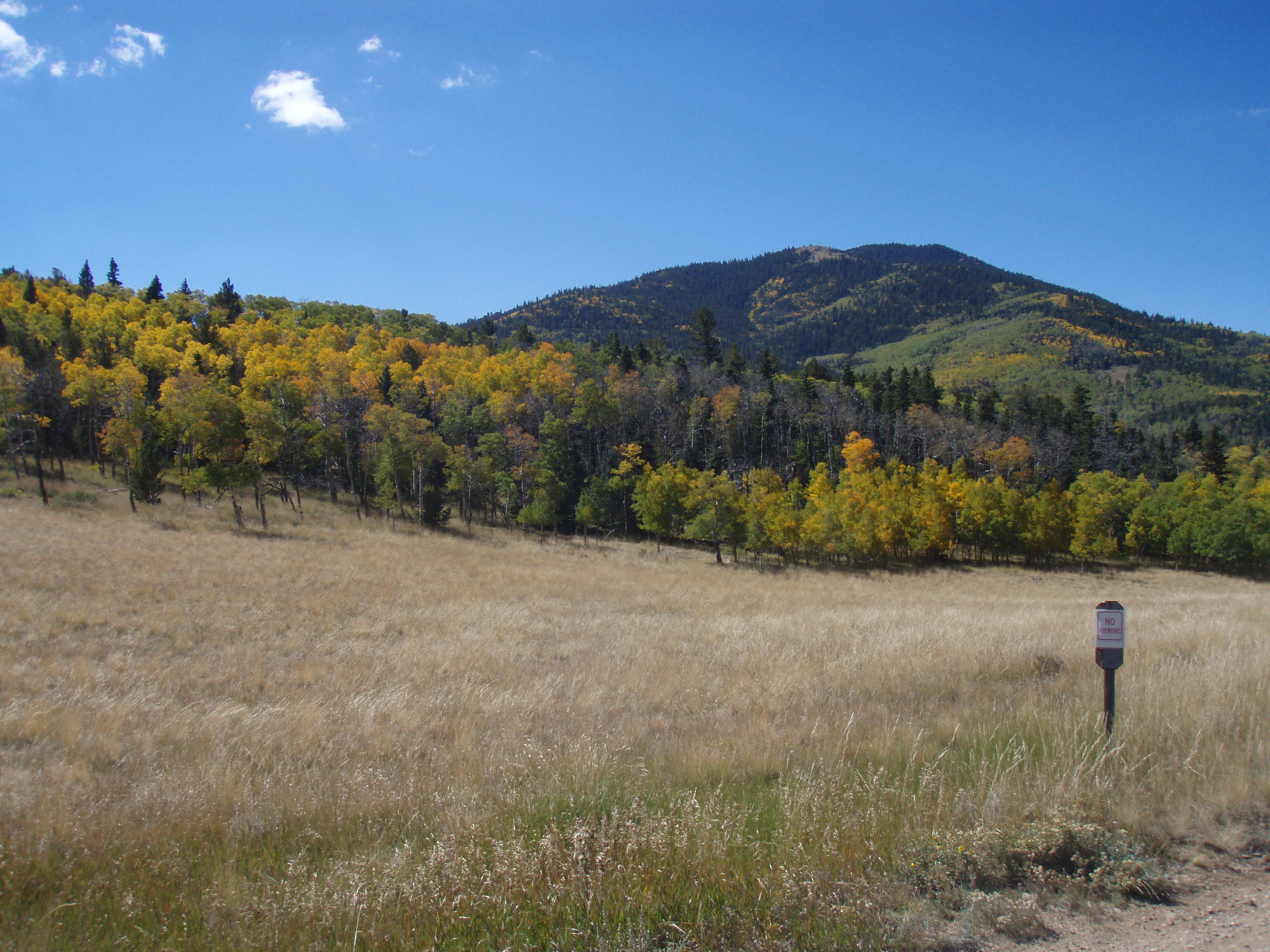
But as you approach the mountains, colors begin to appear. Grays mark tree line and above. Darker greens mark the Pinon pines, Junipers, Ponderosa pines and Douglas firs. Lighter greens and light browns show where mountain meadows flourish.  Patches of gold-leafed quaking aspens grow day by day farther down the mountainside.

Life flourishes. We saw mule deer, squirrels, chipmunks, snakes (other than not being rattlesnakes, I don’t know what they were), Magpies, Mountain bluebirds, and Stellar’s jays.

Mountain Colors

Mountain Colors

At Pinon Flats, the campground at Great Sand Dunes National Park, the towering dunes – some as high as 750 feet above the ground – stretch before you. Between the dunes and the campground lies wide, shallow Little Medano Creek – dry at this time of year except when it rains in the mountains. Then it can take a day or more for the water to flow down the mountainsides and trickle into the creek.

Sand Dunes

Sand Dunes

The dunes look out of place as though transported from the Arabian Desert. You half expect to see Lawrence of Arabia come galloping over the crest.

It’s cold in the mornings before the sun rises over the mountains. Once the sun appears, the air warms from the mid-40s to the mid- to upper-70s. A bright sun makes it feel even hotter. As the sun peaks and angles toward the San Juan Mountains, the breeze picks up and the temperature starts to drop. By late afternoon you’re hunting for a warm shirt or jacket and long pants.

Clouds ring the Sangre de Cristo (Blood of Christ) and San Juan Mountains but the San Juan Valley is mostly cloud free. The sun is strong at this altitude, over 8200 feet. In late summer, the valley is parched except where fields are irrigated. Spring snow melt feeds the Rio Grande. Its water is siphoned off into ditches which are used to irrigate the fields and wetlands. As incongruous as it sounds, there are wetlands in the valley. While most of the ponds and lakes have dried up, a few watery patches remain.

Campground

At this time of year the Pinon Flats Campground is first-come, first-served. We were lucky to have found a site with shade, although it appears to us that most campers want sites that are in full sun. We prefer shade for two reasons: first, we don’t want to fry our 18-1/2 year old cat, the “Camper House Queen”; second, we like shade.

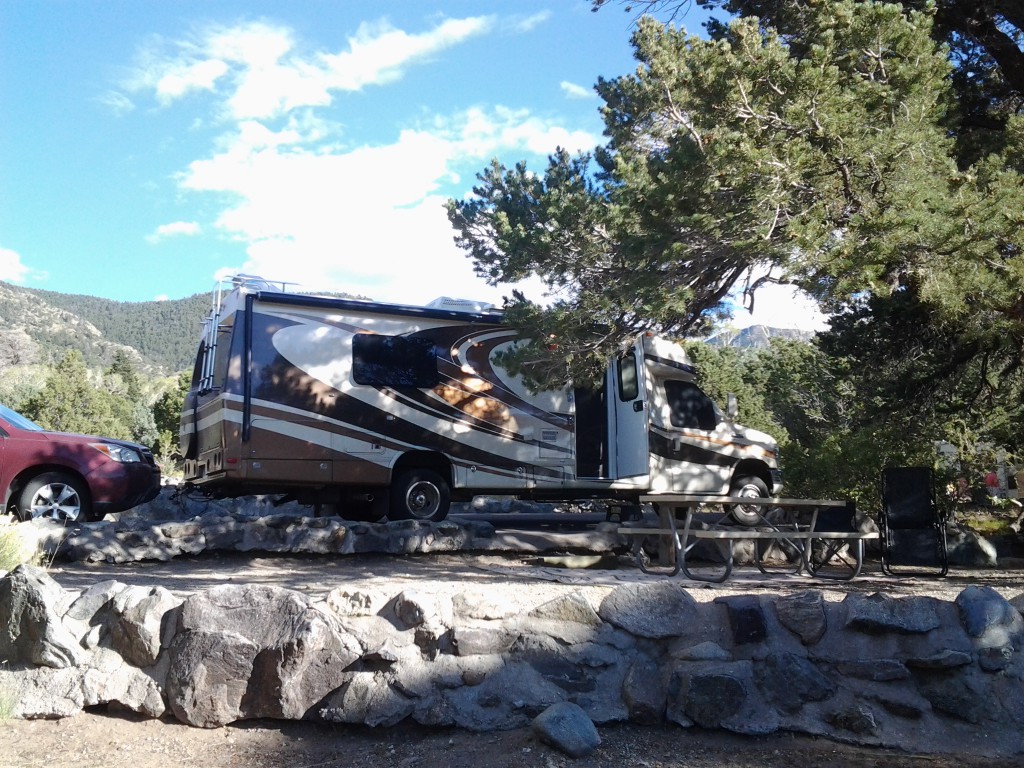
Our campsite

Our campsite

Considering the arid surroundings, there are lots of trees throughout the campground. Loop 1 and Loop 2 can accommodate RVs, but larger RVs can be very difficult to maneuver into a site. They have pull-in and back-in sites. The sites were nice, close but not too close together, and reasonably level. There are no hookups (water, electric, or sewer). There is a dump station.

Each loop has bathrooms and dish washing stations but no shower facilities. There is a spigot outside each restroom where you can get drinking water. Most of the spigots are not threaded so you can’t attach a water hose to it to fill up your fresh water tank. You can get fresh water at the dump station.

The camp hosts were excellent. They drove up in their golf cart as we were setting up and chatted with us for about 10 minutes, answering as many of our questions as they could.

Amazingly, we had an excellent Verizon signal. Our Verizon JetPack MiFi pulled in a strong 4G signal. During our stay we even Skyped with our son and granddaughter.

Warnings about bears being in the area were prominently displayed although we didn’t see any.

Read on for information about our adventures while we were here.

J

Posted in Campgrounds, National Park, Parks | Tagged | Leave a comment

The Epiphany

A friend spoke frequently about how he would buy an RV when he retired and wander the U.S. the way he always wanted. When our friends questioned the sanity of our desire to settle in the northwest, it made us think. Why not buy an RV when we retire and spend a year in the areas we’d like to settle? We can experience the weather first hand for days on end instead of those short one or two week vacations where everything is a new adventure. We can move around to see which towns and areas most appeal to us. We can get to know the region before we commit to living there forever. It sounded like a perfect plan.

We mentioned this to our RV dreamer friend and he asked “So are you going to get a Class A, B or C, or maybe a Fifth-Wheel?” Huh? We camped in tents for years. We were Boy Scout leaders and camped every month of the year no matter what the weather. We were good at the tent thing but our experience with RV’s was limited to sleeping in a parked fifth-wheel for a few nights during a family reunion. We had much to learn. And we did. We searched the internet, we bought books and finally we spent three days at the Hershey RV show so we could actually meet the ABC’s and all their friends.

Day 1 of the Hershey Show: Overwhelmed doesn’t begin to cover it. We had that dream of cruising in a little van (Class B), parking where we liked without worrying about length or towed vehicles. But we knew we would both still be working part time and living full time in the RV and taking the granddaughter with us as often as possible so we quickly ruled out the B’s. There are full timers in Class B rigs but after touring a few, we knew they wouldn’t work for us. We wanted to stay under the 30’ limit that some of the State and National Parks have so we narrowed it down to either the A’s or C’s by the end of the first day of the show. We were still thinking we could get by with just the motorhome and no tow vehicle.

Day 2 of the Hershey Show: We must have crawled in and out and all around over a hundred motorhomes in those first two days. There were a few A’s we liked that were 30’ or less but they felt oversized to us so by the end of the second day we had narrowed the field down to a Class C.

Now the RV Shows are not just RV’s. They have vendors like Camping World (with everything you didn’t know you needed until now) and all sorts of booths manned by people that are totally happy to chat with you about their RV experiences. We saw and spoke with tons of people selling the RV’s, touring the RV’s and working at the vendor booths. To a man/woman, the full timers had one regret – they wished they had done it sooner. We heard that statement over and over again “We wish we had done it sooner”. That phrase rang in our heads as we dragged our tired bodies to the hotel for the night.

Day 3 of the Hershey Show: John shares an epiphany he had. He just turned 60. We’ve saved a good bit of money. We’ve had a few health scares. He states that if we are going to do this, we should do it now while we are able to hike, canoe, raft and wander our way through anything and any place that appeals to us. We decide that we are going to commit to a year on the road and that we will start it within the year. Now we are on a mission – we go back through the Class C rigs taking brochures and making copious notes. We laid on the beds, stood in the showers, sat on the toilets, and lounged on the chairs and couches. We peered into the cabinets and storage bins and we asked questions. We were looking for room to set up two computers so we could both work inside during bad weather; we needed room for clothing; room for cooking utensils and food; room for basic camping gear; room for the cat and the tools and the toiletries and the medicine and maps and electronics and on and on. We leave the show with a list of five units that we plan to research and choose from. We are tired but excited. Our somewhat orderly, boring life has tipped on end and our staid work and retirement plans have taken an amazing turn; all in three little days in Hershey, PA.

Posted in Random Thoughts | Tagged , | 1 Comment

Wanderlust

Wanderlust… The call of the open road… Mid-life crisis… Insanity.
Maybe.

Continue reading

Posted in Random Thoughts | 3 Comments