May 1, 2019
Pipe Spring National Monument
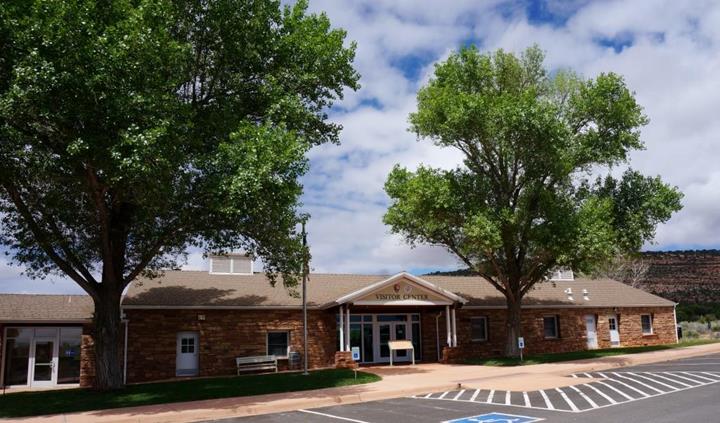
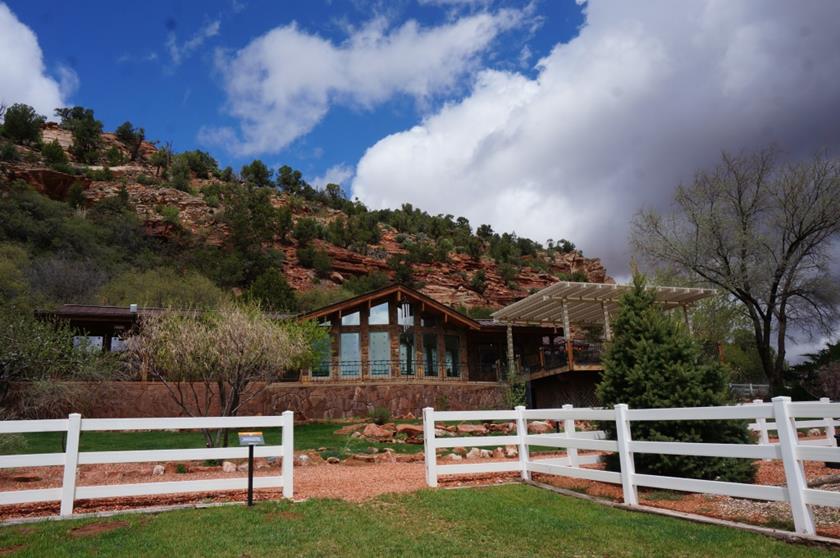
Pipe Spring NM Visitor Center
A Little History
In the arid southwest, water is life. Over hundreds or thousands of years, snow melt and rainwater seep slowly through the sandstone and other porous rock layers until it reaches a non-porous layer. It then travels horizontally until it finds an opening where it springs forth, allowing life to flourish. To the Paiutes, water was, and still is, sacred.
According to the Kaibab Paiute, they were brought to this area in a sack by Coyote. Their Sehoo (umbilical cord) is buried here. And this is where they will return to the spirit world. This is sacred land.
Mormons, persecuted for their beliefs back east, fled westward and settled in the Salt Lake Valley in 1847. Thousands more followed over the next 20 years, settling throughout Utah and neighboring states and territories.
Unlike the United States, the Mormons opted to work with the Native Americans, believing it was cheaper to feed them than to fight them. But the clash of cultures could not be avoided. For example, why could Mormons hunt deer, but Indians couldn’t hunt cattle? Why did the Mormons take the best water and land for themselves and deny it to the Indians?
Meanwhile, the United States aggressively pushed its boundaries ever westward, simply taking what they wanted and fighting anyone that stood in their way.
Conflict was inevitable. Sporadic warfare erupted between the United States, the Mormons, and the Native Americans, lasting from 1850 until 1870.
It was in this environment that, in 1858, Pipe Spring was “discovered” by Mormon travelers. By 1860 it had become a popular watering hole and campsite for ranchers. In 1870, at Brigham Young’s direction, a so-called fort, named Winsor Castle, was built over Pipe Spring. Pipe Spring eventually became one of several tithing ranches. Mormon families were expected to donate or tithe 10% of their income, often in the form of farm animals or agricultural products. These ranches managed livestock donated by Church members and their operations supported Church enterprises. Continue reading →



 Spirit of the Woods